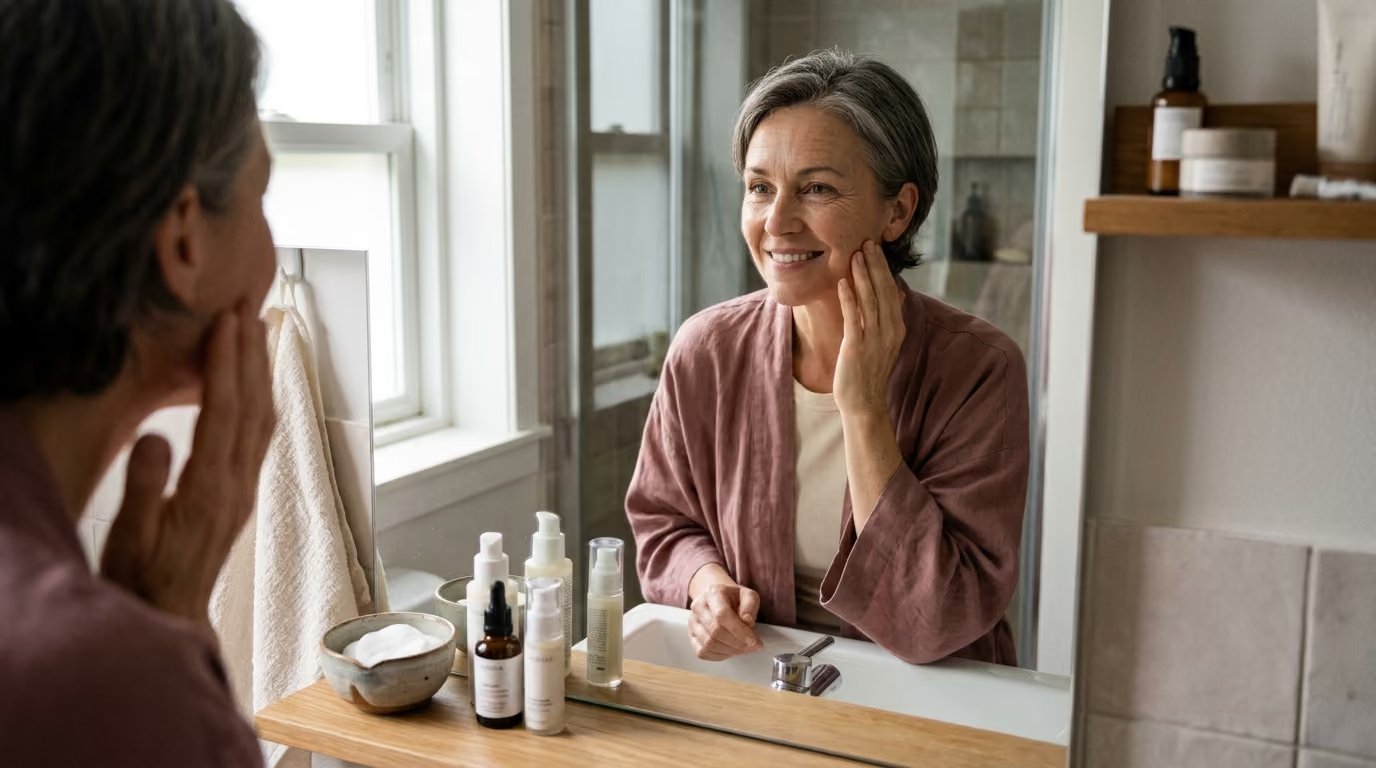

Up to 95 percent of solar ultraviolet radiation reaching Earth consists of deep-penetrating UVA rays that accelerate cellular photoaging throughout the entire year.





Many people find themselves searching online for a straightforward question: does daily sunscreen actually prevent skin aging, or is broad sun protection only necessary during summer holidays? The sheer volume of conflicting advice makes it difficult to know which habits genuinely protect the skin over decades. Marketing often swings between alarmist warnings and unrealistic claims that a single product can preserve eternal youth.
This guide provides a comprehensive, research-informed framework for managing ultraviolet and visible light exposure. True photoprotection is not a single bottle of lotion. It is a multi-layered exposure management system that protects cellular health and supports skin longevity and healthy aging over a lifetime.
Solar radiation transfers energy across multiple wavelengths that interact directly with skin cells. Ultraviolet radiation spans wavelengths from 100 to 400 nanometers. This spectrum is subdivided into UVA, UVB, and UVC. While atmospheric ozone absorbs UVC, both UVA and UVB reach the earth and directly alter cellular structures in human skin.
UVB rays (280 to 320 nanometers) carry significant energy and act predominantly on the epidermal layer. These wavelengths are absorbed directly by cellular DNA. This direct absorption creates cyclobutane pyrimidine dimers and other photoproducts. When cellular repair pathways cannot keep pace with these mutations, the risk of skin malignancies rises. UVB is also the primary trigger for erythema, commonly known as sunburn.
UVA rays (320 to 400 nanometers) make up the vast majority of terrestrial ultraviolet light. Because UVA has a longer wavelength, it penetrates past the epidermis into the deeper reticular dermis. UVA does not depend heavily on seasonal heat. It passes through standard window glass and remains relatively consistent throughout daylight hours.
Within the dermis, UVA radiation triggers photochemical reactions that generate reactive oxygen species. This oxidative stress overwhelms endogenous antioxidant defenses. It damages lipids, disrupts cell membranes, and degrades structural proteins. Furthermore, UVA upregulates enzymes called matrix metalloproteinases, which actively break down type I and type III collagen fibers. Over time, healthy collagen scaffolding is replaced by disorganized clumps of altered elastin, a process known as solar elastosis. This structural degradation is a major focus in collagen and structural aging research.
Visible light (400 to 700 nanometers) also affects dermal health. While visible light does not cause standard sunburn, the high-energy visible band (400 to 500 nanometers) penetrates deeply into tissue. Research shows that visible light stimulates melanocytes to produce melanin. In darker skin phototypes and individuals with melasma, this leads to intense, long-lasting hyperpigmentation. Standard transparent sunscreens do not filter these visible wavelengths, requiring physical pigments like iron oxides to deflect the light.
The most rigorous randomized trial evaluating sunscreen and skin aging is the Nambour trial conducted in Queensland, Australia. Researchers followed 903 adults for four and a half years. Participants were randomly assigned to either daily use of a broad-spectrum SPF 15+ sunscreen or discretionary use. The investigators measured skin surface microtopography from silicone impressions taken from the back of the hands at baseline and study completion.
The data revealed that the daily sunscreen group had 24 percent less progression in skin aging than the discretionary group. In fact, participants in the daily application arm showed no detectable increase in microtopographic skin aging over the entire four and a half year observation period. By contrast, the discretionary group accumulated measurable microstructural degradation. This study provided objective proof that consistent photoprotection preserves existing skin architecture.
Beyond skin aging, the epidemiological data regarding skin cancer prevention is substantial. The World Health Organization reported more than 1.5 million skin cancer cases globally in 2020. Excessive ultraviolet radiation accounted for roughly 1.2 million non-melanoma skin cancers and 325,000 melanomas in that single year. Consistent daily protection significantly reduces lifetime cumulative UV dose, lowering the statistical risk of developing both pre-malignant actinic keratoses and invasive carcinomas.
Epidemiological research on indoor tanning demonstrates an even more stark reality. The International Agency for Research on Cancer classifies UV-emitting tanning devices as group 1 human carcinogens. A comprehensive meta-analysis summarized by the American Cancer Society demonstrated that indoor tanning increases the risk of basal cell carcinoma by 24 percent. It also increases squamous cell carcinoma risk by 58 percent. When tanning bed use begins before age 35, the relative risk of developing melanoma increases by approximately 60 percent. A tan is a biological emergency response to cellular injury, not an indicator of health.
When we first started reviewing clinical trials on collagen supplementation and photoprotection, I was struck by how often the media misinterpreted the data. A study showing a minor preservation of skin elasticity was suddenly headlined as a miracle breakthrough. It made me realize how desperately consumers need a translator for beauty science, someone who can say exactly what a study proves and what it does not prove.
The Nambour trial is a gold standard study, but its conclusions have precise boundaries. The data proves that daily sunscreen use retards the progression of photoaging over several years. It does not show that sunscreen reverses pre-existing solar damage. Sunscreen will not eliminate deep, established wrinkles or erase long-standing actinic damage on its own.
Furthermore, the primary outcome in the Nambour trial was evaluated using microtopography of the hands. Hand microtopography measures epidermal line patterns and fine surface texture. It does not measure deep volume loss, dynamic facial expression lines, or mid-face fat pad descent. These structural shifts are governed by intrinsic biological aging and musculoskeletal changes.
It is also important to note that the Nambour study utilized an SPF 15+ formulation with specific UVA attenuation available in the 1990s. While modern broad-spectrum formulas offer superior filtration, we cannot linearly extrapolate that higher SPF numbers will produce exponentially greater anti-aging results. Protection in everyday life is heavily limited by user behavior. People routinely apply less than half the recommended quantity of product.
Finally, clinical trials cannot guarantee that diligent photoprotection will prevent every individual case of skin cancer. Genetic susceptibility, immune function, and childhood sunburn history all influence lifetime risk. Sun protection manages risk, but it does not eliminate biological vulnerability entirely.
Relying exclusively on sunscreen creates a false sense of security. The World Health Organization explicitly states that sunscreen should not be used to prolong outdoor exposure. A resilient defense relies on a complete exposure-management system based on five variables: dose, duration, intensity, coverage, and consistency.
The UV Index provides a standardized international measurement of the strength of sunburn-producing ultraviolet radiation. The World Health Organization and the Centers for Disease Control and Prevention recommend protective measures whenever the UV Index reaches 3 or higher.
Peak ultraviolet radiation occurs when the sun is highest in the sky, typically between 10 a.m. and 4 p.m. Scheduling outdoor workouts, errands, or gardening outside these peak hours dramatically reduces cumulative exposure without requiring lifestyle deprivation. UV intensity is not governed by air temperature. A cool, overcast day can still register a moderate UV Index because UVA easily penetrates cloud cover.
Seeking shade under trees, awnings, or architectural canopies significantly lowers direct solar irradiance. However, shade does not eliminate scattered or diffuse radiation.
Ultraviolet rays scatter in the atmosphere and bounce off surrounding surfaces. Concrete, water, white sand, and snow reflect substantial amounts of radiation upward under umbrellas and porches. For this reason, shade is a foundational layer that must be combined with clothing and topical protection.
Clothing provides the most consistent, low-maintenance barrier against solar radiation. Unlike topical lotions, fabrics do not degrade over hours or wash away with perspiration.
The protective value of clothing depends on fabric density, weave tightness, color, and fiber composition. A standard thin white cotton shirt may provide an Ultraviolet Protection Factor of only 5, which drops further when damp. Purpose-designed UPF 50+ apparel blocks 98 percent of UVA and UVB rays. Tightly woven synthetic fabrics like polyester and nylon offer superior photoprotection compared to loose natural knits.
Baseball caps leave the ears, temples, and back of the neck completely unprotected. These uncovered areas are common sites for precancerous lesions and advanced photoaging.
A broad-brimmed hat with a brim of at least three inches protects the face, scalp, ears, and posterior neck. Individuals with thinning hair, visible part lines, or alopecia require consistent hat usage because hair provides uneven shielding against high-intensity solar energy.
The skin around the eyes is exceptionally thin, making it vulnerable to cellular breakdown, elastosis, and carcinogenesis. Furthermore, chronic ocular ultraviolet exposure contributes to cataract formation and photokeratitis.
Select sunglasses labeled as UV400 or certified to block 99 to 100 percent of UVA and UVB radiation. Wraparound styles or large frames prevent scattered peripheral radiation from entering around the sides of the lenses.
Selecting an appropriate sunscreen requires understanding how modern UV filters operate and how product labels communicate efficacy. A high SPF rating alone does not indicate comprehensive coverage across the entire electromagnetic spectrum.
In the United States, the Food and Drug Administration mandates that products labeled "Broad Spectrum" pass a critical wavelength test. This test ensures the formulation absorbs radiation across both the UVB and UVA spectrum up to at least 370 nanometers.
International rating systems offer further precision:
Sun Protection Factor (SPF) measures how much solar energy is required to cause erythema on protected skin compared to unprotected skin. It is primarily a measure of UVB protection.
Notice that the curve flattens significantly past SPF 30. SPF 30 blocks 96.7 percent of UVB rays, while SPF 50 blocks 98 percent. While SPF 50 allows half as many UVB photons through as SPF 30, it does not double total outdoor protection time. SPF should never be used as a timer for how long you can safely remain under direct sunlight.
Inorganic filters, commonly called mineral filters, utilize zinc oxide and titanium dioxide. These active minerals primarily absorb UV radiation and convert it into harmless heat, scattering only four to five percent of incoming light. Zinc oxide provides broad, uniform protection across both UVA and UVB spectra. Mineral formulations are well tolerated by reactive skin, post-procedure barriers, and sensitive eyes.
Organic filters, often referred to as chemical filters, use complex carbon-based molecules like avobenzone, octisalate, and advanced international filters such as bemotrizinol. These molecules absorb high-energy UV photons and release that energy as low-grade thermal energy. Modern organic filters offer cosmetically elegant textures that leave zero chalky white residue on deeper skin complexions.
Hybrid formulations combine both inorganic and organic active ingredients. They provide high photostability and broad-spectrum coverage while maintaining an accessible cosmetic finish. The most effective sunscreen is ultimately the one you enjoy wearing enough to apply generously every single morning.
For individuals managing melasma, post-inflammatory hyperpigmentation, or persistent dark spots, standard transparent sunscreens are often insufficient. High-energy visible light triggers melanogenesis through opsin-3 cellular receptors.
Tinted sunscreens containing cosmetic iron oxides and pigmentary titanium dioxide create a visible barrier over the skin. Clinical studies indicate that these tinted formulations reduce high-energy visible light transmission by 80 to 97 percent. Adding iron oxides helps prevent visible-light-induced pigmentation flares that traditional clear mineral or organic sunscreens fail to block.
Sunscreen failure is almost always an application failure rather than a chemical failure. Laboratory SPF testing uses a standardized thickness of two milligrams of product per square centimeter of skin. In everyday life, most consumers apply only 0.5 to 1.0 milligram per square centimeter. This chronic underapplication drastically cuts the delivered SPF and UVA protection.
To achieve labeled protection on the face and neck, use approximately two full finger lengths of sunscreen squeezed along the index and middle fingers. For the entire adult body, the American Academy of Dermatology recommends approximately one ounce of lotion, roughly equivalent to a full shot glass.
Apply sunscreen systematically to ensure total coverage. Distribute the lotion across major zones before blending to prevent patchiness:
Sunscreen does not simply disappear off the skin on an internal clock. Reapplication is necessary because the protective product film degrades physically over time.
The American Academy of Dermatology recommends reapplying sunscreen every two hours when outdoors, and immediately after swimming, sweating heavily, or towel drying. If you work indoors away from windows, a generous morning application is generally sufficient for your standard workday. However, reapply before your afternoon commute or any midday outdoor walk.
Cosmetics containing SPF rarely provide adequate standalone photoprotection. Achieving labeled SPF from a foundation would require using six to ten times more makeup than anyone normally wears.
Always apply a dedicated broad-spectrum sunscreen as the final step of your morning skincare routine. Allow the sunscreen to dry down for three to five minutes so it forms a stable protective film. Apply your foundation or concealer gently over the top without aggressive rubbing. For touch-ups over makeup during the day, use SPF setting sprays, tinted mineral powders, or gentle cushion compacts.
Sun exposure varies dramatically depending on your daily routine, skin tone, health conditions, and environment. These tailored profiles show how to adapt photoprotection to different real-world scenarios.
Reality: A tan is not a sign of resilience. It is an emergency biological reaction triggered by cellular DNA damage. Melanin production increases only after ultraviolet photons have already broken bonds within epidermal cells. A typical base tan provides an intrinsic protection level equivalent to an SPF of roughly 2 to 4. This minor barrier does not prevent cumulative cellular photoaging, deeper collagen breakdown, or elevated skin cancer risk.
Reality: Sun Protection Factor indicates photon filtering efficiency under strict laboratory application densities. It is not an outdoor countdown timer. High SPF sunscreens do not filter 100 percent of UV rays, and they remain vulnerable to degradation from sweat, skin oils, and clothing friction. Relying solely on a high SPF number while staying in direct sunlight increases your total accumulated lifetime radiation dose.
Reality: Deeper skin complexions have higher concentrations of epidermal eumelanin, which provides natural protection roughly equivalent to SPF 13. While this reduces the frequency of sunburn, it does not make the skin immune to photoaging, cellular mutations, or cutaneous malignancies. Furthermore, deeper skin tones are particularly prone to high-energy visible light damage. This visible radiation causes stubborn, long-lasting hyperpigmentation that requires iron-oxide protection.
Reality: Standard zinc oxide and titanium dioxide are engineered with small particle sizes to appear transparent on the skin. While this transparency improves cosmetic appeal and prevents chalkiness, it allows visible light to pass straight through. To filter visible light, a sunscreen must contain visible pigments such as iron oxides or large-particle pigmentary titanium dioxide.
Reality: Clinical trials consistently demonstrate that everyday sunscreen use has minimal impact on circulating 25-hydroxyvitamin D concentrations. Real-world users rarely apply enough product to block 100 percent of UVB transmission. The World Health Organization advises against intentional, unprotected solar exposure or indoor tanning to boost vitamin D. Dietary sources and oral vitamin D3 supplementation provide a safe, reliable way to maintain healthy levels without damaging skin cells.
Standard commercial window glass blocks virtually all UVB radiation, preventing sunburn indoors. However, standard glass permits up to 75 percent of UVA rays to pass through without resistance. If you sit directly beside an unshaded window for hours every day, cumulative UVA exposure will accelerate collagen degradation and promote uneven pigmentation. You can mitigate this risk by applying broad-spectrum sunscreen daily, drawing blinds during peak hours, or applying clear UV-blocking film to the window glass.
Reapplying sunscreen over a full face of makeup can be done without wiping away your cosmetics:
Oral photoprotective supplements, such as Polypodium leucotomos extract, astaxanthin, or mixed carotenoids, provide systemic antioxidant support. These compounds neutralize reactive oxygen species from the inside out, helping the skin resist low-level oxidative stress. However, oral supplements do not reflect, absorb, or scatter incoming UV photons at the skin's surface. They are secondary tools that complement topical sunscreen, protective clothing, and shade, never a standalone replacement.
Broad-Spectrum is an FDA regulatory term indicating that a product absorbs UV radiation across both UVA and UVB wavelengths up to at least 370 nanometers. The PA system is an international standard based on the Persistent Pigment Darkening method, which measures protection specifically against UVA rays. A rating of PA++++ indicates that the product provides high UVA protection, with a UVA Protection Factor of 16 or greater.
If you wear a standard SPF 50 sunscreen but your melasma continues to flare, visible light or ambient heat is likely triggering melanocyte activity. Traditional transparent sunscreens protect against UVB and UVA, but they allow high-energy visible light to reach pigment-producing cells. Switch to a tinted sunscreen containing visible iron oxide pigments, and wear a broad-brimmed hat to physically shade your face. Also, minimize intense heat exposure from saunas or hot yoga, as cutaneous vasodilation can also trigger pigment pathways.
Building consistent photoprotection into your routine does not have to be overwhelming. Use this checklist to establish practical habits this week:
Stay connected for research and practical guidance on skin, hair, collagen, nutrition and beauty longevity. Clear ideas for people who want to understand how appearance changes with age and make better-informed choices over time.


Understand your skin, hair and body better without chasing every new trend, treatment or promise.
explore the Blog