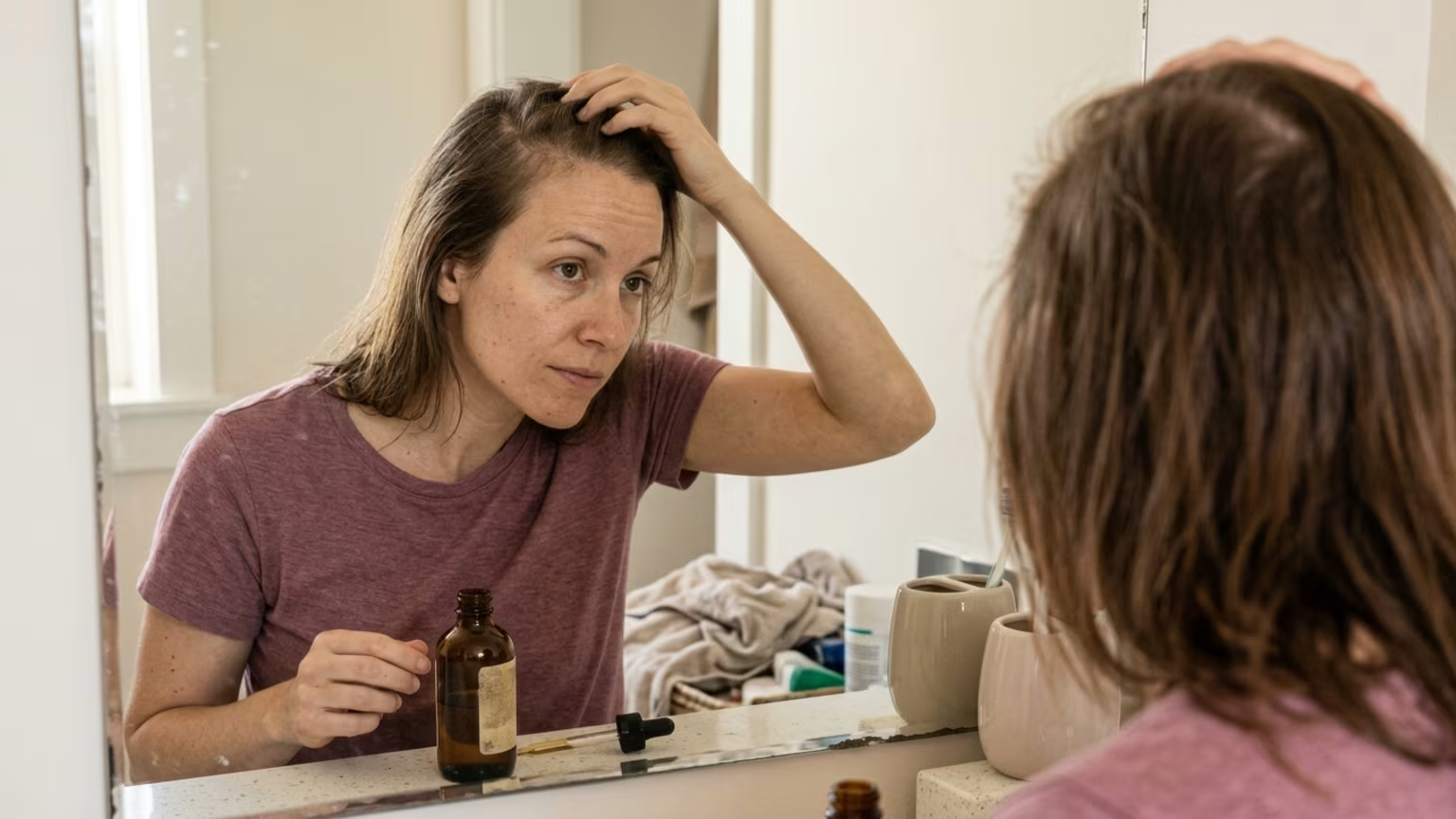

Kenvue's post hoc analysis of a Phase III trial found that 5% topical minoxidil foam produced measurable hair-count gains across subgroups. Learn the details.





In September 2026, Kenvue announced upcoming research presentations across its Neutrogena, Aveeno, and Regaine brands. The company outlined twelve distinct data sets intended for the European Academy of Dermatology and Venereology congress in Vienna. These presentations covered topics ranging from skin barrier health and skin appearance to androgenetic alopecia. Among these announcements, Kenvue highlighted specific findings from a post hoc analysis of a Phase III trial evaluating Regaine five percent topical minoxidil foam.
This particular trial evaluated men diagnosed with androgenetic alopecia to measure changes in their overall hair density. Kenvue's release noted that this minoxidil analysis was previously presented at the 2024 EADV congress in Amsterdam. The newly publicized summary focuses on how treatment outcomes might vary based on a patient's age and their baseline severity of hair loss. According to Kenvue executive Kate Stockman, consumers consistently report that healthy skin and hair deeply affect their confidence and overall quality of life.
The company views these ongoing research efforts as essential for advancing the scientific understanding of established active ingredients like minoxidil. Re-evaluating existing clinical data helps researchers formulate new questions about how early interventions impact long term follicle health.
To interpret these clinical findings accurately, one must look at the specific biological markers tracked by the researchers. The primary endpoint for this post hoc analysis was the measurable change in non-vellus hair count after a set period of treatment. Non-vellus hairs are the thicker, fully pigmented strands that provide visible structural density on the human scalp. As androgenetic alopecia progresses over time, these robust hairs gradually undergo miniaturization until they become fine, barely visible vellus hairs.
Minoxidil targets the hair follicle environment directly to alter this progression and support a healthier, sustained growth cycle. The topical application aims to prolong the active growth phase, helping to maintain existing non-vellus hairs and potentially increase their overall numbers. Kenvue examined their trial data to see if intervening during the earlier stages of this miniaturization process produces a different measurable response. The resulting data highlights distinct variations in follicle response depending on the baseline condition of the scalp.
The Phase III trial measured these non-vellus hair counts over a standard 16-week period to establish a baseline of efficacy. Kenvue reported statistically significant improvements versus a placebo across all the hair loss classifications studied, achieving a p-value of less than 0.002. When looking closely at the age based subgroups, the analysis revealed a notable difference in the average number of hairs gained. Men aged 20 to 30 experienced an average increase of 26.25 hairs from their initial baseline measurement.
In contrast, men older than 30 saw a comparatively lower average increase of 19.93 hairs over the same 16-week timeframe. The researchers also grouped the study patients by the severity of their hair loss using the established Norwood-Hamilton scale. Men categorized with early Type III hair loss recorded an average increase of 23.06 hairs. Those presenting with more advanced Type IV or V hair loss showed an average increase of 18.70 hairs.
While these specific averages point toward higher numerical yields in earlier stages, they require careful interpretation. The reported comparisons represent broad subgroup averages rather than a reliable forecast of how many hairs an individual will actually regrow. A single statistical average cannot account for the complex biological variables that influence a person's unique response to topical minoxidil.
While the reported figures offer interesting insights, reading clinical research always requires a careful look at the missing context. A report from Practical Dermatology explicitly cautions that these subgroup findings should not establish that earlier treatment directly causes greater regrowth. Because this is a post hoc analysis, the researchers reviewed the data after the original trial concluded to search for these specific statistical patterns. The publicly available summaries omit critical details, such as the exact participant counts for each subgroup.
Without these specific counts, confidence intervals, or the original statistical analysis plan, independent researchers cannot fully verify the true weight of these secondary comparisons. Furthermore, the 16-week analysis period only captures the initial phase of treatment response and stabilization. The cited results do not establish long term outcomes, nor do they guarantee that the numerical increases translated to a cosmetically noticeable difference. Finally, this study exclusively evaluated men, meaning readers absolutely cannot apply these age and stage comparisons to female hair loss.
For health conscious women, this news reinforces the immense value of timely clinical evaluation over waiting for advanced thinning. The broader principle of investigating changes early holds true, even if this specific male focused data does not map directly to female biology. If you notice a persistent reduction in your hair volume, scheduling a prompt assessment with a qualified clinician is a sensible first step. Discussing these physical changes early allows your provider to evaluate your follicles before significant miniaturization limits your available options.
Preparing for this clinical conversation requires a clear understanding of the specific treatments designed for your unique physiology. Reviewing the underlying causes and diagnostic steps for female hair loss provides an excellent foundation for discussing targeted, evidence based interventions with your doctor. You can also review a complete overview of prescription treatments for female hair loss to thoroughly familiarize yourself with the current landscape of clinically supported therapies. When considering any topical treatment, always remember to follow the medical guidelines for your specific demographic.
Product labeling exists to ensure safety and proper usage based on the specific populations evaluated in clinical trials. For example, the United States label for the men's five percent minoxidil foam explicitly states it is for men only. It further clarifies that the product is not intended for frontal baldness or a receding hairline. Relying on an accurate diagnosis and appropriate product selection ensures your hair preservation routine is both safe and scientifically sound.
The continuous publication of post hoc analyses highlights a growing clinical interest in how early intervention impacts long term follicle health. Clarifying the baseline condition of the scalp is rapidly becoming a central focus for both researchers and longevity minded consumers. To learn more about assessing early shedding changes accurately, you can read our framework on distinguishing between temporary hair shedding and true hair loss. Moving forward, how will the broader scientific community design new prospective trials to better predict personalized responses to early stage hair preservation?
Stay connected for research and practical guidance on skin, hair, collagen, nutrition and beauty longevity. Clear ideas for people who want to understand how appearance changes with age and make better-informed choices over time.




Understand your skin, hair and body better without chasing every new trend, treatment or promise.
explore the Blog