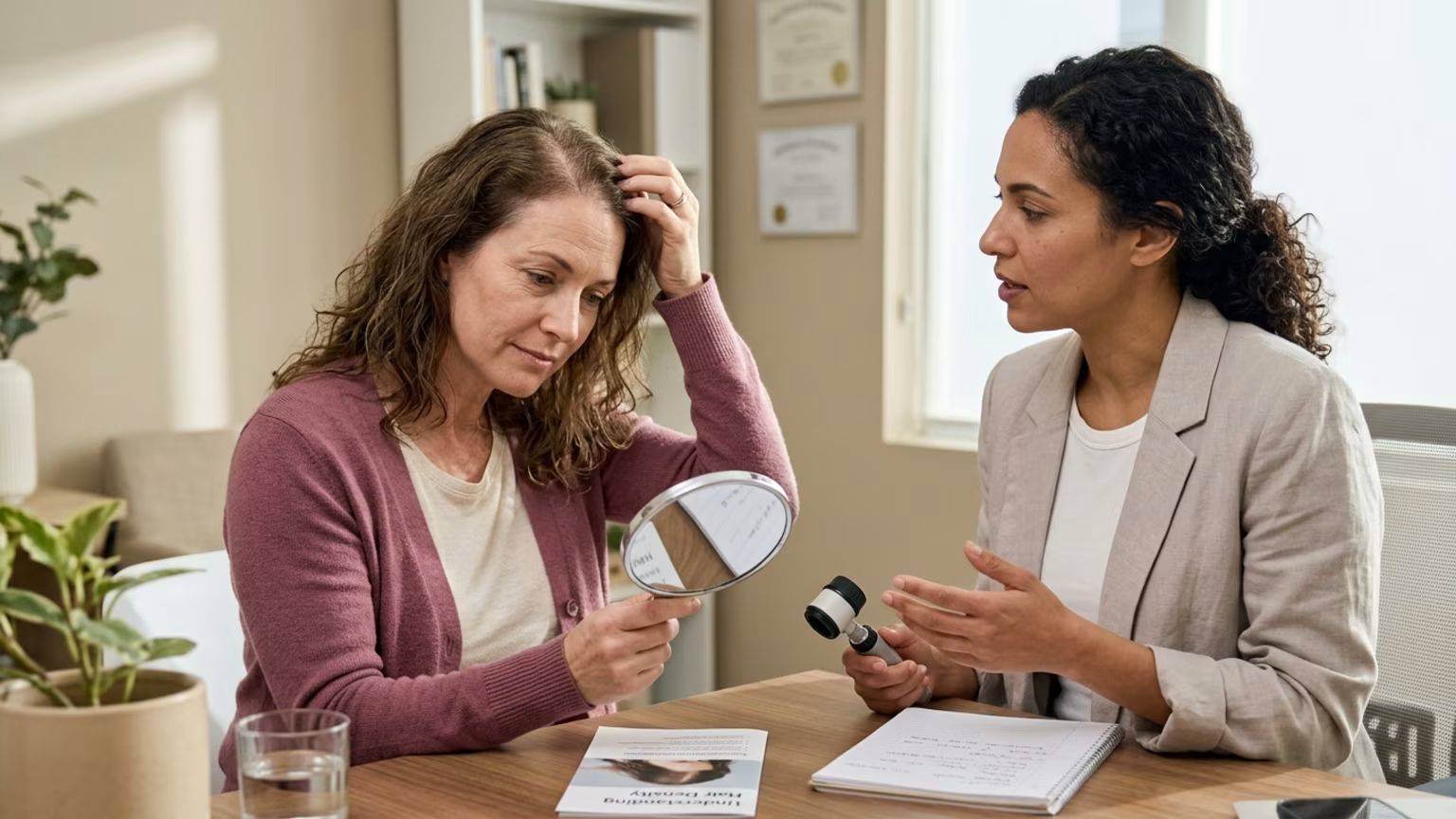

We review IMCD's Beauty Build Support menopausal supplement concept, the biological realities of midlife collagen loss, and the need for rigorous clinical proof.





In September 2026, NutraIngredients reported that IMCD presented 10 formulation concepts at a Bangkok trade show. These concepts were systematically organized around four specific pillars of women’s health. The pillars included hormonal cycle balance, inner wellness and vitality, age preservation and radiance, and cognitive wellness. This comprehensive approach reflects a growing industry interest in addressing female physiology across different life stages.
Among the showcased ideas was Beauty Build Support, an effervescent-tablet concept intended for aging women. This specific concept targets skin resilience during the critical window of perimenopause and menopause. The presentation claimed that this formulation supports antioxidant protection specifically during the menopausal transition. It also promised broad support for skin firmness, elasticity, hydration, and stronger hair and nails.
Eprina Ng, IMCD’s regional business development manager for nutraceuticals, emphasized that women’s health is a key focus. Ng noted that IMCD presented several other targeted formulations, including Cycle Ease, Meno Ease, and Keep Up Fastmelt. She also observed that beauty-from-within remains a consistently popular product category in Asia. Consumers are increasingly seeking internal nutritional interventions to address external visible changes.
To understand why companies are developing these concepts, we must look at the underlying biological reality. A 2025 narrative review on managing menopausal skin changes provides essential context for these industry developments. The review outlines how the menopausal transition brings significant structural shifts to the deep layers of the skin. These shifts include reduced collagen production, lower elasticity, and decreased overall skin hydration.
These hormonal transitions directly contribute to visible skin thinning and chronic dryness over time. Understanding how the dermal matrix changes over time helps explain why intervention is so highly sought after. Collagen acts as the primary structural framework for the skin, maintaining its thick, resilient texture. When estrogen levels fluctuate and decline, the skin’s ability to naturally maintain this supportive network diminishes.
This loss of structural integrity is what drives the market for age-preservation concepts. As the dermal layer thins, the skin's barrier function weakens, becoming more susceptible to moisture loss. This process leads to chronic dryness and a visible loss of firmness. Formulators aim to address these exact biological mechanisms through targeted nutritional support.
The 2025 review provides specific estimates regarding the timeline of these structural skin changes. It cites earlier research calculating an average skin-collagen decline of 2.1 percent per postmenopausal year over 15 years. Over a decade and a half, this continuous decline creates a noticeable long-term shift in skin thickness. It is crucial to remember that this figure is a review-level estimate, not a guaranteed individual prediction.
Women navigating estrogen and midlife skin changes will experience these shifts at their own unique pace. Genetics, baseline health, and environmental lifestyle factors all influence how rapidly the skin thins. For some, collagen loss may proceed slowly, while others may notice more accelerated changes. This individual variability underscores the need for highly specific, well-documented clinical research rather than generalized marketing claims.
The complex nature of these bodily changes means that generic solutions often fall short. A supplement cannot simply replace the systemic role that estrogen played in collagen synthesis. Instead, effective interventions must provide the right building blocks in highly bioavailable formats. This biological reality requires supplement manufacturers to prove their concepts with hard clinical data.
While the biological need for skin support is clear, evaluating new commercial concepts requires healthy skepticism. The NutraIngredients report presents IMCD's company claims without detailing a new independent clinical trial for Beauty Build Support. Furthermore, the coverage does not provide an ingredient list, specific doses, or measured clinical results. Readers must view the stated benefits as a commercial marketing concept rather than a scientifically proven outcome.
The broader landscape of menopausal skincare research also faces notable limitations and historical gaps. Ng pointed out that many past clinical studies were not conducted on women. She explained that hormonal fluctuations could influence results, leading researchers to simply exclude female participants. Ng argued that this historical omission is an area the industry urgently needs to address moving forward.
Even established medical interventions require further study to fully understand their long-term impact on skin health. The 2025 narrative review describes inconsistent findings across studies evaluating hormone therapy and skin outcomes. Some placebo-controlled studies did not find significant changes in wrinkles or skin rigidity following treatment. The review authors emphasize that future studies need more robust designs and comprehensive skin measurements.
Without clear clinical protocols and patient-reported outcomes, determining which interventions truly work remains challenging. This evidence gap highlights why consumers must distinguish between a biologically plausible idea and a proven product. A company may correctly identify a biological problem, but that does not guarantee their unverified concept provides the solution. True efficacy requires independent testing on the final product formulation.
For health-conscious women, new formulation announcements should prompt thoughtful questions rather than immediate purchases. When evaluating any beauty-from-within product, always check if the manufacturer transparently lists active ingredients. You should also demand to know the exact amounts used and whether they match tested clinical doses. The recent IMCD coverage simply does not answer these critical questions for its newly presented concept.
There is a significant difference between borrowing data for a single ingredient and testing a finished product. Many brands cite research on individual vitamins without ever conducting trials on their unique final formula. Without testing the complete formulation, the exact absorption and interaction of the ingredients remain unknown. True efficacy requires independent testing on the final product formulation to verify actual biological benefits.
Do not assume that an ingredient concept replaces formal medical evaluation for menopausal symptoms. A commercial formulation is not equivalent to hormone therapy or specialized medical care guided by a physician. Your primary focus should be establishing a consistent routine that supports your skin barrier and overall bodily health. Maintaining a well-rounded diet is a foundational step before adding specialized, high-cost supplements to your regimen.
Reviewing affordable nutrition for healthy aging offers a highly practical baseline for skin resilience. Consuming adequate protein, essential fatty acids, and micronutrients provides the raw materials your body needs for tissue repair. If you choose to use specialized supplements, understand that they take considerable time to show measurable benefits. Look for products with clear clinical backing, precise dosage instructions, and measured marketing language.
Ng noted that IMCD works with brand owners beyond formulation development to help communicate product science. As consumers, you have every right to ask for that scientific proof before investing your money. Companies must provide verifiable data rather than relying on the general popularity of the beauty-from-within category. Demanding transparency ensures that you only spend resources on interventions with documented, tangible value.
As the industry begins to acknowledge the biological realities of menopause, product concepts will likely grow more sophisticated. We are seeing a promising shift away from generalized beauty products toward phase-specific health formulations. However, true progress depends on moving past theoretical models and investing in rigorous, female-centered clinical trials. Will future product launches finally deliver the comprehensive, independent data that women need to make informed choices about their skin longevity?
Stay connected for research and practical guidance on skin, hair, collagen, nutrition and beauty longevity. Clear ideas for people who want to understand how appearance changes with age and make better-informed choices over time.




Understand your skin, hair and body better without chasing every new trend, treatment or promise.
explore the Blog