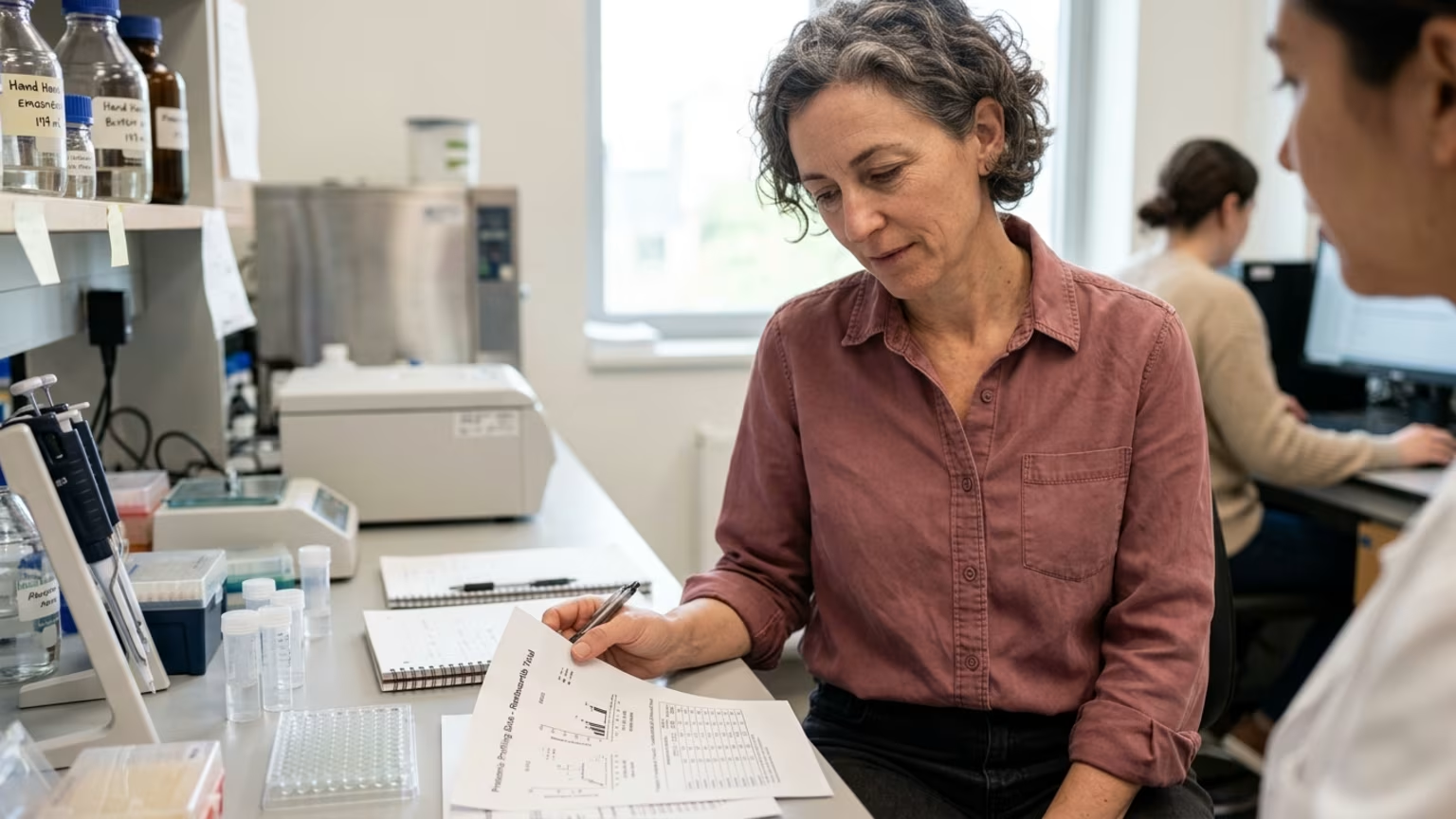

Six proteomic clocks showed a lower predicted biological age after rentosertib treatment, but cosmetic and long-term healthy aging benefits remain unproven.





In September 2026, researchers published new findings from an important Phase IIa clinical trial involving an experimental drug called rentosertib. Insilico Medicine evaluated blood samples from idiopathic pulmonary fibrosis patients using six independently developed proteomic aging clocks. The analysis revealed that all six clocks pointed toward a lower predicted biological age for rentosertib-treated participants compared to those receiving a placebo. This marks an important head-to-head comparison of multiple aging models within a drug intervention trial.
To understand this outcome, we first need to look at how proteomic aging clocks function. These advanced biomarker tools do not measure calendar age directly. Instead, they estimate biological characteristics and health risks by analyzing specific patterns in circulating blood proteins. The clocks in this study were trained using entirely different methods and objectives. Some focus primarily on chronological age prediction, while others are designed for mortality risk estimation.
Rentosertib, also known as ISM001-055, is a small molecule inhibitor of a target called TNIK. The company used its PandaOmics artificial intelligence platform to identify TNIK as a target associated with multiple hallmarks of aging. They then utilized their Chemistry42 platform to help design the actual rentosertib molecule. When researchers examined the clinical trial data, they noticed that treated profiles moved against certain age-associated protein trajectories.
To confirm these shifts, the researchers compared the trial data with age-associated patterns derived from 55,319 UK Biobank profiles. They found that placebo profiles moved more in the direction of normal aging. The study also noted reductions in specific protein signatures linked to cellular senescence among treated participants. Researchers described this effect as compatible with a senomorphic action. This means the treatment suppresses harmful signals from aging cells rather than eliminating the senescent cells entirely.
While the broader trial enrolled more patients, only 42 participants provided the longitudinal data for this specific proteomic profiling. Researchers measured 2,841 circulating proteins in these samples using an Olink proteomics panel. The analysis involved 54 treatment-versus-placebo comparisons across the six clocks and three post-baseline time points. According to the detailed report, 21 of these comparisons reached statistical significance.
The most robust cross-clock signal appeared at Week 4 in the group taking 30 milligrams twice daily. Company summaries noted approximately three to four years of predicted biological-age reduction, with one clock indicating a change of up to six years. However, a more granular report showed a narrower and more specific range. Across four chronological-age clocks, treated patients in that dosing arm were between 2.7 and 3.5 years younger than expected at Week 4.
It is also critical to observe how the signal changed over time. The biological age reduction did not continue steadily throughout the full observation period. Instead, the apparent effect plateaued by Week 12. Significant findings were concentrated heavily around the fourth week rather than appearing uniformly across the entire 12-week study duration.
Despite these interesting biomarker shifts, the results come with substantial limitations for the longevity field. The participants had idiopathic pulmonary fibrosis, and the profiled cohort had a mean age of 67.1 years. This was originally a disease-focused study rather than a trial designed to test general longevity. Changes in organ function, inflammation, and systemic illness associated with the disease could heavily influence blood protein patterns.
Michael Levitt, a Nobel Prize-winning chemist, offered a crucial caution in the official company report. He stated that the trial cannot yet separate slower aging from the effects of a treated lung. The researchers actually found that the dose with the best lung function improvement did not match the dose with the broadest aging-clock agreement. Levitt noted that a healthy-volunteer experiment would be the necessary next step.
Furthermore, predicting a lower biological age on a computer model is a surrogate measurement. It does not prove that the fundamental aging process has been altered in the whole person. The study did not establish that patients would live longer or remain healthier over time. It also did not track visible cosmetic outcomes, meaning we cannot infer any improvements in hair density or skin elasticity.
For health conscious women, this research provides an early glimpse into the future of biological testing. You cannot seek out or use rentosertib for routine longevity goals. The drug has progressed into Phase III development strictly for idiopathic pulmonary fibrosis. The evidence discussed concerns an experimental therapy for a specific condition, not an approved wellness treatment.
Instead of looking for a prescription, readers should appreciate the significant methodological advance here. Longevity science is moving away from relying on a single proprietary algorithm to measure progress. By applying six different clocks to the same clinical samples, scientists can ensure their results are robust across different models. We will likely see these advanced multi-clock testing methods applied to preventative care in the future.
Until clinical trials involve healthy populations, you should focus on established biological realities. For example, understanding how collagen changes by decade provides a more practical foundation for your daily routine. You can also review lasers and light treatments for aging skin to find evidence based ways to support your tissue health. Stick to interventions with proven tissue-specific outcomes rather than chasing early blood-protein signals.
The ability to track thousands of circulating proteins simultaneously opens a fascinating door for longevity research. Will future preventative treatments be evaluated by how they shift our internal protein clocks before we ever see changes in the mirror? As biomarker testing moves from theoretical models into real world trials, we are stepping closer to a time when our long term health choices are guided by precise cellular feedback.
Stay connected for research and practical guidance on skin, hair, collagen, nutrition and beauty longevity. Clear ideas for people who want to understand how appearance changes with age and make better-informed choices over time.



Understand your skin, hair and body better without chasing every new trend, treatment or promise.
explore the Blog