
Learn how menopause impacts skin collagen, elasticity, and hair density. Find evidence-based ways to adapt your routine for midlife biological changes.





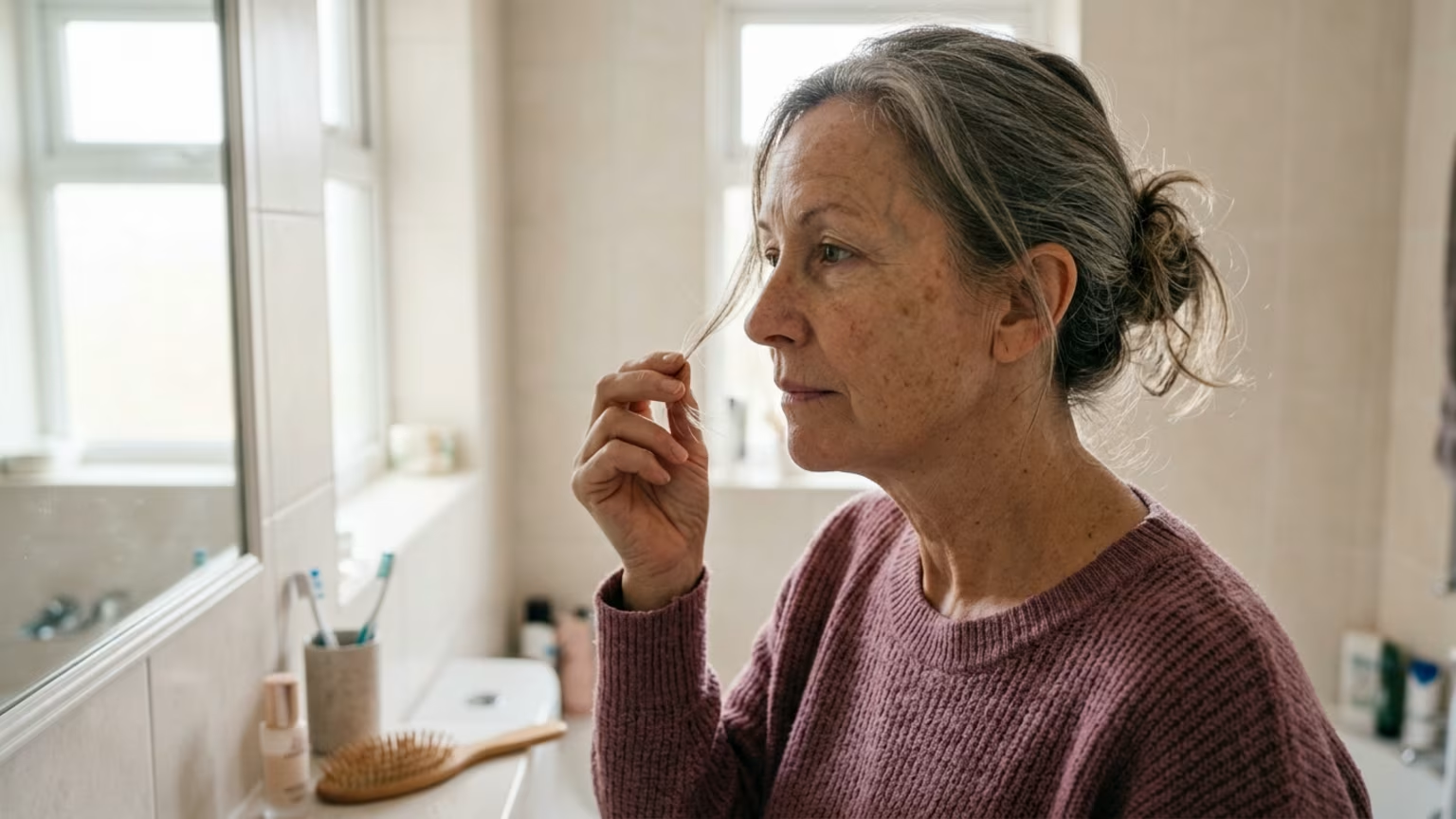
You might notice it while applying your morning moisturizer. The skin across your cheeks feels tighter and distinctly drier than it did last year. Perhaps you see a slightly wider part when styling your hair, which often aligns with menopause onset. Understanding these biological changes helps you make informed decisions about your routine.
Many women spend decades refining their habits, only to find those reliable products suddenly cause irritation. Learning exactly what happens beneath the surface during this transition provides clarity. It allows you to adjust your approach based on science rather than frustration.
We can summarize the core clinical findings about midlife dermatological changes into a few key points.
Estrogen and progesterone play supportive roles in maintaining tissue hydration and structural integrity. When ovarian hormone levels fall, the skin barrier becomes less resilient. It naturally holds less moisture and produces less oil. This shift explains why mature skin often feels highly sensitive to weather changes, fragrance, and harsh friction.
Estrogen receptors are located throughout the skin, making the tissue highly responsive to hormonal shifts. When estrogen levels are steady, they promote hyaluronic acid production. This helps the tissue maintain its plump, hydrated appearance. Without this constant hormonal signaling, the skin simply cannot retain water as efficiently as it once did.
Beneath the surface, the structural proteins that keep skin firm begin to break down faster. Reduced collagen content and increased elastic fiber degradation lead to fine lines and laxity. The skin essentially loses its internal scaffolding. Because the tissue is thinner, you might even find that you bruise more easily than before.
The hair follicle microenvironment also goes through a significant transition. Hormonal shifts change the duration of the active growth phase for individual hairs. A systematic review describes postmenopausal hair loss as multifactorial, involving systemic hormonal decline alongside local follicle changes. You might experience reductions in both the quantity of scalp hair and the diameter of individual hair shafts.
The numbers provide a clear picture of how quickly these biological changes can occur. The American Academy of Dermatology says studies indicate that women lose approximately 30% of their skin collagen during the first five years of menopause. This initial drop is followed by a slower decline of approximately 2% annually for the next 20 years.
When our team first started reviewing clinical trials on collagen supplementation, I was struck by how often the media misinterpreted the data. A study showing a minor increase in skin elasticity was suddenly headlined as an absolute reversal of time. It made me realize how desperately consumers need a translator for beauty science, someone who can say exactly what a study proves and what it does not prove.
The Danish Medical Journal review notes that elastin degradation increases during menopause. This degradation is associated with cutaneous elastosis, which is a specific form of structural elastic-fiber damage. As these structural changes occur, the American Academy of Dermatology says women may notice less hair on the scalp and more facial hair. You might see this present as a smaller ponytail or increased scalp visibility.
While the data on midlife changes is extensive, it is not entirely comprehensive. The Danish review cautions that menopausal skin changes have not been systematically investigated in all respects. Studies focusing on systemic menopausal hormone therapy and low-dose topical estrogen remain quite limited.
The evidence regarding systemic hormone therapy for cosmetic purposes is notably inconsistent. Some studies report that estrogen therapy may increase dermal collagen and improve skin thickness. Other studies do not find this same beneficial effect. Because of this contradiction, experts emphasize that hormone therapy should not be prescribed solely as a cosmetic intervention.
Furthermore, the widely cited 30% collagen figure is an estimate derived from grouped studies. It is not a guaranteed universal trajectory for every single woman. Individual genetics, cumulative ultraviolet exposure, and nutrition all influence your specific structural changes over time. Clinical guidance also notes that compounded bioidentical hormone products lack the same evidence and regulatory oversight as approved products.
Readers should also view nutritional claims with a critical eye. Available search results support broader attention to nutrition during the menopausal transition. However, they do not establish that a particular collagen powder or specific diet reliably reverses menopausal skin changes. You should avoid taking iron or biotin supplements without a documented medical indication or clinical advice.
Addressing these changes requires a conservative approach that prioritizes barrier protection over aggressive treatments. The American Academy of Dermatology recommends using a mild cleanser rather than traditional soap. Soap can strip essential oils and become excessively drying for mature skin. Switching to a richer cream or ointment generally provides more substantial moisturization than a thin lotion.
Sun protection is non-negotiable for preserving your remaining structural proteins. The American Academy of Dermatology recommends using a broad-spectrum sunscreen with SPF 30 or higher every day. Daily sun protection can help prevent further skin thinning and manage uneven pigmentation. If you decide to introduce active ingredients like retinol or peptides, you must do so cautiously.
If you notice changes in your hair density, document the pattern rather than guessing the cause. The American Academy of Dermatology lists hereditary pattern hair loss as the most common cause of hair loss. Sudden onset, patchy loss, or marked redness should prompt a medical evaluation instead of a cosmetic product trial. A clinician can individualize testing to check for thyroid disease, iron deficiency, or nutritional gaps.
If you decide to try minoxidil, it should be selected and used according to a professional's advice. This is particularly important when scalp disease, cardiovascular concerns, or medication interactions are relevant.
The Menopause Society’s 2022 position statement says the benefit-risk ratio is generally favorable for healthy symptomatic women younger than 60. This applies to patients within 10 years of menopause onset when there are no contraindications. However, this is for overall health indications and bothersome vasomotor symptoms, not as a standalone cosmetic treatment.
Hair loss has numerous potential causes, including thyroid disease, autoimmune conditions, and stress. The timing of menopause can make hormonal explanations feel obvious, but temporal association is not diagnostic proof. The American Academy of Dermatology lists hereditary pattern hair loss as the most common cause.
Compounded bioidentical products should not be described as safer merely because they are marketed as natural. Available clinical guidance clearly states they lack the same evidence and regulatory oversight as conventionally approved products.
Hormonal fluctuation and cumulative sun exposure often appear together as dark spots or uneven pigmentation. A reliable skin-care strategy needs both pigment management and strict ultraviolet protection. Treating pigmentation without daily sunscreen makes recurrence highly likely.
The American Academy of Dermatology states that minoxidil can stimulate growth and help prevent further loss. However, it cannot restore an entire head of hair. Visible improvement generally takes time, often six to 12 months, and benefits disappear if treatment stops.
The American Academy of Dermatology advises seeing a dermatologist before trying exfoliation or microdermabrasion when dryness persists. Menopausal skin that is thin or barrier-impaired may tolerate fewer aggressive procedures than it did earlier in life.
Navigating the physical shifts of menopause does not require chasing impossible standards. We encourage you to focus on healthy aging by supporting your body with gentle, consistent habits. At Younell, we believe that understanding your biology is the most reliable path to feeling comfortable and confident over time.
Stay connected for research and practical guidance on skin, hair, collagen, nutrition and beauty longevity. Clear ideas for people who want to understand how appearance changes with age and make better-informed choices over time.


Understand your skin, hair and body better without chasing every new trend, treatment or promise.
explore the Blog