Eli Lilly's Phase 3b trials show combining Taltz and Zepbound may improve psoriasis clearance and weight loss outcomes. Learn what the one-year data reveals.





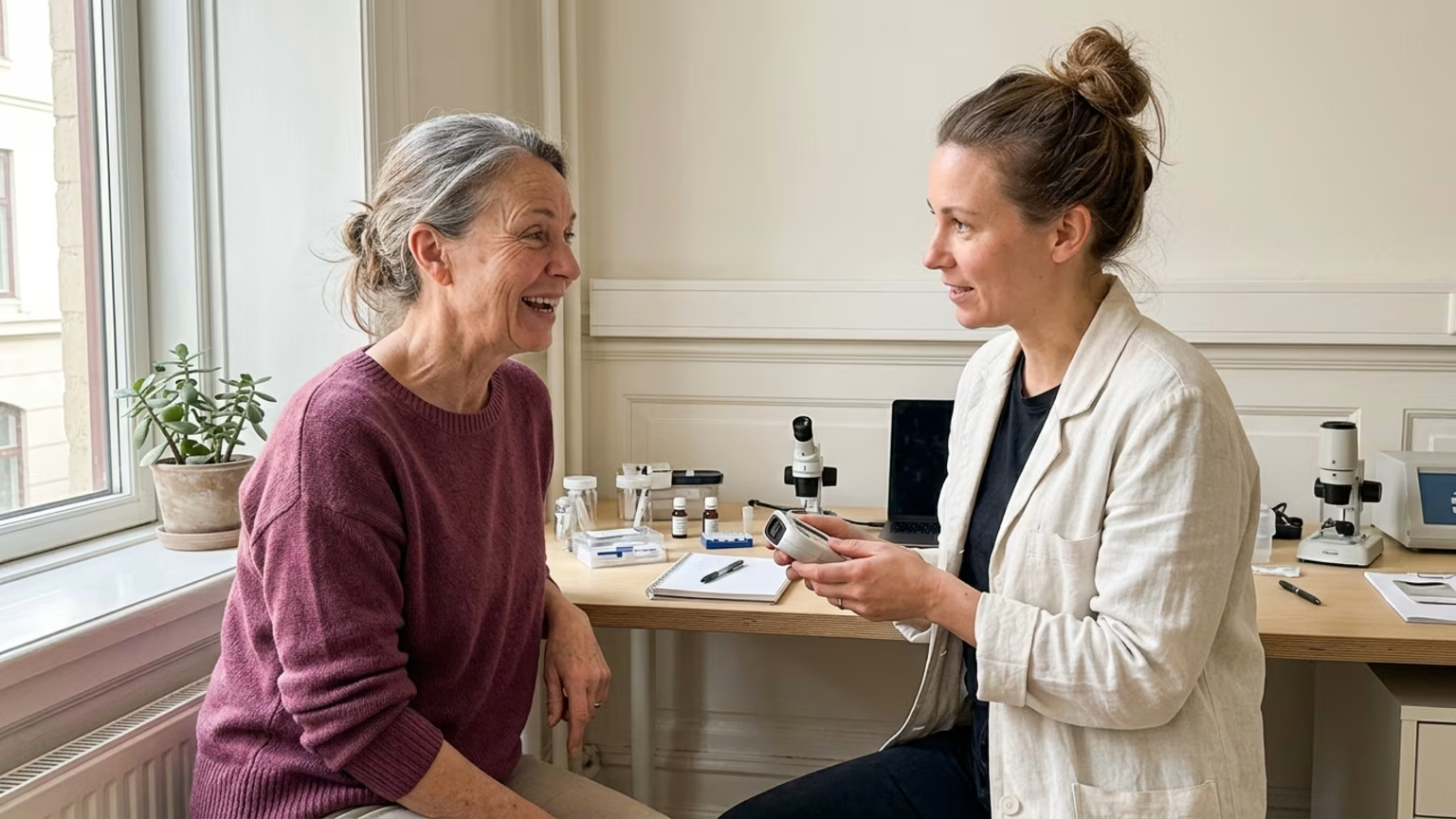
A woman sits in a clinical examination room staring at two distinct treatment plans. Her physician explains that her stubborn skin plaques and metabolic health are deeply connected. This integrated clinical approach is the focus of a recent report from Eli Lilly. The company tested the combined use of Taltz (also known as ixekizumab) and Zepbound (also known as tirzepatide) for adults managing psoriatic disease and excess weight.
In our experience, grounding these conversations in science is vital. "I remember speaking with a dermatologist who told me her patients were coming in with severe anxiety about normal skin aging. That anxiety was driven entirely by social media filters and aggressive marketing. That conversation became a cornerstone of our philosophy. We decided right then that our publication would never frame natural changes like wrinkles or thinning hair as personal failures."
Managing a chronic condition like psoriasis requires a grounded clinical perspective rather than a search for quick cosmetic fixes. We rely on beauty science research to understand how internal health influences visible skin conditions over time. Let us examine the clinical evidence regarding combined dermatologic and metabolic therapies.
To understand this integrated treatment strategy, we must look at the specific trial parameters. Eli Lilly reported 52-week results from two open-label studies known as TOGETHER-PsO and TOGETHER-PsA. TOGETHER-PsO enrolled 274 adults with moderate-to-severe plaque psoriasis and obesity, or overweight with a related comorbidity. TOGETHER-PsA enrolled 271 adults with active psoriatic arthritis who met those exact same weight criteria.
The baseline characteristics of the study populations provide important context. The mean baseline body mass index was 39.2 in the psoriasis study and 37.6 in the psoriatic arthritis study. Participants were randomized to receive either Taltz alone or Taltz together with Zepbound. Both groups also received counseling on a reduced-calorie diet and increased physical activity.
Psoriasis is often viewed strictly as a surface issue. However, psoriatic disease is heavily linked to systemic inflammation and metabolic function. When excess weight is present alongside an inflammatory skin condition, achieving clear skin becomes significantly more difficult. Adipose tissue is biologically active and can produce inflammatory markers that complicate traditional dermatology therapies.
Treating both issues concurrently may improve the likelihood of reaching multiple health goals. Taltz is an IL-17A-targeting biologic approved for active psoriatic arthritis and moderate-to-severe plaque psoriasis in eligible adults and children aged 6 years and older. Zepbound is a dual GIP and GLP-1 receptor agonist indicated for adults with obesity, or certain adults with overweight and a weight-related medical problem. Using both medications targets localized inflammation while simultaneously addressing broader metabolic factors.
This dual approach aligns with an emerging medical framework. Clinicians are increasingly recognizing that obesity is a chronic disease requiring dedicated medical intervention. The trial’s weight-loss criterion was at least 10% of body weight, and Zepbound is an approved prescription treatment used with diet and physical activity for eligible adults. Zepbound also has an FDA-approved indication for moderate-to-severe obstructive sleep apnea in adults with obesity.
The trial results distinguish between managing skin symptoms and achieving comprehensive physical improvements. In TOGETHER-PsO, the primary combined endpoint required complete skin clearance and at least 10% weight loss. At Week 52, 30.6% of people receiving Taltz plus Zepbound achieved that combined endpoint. In contrast, only 4.4% of people receiving Taltz alone reached that exact milestone.
Looking solely at skin results provides another angle on the data. Complete skin clearance alone was reported in 40.5% of the combination group and 29.1% of the Taltz-only group at Week 52. Lilly said complete skin clearance was maintained at one year.
The arthritis-focused TOGETHER-PsA trial evaluated a 50% improvement in disease activity alongside at least 10% weight loss. At Week 52, 39.2% of participants receiving Taltz plus Zepbound achieved this endpoint, compared with just 1.7% receiving Taltz alone. The ACR50 response alone was reported in 43.7% of the combination group and 15.7% of the Taltz-only group.
Lilly reported that the greater psoriatic arthritis improvements with combination treatment were visible as early as Week 4, before clinically meaningful weight loss had occurred. The company reported deeper or sustained improvements with the combination in high-sensitivity C-reactive protein, a marker of systemic inflammation. Blood pressure, glucose, and HbA1c also showed improvement during the study. Finally, the combination positively impacted triglycerides and total cholesterol.
While these statistics are compelling, we must evaluate them with scientific caution. The Week 52 analyses were pre-specified exploratory objectives without multiplicity control. Lilly also said that comparisons between time points were descriptive and were not statistically tested or controlled for multiplicity. These findings are company-reported and have not yet been published in a peer-reviewed journal.
Lilly said detailed 52-week results would be presented at future medical meetings, but the release did not identify a specific presentation date or manuscript. Until those materials are available, readers cannot independently examine the full statistical analysis. Missing-data handling, subgroup results, and detailed adverse-event tables remain unpublished. Furthermore, both clinical trials were open-label studies.
This means participants and clinicians knew which therapy was being administered throughout the 52 weeks. That transparency can influence expectations and patient behavior regarding diet and physical activity. Finally, the study population was highly specific to individuals with moderate-to-severe disease and elevated body weight. The baseline characteristics of the participants reflect significant systemic health challenges.
These results should not be generalized to people with mild psoriasis, normal weight, or isolated overweight without a qualifying condition. The public release also does not provide a sex-specific analysis. The data therefore cannot establish that the combination works differently in women aged 30 to 60 compared to the broader participant pool.
If you manage psoriasis alongside excess weight, this research highlights the value of coordinated healthcare. You should ask for integrated care that involves a dermatologist and an obesity-medicine specialist. These clinicians can help coordinate your skin, joint, and cardiovascular considerations effectively. You can use the specific endpoints from this trial to make your treatment goals more concrete.
Instead of asking for general improvements, discuss validated psoriasis measures like the possibility of durable clearance. You and your physician can also set an appropriate weight-management target based on your clinical needs. Do not assume that weight loss alone replaces dedicated psoriasis treatment. The study compared the combination of Taltz and Zepbound against Taltz alone.
It did not evaluate Zepbound alone against Taltz. The findings support studying concurrent treatment, not abandoning evidence-based dermatologic therapy. Always discuss potential side effects before beginning any new prescription regimen. You must also verify whether these specific medications align with your exact medical diagnosis.
A common assumption is that weight reduction automatically resolves all inflammatory skin issues. The reality shown in this one-year data is much more nuanced. Lilly reported that joint disease improvements were visible at Week 4, well before significant weight loss happened. This suggests that combining an evidence-based dermatologic therapy with a metabolic treatment works synergistically.
The joint-disease difference cannot automatically be explained only by later weight reduction. Although the trial does not establish the biological reason for the early separation, it challenges the idea that weight loss is the sole driver of relief. This reinforces the necessity of using targeted treatments like Taltz for the primary skin and joint conditions.
Lilly said no new safety concerns were identified through Week 52. However, adverse events reported in at least 5% of participants in the combination arms included nausea, diarrhea, and constipation. Participants also reported injection-site reactions, vomiting, dizziness, and headache.
These reports focus strictly on clearing psoriasis plaques and reducing systemic inflammation. The data does not demonstrate any improvements in collagen production, wrinkle reduction, or general cosmetic aging.
TOGETHER-PsO enrolled 274 adults with moderate-to-severe plaque psoriasis and obesity, or overweight plus at least one weight-related comorbidity. TOGETHER-PsA enrolled 271 adults with active psoriatic arthritis who met the same weight-related eligibility criteria.
Schedule a joint consultation with your dermatologist and primary care physician to discuss how metabolic health impacts your specific skin condition today.
Stay connected for research and practical guidance on skin, hair, collagen, nutrition and beauty longevity. Clear ideas for people who want to understand how appearance changes with age and make better-informed choices over time.


Understand your skin, hair and body better without chasing every new trend, treatment or promise.
explore the Blog