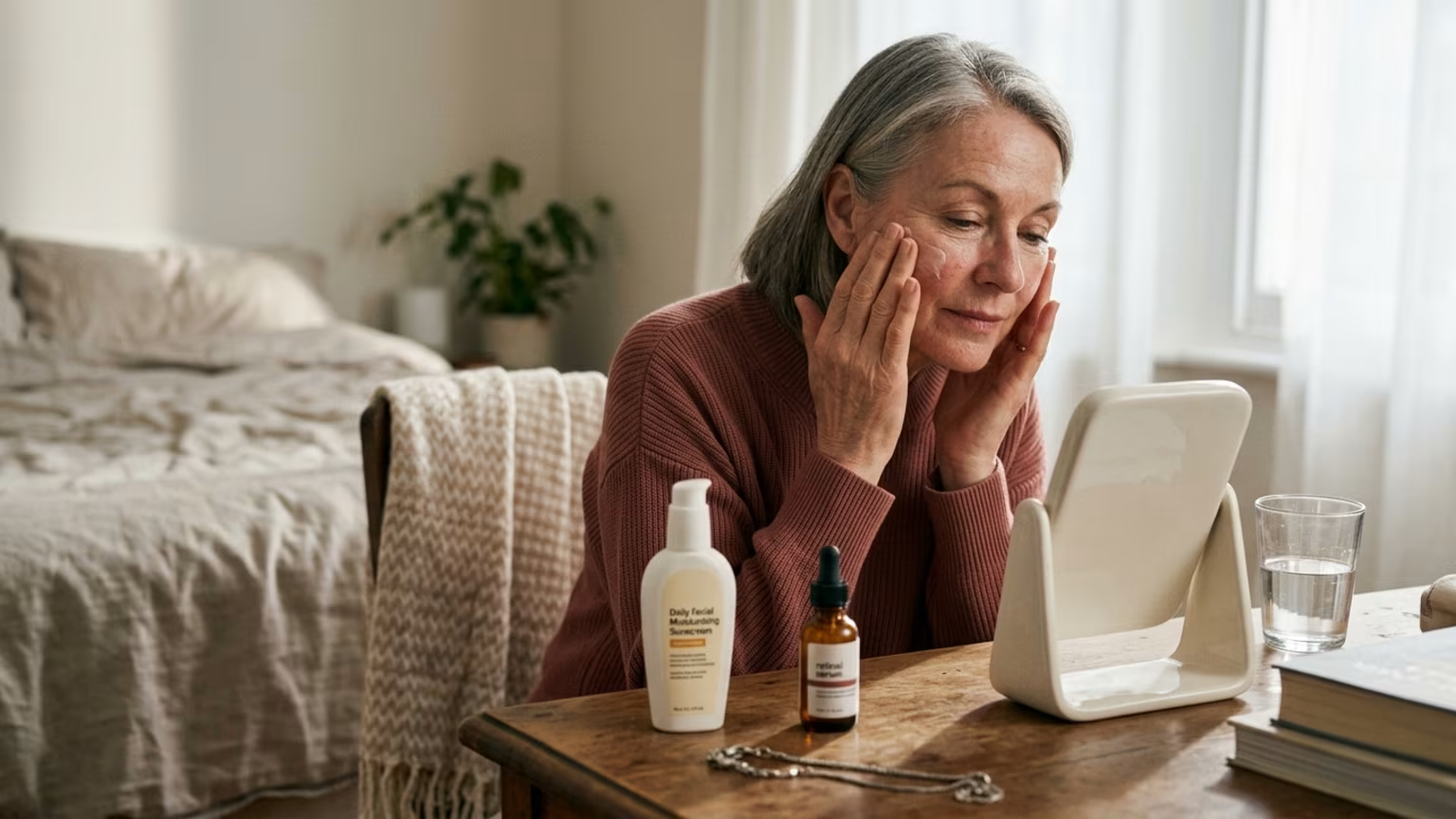

An analysis of the 60-day clinical data behind Blue Cell Elixir, examining measurable changes in skin hydration, elasticity, and study limitations.





On September 14, 2026, Personal Care Insights reported that Laboratoire launched a powdered nutricosmetic called Blue Cell Elixir. The product is supplied in two-gram sachets that are mixed with 100 milliliters of water. This new entry in the beauty longevity space is positioned as a customizable formula for external brands. It features a specific blend of peptides and carefully selected micronutrients designed to support natural skin processes.
Personal Care Insights places this launch within a period of continued growth for the overarching beauty category. This sector now includes functional foods, specialized beverages, and longevity-focused nutraceuticals. The commercial proposition of this specific formulation is aimed at both direct consumers and brands seeking customizable nutrition products. This indicates a maturing market where scientifically backed ingredients are becoming standard requirements for new launches.
The core of the formula relies on a steady 500-milligram dose of Novastyne Glow per serving. Developed by Novactiva, this ingredient is characterized as a targeted collagen-derived peptide and amino acid complex. Its primary biological function is designed to support natural skin renewal processes over time. The inclusion of vitamins and minerals creates a multifunctional approach rather than a singular nutritional focus.
Laboratoire intentionally pairs this peptide complex with complementary micronutrients for broader systemic support. Vitamin C is scientifically recognized for its role in normal collagen formation within the body. Meanwhile, minerals like zinc and vitamins like niacin and biotin are consistently associated with maintaining overall healthy skin. These specific nutrient relationships align with established nutritional frameworks and general physiological science.
To maximize the potential availability of the vitamin C, the manufacturer utilized a liposomal delivery system. The nutrient is deliberately encapsulated within phosphatidylcholine vesicles to protect it during digestion. According to Laboratoire, an early ingredient study demonstrated sustained absorption in an in-vitro intestinal model. This modeled testing suggests a more efficient pathway into the bloodstream compared to standard ascorbic acid.
Laboratoire reports that this liposomal delivery method showed roughly 30 percent greater total plasma exposure than conventional vitamin C. This was observed during an ingredient study, with higher blood concentrations noted at 10 and 24 hours. While these early tests are promising, consumers evaluating the specific mechanisms of skin peptides often want to see how these combinations perform in human trials. The company did conduct a clinical evaluation to provide that data.
The reported evaluation of Blue Cell Elixir was a randomized, double-blind, placebo-controlled trial. It included 66 participants taking the active dose daily. Researchers assessed the participants after 30 days and 60 days of continuous use. After 30 days, skin hydration was reported to be 6.5 percent higher.
By day 60, skin hydration was reported to be 9.1 percent higher. The trial also measured structural parameters across the participant group. Skin elasticity improved by 2.8 percent after two months. Furthermore, skin deformation fell by 3.8 percent during the same clinical period.
This deformation metric is directly associated with skin firmness and its ability to bounce back after physical stress. Evaluating how structural changes affect elasticity is critical for setting grounded expectations about cosmetic treatments. Beyond simple bounce, the clinical evaluation also tracked detailed wrinkle characteristics over the 60-day period. Wrinkle depth decreased by 7.9 percent, and overall wrinkle surface area dropped by 9.5 percent.
Wrinkle length and roughness also saw minor reductions of 4.4 percent and 4.1 percent respectively. These physical measurements were accompanied by highly favorable participant perception questionnaires. In these subjective surveys, 96.9 percent of users reported that their skin felt firmer and more radiant. Furthermore, 94 percent of the group felt their skin was noticeably more hydrated.
When we first started reviewing clinical trials on collagen supplementation, I was struck by how often the media misinterpreted the data. A study showing a minor measurable increase in skin elasticity was suddenly headlined as a major medical event. It made me realize how desperately consumers need a translator for beauty science. Someone needs to clarify exactly what a study proves and what it does not prove, especially when brands emphasize subjective survey numbers over clinical realities.
This contrast between feeling nearly 97 percent firmer and measuring 2.8 percent more elastic is a vital distinction. A 2026 review summarized by Dermatology Times adds crucial perspective to these specific product claims. The broader medical review found that oral collagen peptide supplementation is consistently associated with improvements in both hydration and elasticity. It also noted positive shifts in general barrier-related measurements.
However, that same review did not find robust evidence for significant wrinkle reduction once researchers accounted for study heterogeneity and influential outliers. This wider scientific consensus suggests that surface hydration and structural bounce are the most reliable outcomes of oral supplementation. Therefore, readers evaluating the clinical evidence behind collagen supplements should view wrinkle reduction claims as a preliminary benefit rather than a guarantee. Blue Cell Elixir shows promising results in its trial, but it does not prove that all beauty drinks will visibly reduce established wrinkles.
Aurélie De Schuyteneer, a marketing and communications manager for Laboratoire, emphasized the company’s priority for documented active ingredients and suitable dosages. Despite this commitment to clinical evaluation, Personal Care Insights noted that the publicly available report omits several critical data points. The analysis does not publish statistical p-values, confidence intervals, or precise effect sizes. It also fails to provide the baseline values needed to interpret the relative percentage changes.
Without separate treatment versus placebo data, independent experts assessing whether oral formulas deliver measurable outcomes cannot accurately calculate the true product advantage. Furthermore, the article does not identify the demographics, ages, or skin types of the 66 trial participants. We do not know the dropout rate, the exact measurement instruments used, or the inclusion criteria. The report also does not clarify if this specific study has been peer-reviewed or published in a recognized scientific journal.
Safety transparency presents another distinct limitation for health-conscious consumers evaluating this formula. The product contains liposomal vitamin C, zinc, niacin, and biotin alongside retinol. The exact concentration of retinol per serving is omitted from the available report. People taking isotretinoin should avoid vitamin-A supplements unless specifically advised by a clinician, as medical labeling warns against this concomitant use.
Health-conscious women aged 30 to 60 can use this exact evaluation framework to make informed purchasing choices. When shopping for oral nutricosmetics, prioritize brands that base their claims on randomized, double-blind, placebo-controlled human trials. Treat any published percentage improvements as preliminary indicators unless the brand also provides absolute baseline values and clinically meaningful thresholds. Always distinguish between objective clinical measurements, like hydration scores, and subjective questionnaire responses.
A 60-day testing window provides a useful benchmark for evaluating short-term changes in skin moisture and bounce. It does not, however, establish long-term maintenance or confirm continued benefits if you stop daily supplementation. Focus your routine expectations on hydration and elasticity, as these endpoints have the strongest backing in current independent literature. If a brand promises profound structural remodeling, ask if they can provide their complete, placebo-adjusted clinical data.
Finally, always review the complete nutritional label for active vitamins and minerals. Because the precise amount of retinol is not detailed in the initial report, consumers must check the packaging carefully. Anyone who is pregnant, trying to conceive, or taking specialized dermatological medications must discuss vitamin-A supplements with a healthcare professional. Responsible longevity routines rely on safe, measured supplementation rather than chasing every new ingredient trend.
As the nutricosmetic industry formulates increasingly complex blends of peptides and targeted vitamins, clinical accountability will become even more vital. Will future beauty supplement brands routinely publish their complete clinical reports for independent review, or will the market continue to rely on carefully curated percentages to drive consumer sales?
Stay connected for research and practical guidance on skin, hair, collagen, nutrition and beauty longevity. Clear ideas for people who want to understand how appearance changes with age and make better-informed choices over time.




Understand your skin, hair and body better without chasing every new trend, treatment or promise.
explore the Blog