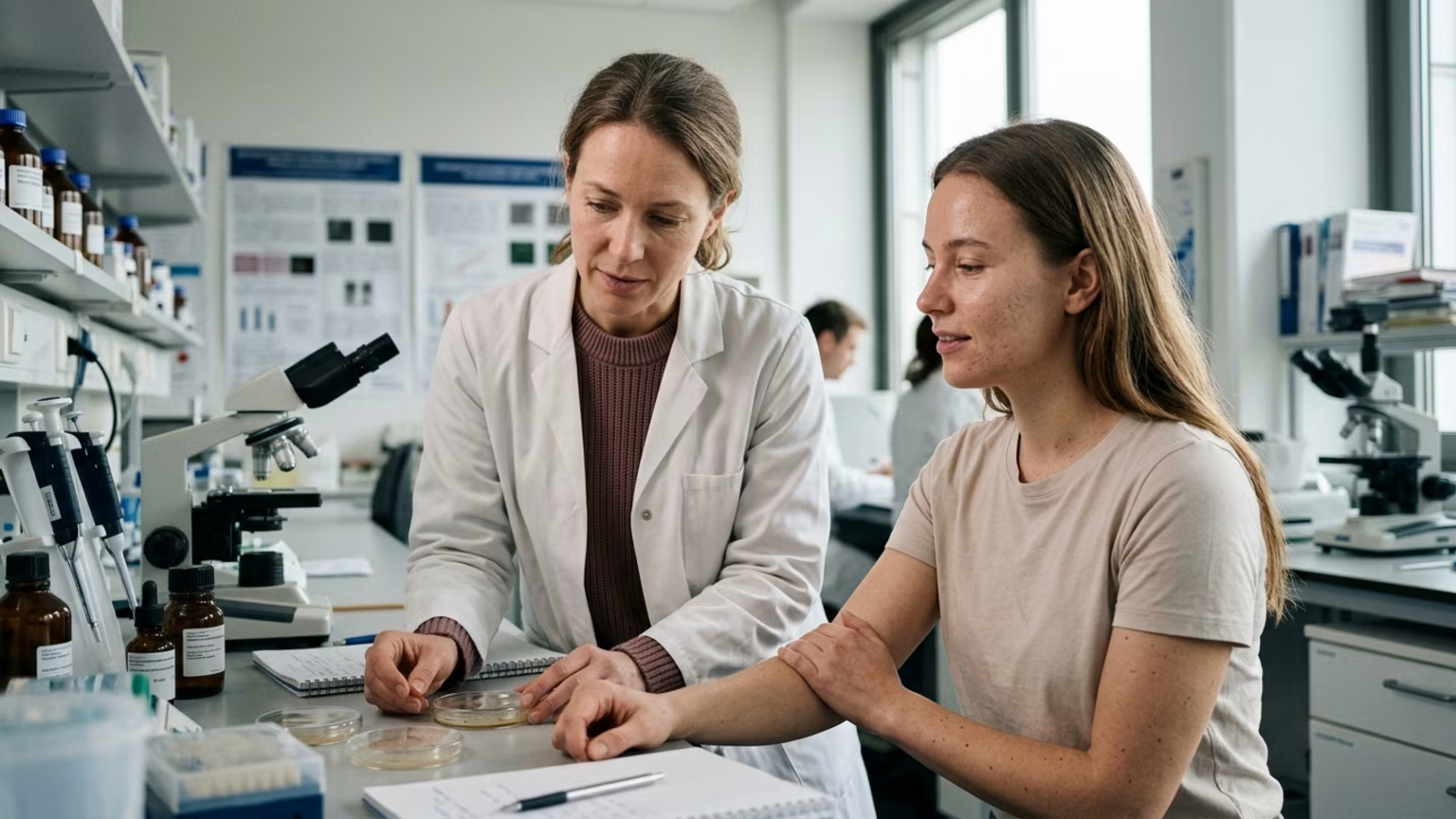

Explore how Beiersdorf's new microbiome-focused formulation aims to support skin barrier health, and what the latest clinical research means for your routine.





Skincare has spent decades trying to destroy bacteria, but clinical research now aims to keep it alive. Beiersdorf recently introduced a new formulation approach for its Eucerin brand that uses dormant bacterial strains. This marks a significant shift from indiscriminately clearing the skin to selectively managing its microbial ecosystem.
Beiersdorf announced on September 1, 2026, that its Eucerin brand is introducing a new product approach. The DERMOPURE CLINICAL PROBIOM8 routine is designed specifically for acne-prone skin. It utilizes a patented active ingredient called TopiC.A™, which contains two viable, skin-native bacterial strains. These selected strains are kept in a dormant state until applied.
The development of TopiC.A™ represents a significant technical challenge in cosmetic chemistry. Maintaining live microorganisms in a dormant state requires precise formulation and specialized packaging. The bacteria must remain stable on the shelf and activate only when applied to the skin. This logistical complexity is why true microbiome formulations take years to develop.
Beiersdorf cites more than 20 years of research behind this specific development. The company notes its skin microbiome research stretches back to the 1990s. They began developing prebiotic and probiotic approaches in 2005. Since 2014, the brand has conducted over 120 proprietary microbiome studies.
Research capabilities were also explicitly expanded through corporate strategy. Beiersdorf points to its 2022 acquisition of S-Biomedic as a key milestone. S-Biomedic operates as a life-science company focused entirely on skin microbiome technology.
The human skin relies on a complex ecosystem of microorganisms to function properly. A 2026 review found that microbiota-derived metabolites influence several critical biological processes. These processes include keratinocyte differentiation, lipid metabolism, and epithelial integrity. The metabolites also play an important role in inflammatory signaling and microbial homeostasis.
The skin barrier acts as the body's primary defense against environmental stressors and moisture loss. When the microbiome becomes imbalanced, this physical barrier often becomes compromised and reactive. A weakened barrier struggles to retain hydration, leading to increased sensitivity and visible texture issues. By supporting native bacterial strains, formulations attempt to indirectly strengthen this vital protective layer.
Instead of clearing all bacteria, modern formulations aim to support these natural biological systems. Beiersdorf states its new product is intended to encourage microbial balance. The dormant strains in the formulation are activated as part of the daily skincare routine. This provides a gentler alternative to broadly targeting all microorganisms on the skin surface.
The commercial interest in barrier-conscious formulations is growing at a notable pace. According to Beiersdorf, the global market for acne-prone skincare reached €4.6 billion in retail sales in 2025. The company cited Euromonitor data showing approximately 8.8% growth in this category between 2020 and 2025. This aligns with a broader consumer shift toward gentle dermatological care.
The €4.6 billion market valuation highlights a significant shift in consumer spending habits. Health-conscious individuals are moving away from aggressive, drying treatments in favor of supportive care. The 8.8% growth rate between 2020 and 2025 underscores this sustained momentum. Consumers are increasingly willing to invest in science-backed routines that prioritize long-term skin health.
The prevalence of these skin concerns highlights the need for effective management. Beiersdorf noted that approximately one in five people worldwide are affected by acne-prone skin. Citing a 2024 study, they reported a prevalence of 28.3% among people aged 16 to 24. The same study noted a 19.3% prevalence among adults aged 25 to 39.
The commercial opportunity for dermatological skincare remains substantial for established brands. Beiersdorf reported 7.8% organic sales growth for its Derma division in the first half of 2026. The division saw second-quarter organic growth of 7.4%. Derma generated €837 million in sales during the first half of 2026 against €4.952 billion in total group sales.
Mechanistically, a 2026 review concluded that microbiome-targeted therapies currently have strong preclinical support. However, the review noted that large-scale clinical validation remains heterogeneous. This means the theory is biologically sound, but standardized human results are still evolving.
Consumers should evaluate new formulation technologies with a measured and realistic perspective. Most of the specific information regarding TopiC.A™ comes directly from Beiersdorf. The company has not publicly released the full protocols or sample sizes for its 120 proprietary studies. Without independent verification, these results should be viewed as internal data rather than standardized clinical conclusions.
Furthermore, the 2026 review emphasized that clinical outcomes can vary widely between individuals. Results depend heavily on the specific probiotic strain, study design, and measurement methods used. A balanced skin microbiome is not a single, universal state that applies identically to everyone. Factors like age, environment, and medication exposure constantly shift an individual's microbial baseline.
The use of viable probiotics also raises practical questions regarding product stability and shelf life. A consumer has limited ways to independently verify that the strains remain active throughout the product's lifespan. Beiersdorf states that the strains are dormant and activated upon use, but technical specifics remain proprietary. Outcomes depend heavily on this delivery system functioning exactly as designed during daily application.
Acne itself is a multifactorial condition that often requires comprehensive medical management. A topical cosmetic product does not replace established medical care for persistent symptoms. Additionally, the presence of a probiotic ingredient does not inherently prove long-term benefits across all users. The research supports microbial balance as a concept, but real-world formulation efficacy varies.
Readers interested in healthy skin longevity can apply this science carefully. Treat a microbiome claim as a formulation philosophy rather than a promised outcome. Introduce only one new product at a time to accurately monitor your skin's response. This makes it easier to identify whether a formula is helpful or irritating.
When introducing a microbiome-focused product, consistency is far more important than intensity. Give your skin several weeks to adapt to the new biological inputs before judging the results. Avoid the temptation to constantly switch products, which can confuse the skin's microbial environment. A steady, gentle approach yields better data on how your unique skin responds.
It is important to maintain basic barrier care alongside any targeted treatments. Gentle cleansing and daily photoprotection remain foundational habits for structural resilience. Be cautious when combining new biological formulations with strong active ingredients. Heavy use of exfoliating acids or peroxide can disrupt the balance you are trying to support.
Always prioritize consistent skin health research when adjusting your daily regimen. Seek dermatological advice for significant acne, persistent redness, or suspected allergies. A cosmetic microbiome product may fit nicely into a skincare routine, but it is not a medical treatment. Clear expectations will help you build a routine that actually supports long-term resilience.
A common assumption is that all bacteria lead to breakouts and visible irritation. Historically, skincare routines prioritized astringents and broad antibacterial agents to create a completely clean surface. The reality is that specific microbial strains are necessary for epidermal homeostasis and structural integrity. Removing them indiscriminately can impair the skin barrier and trigger further unwanted inflammation.
Can topical probiotics deliver the same clinical results as oral dietary supplements? The 2026 review explicitly notes that evidence regarding systemic and oral probiotic interventions is highly heterogeneous. Findings from oral research cannot be automatically applied to topical cosmetic formulations like PROBIOM8. Topical and oral delivery systems interact with completely different biological pathways.
Does this new technology effectively treat general sensitive skin conditions like rosacea or eczema? Beiersdorf announced this specific product for acne-prone skin, not as a universal sensitive-skin treatment. While the underlying theory is relevant to barrier health, the specific formulation is targeted. Those interested in understanding beauty science should always align product selection with their specific needs.
Skincare has spent decades trying to destroy bacteria, but clinical research now aims to keep it alive. As the beauty industry shifts from harsh removal to careful cultivation, consumers gain significantly gentler options. Supporting the skin's natural biological ecosystem provides a measured, realistic path forward. This approach helps build lasting resilience instead of chasing temporary, aggressive fixes.
Stay connected for research and practical guidance on skin, hair, collagen, nutrition and beauty longevity. Clear ideas for people who want to understand how appearance changes with age and make better-informed choices over time.




Understand your skin, hair and body better without chasing every new trend, treatment or promise.
explore the Blog