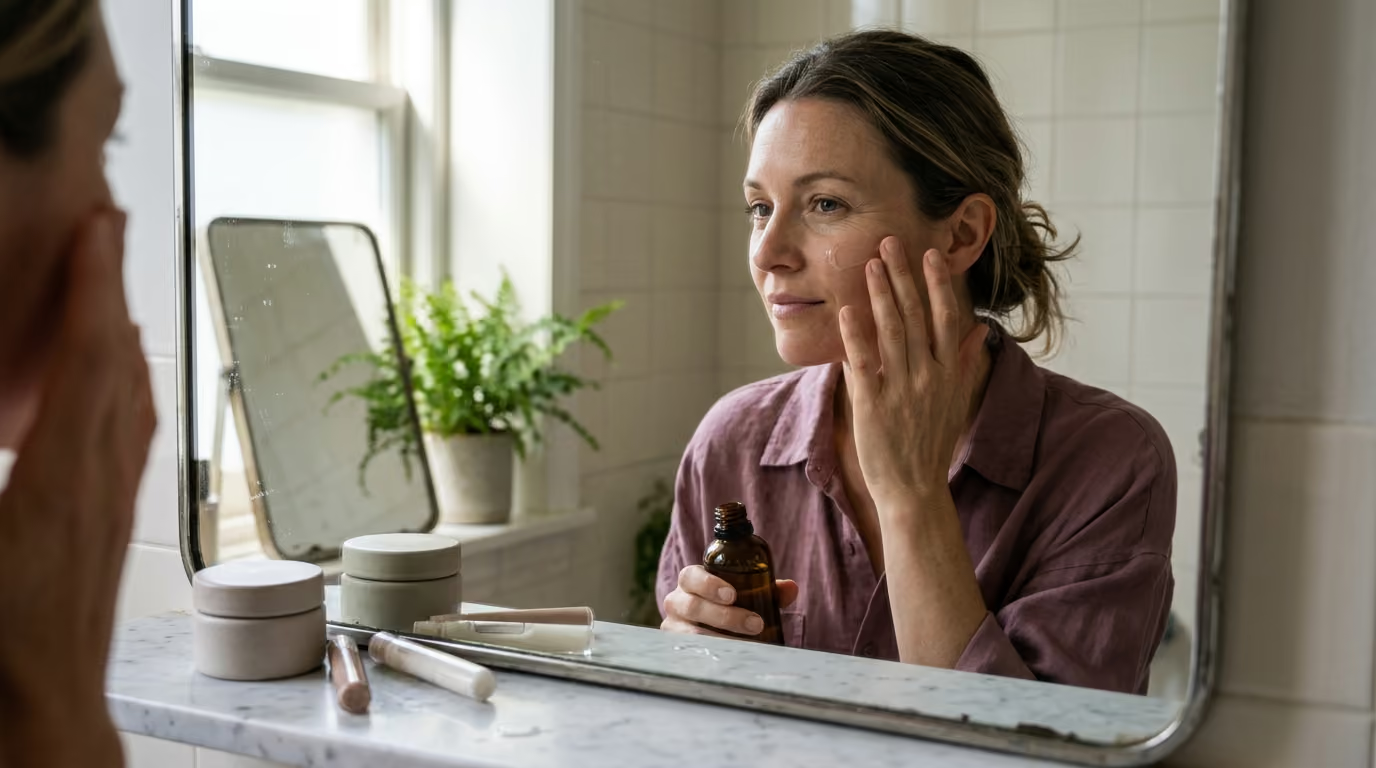

Topical collagen delivers surface hydration and improves moisture retention, though large molecular sizes prevent penetration into the deeper dermal layers.





If you have ever searched whether topical collagen actually works, you have likely found contradictory claims. Cosmetic advertisements often suggest that applying collagen can directly replenish structural proteins in mature skin. At the same time, many dermatologists state that collagen molecules are far too large to penetrate the skin barrier.
The reality sits between these two extremes. Topical collagen is an effective surface moisturizer and film-forming agent, but it cannot pass through the skin barrier to rebuild dermal scaffolding.
Understanding what topical collagen can and cannot do allows you to make informed decisions about your routine. This comprehensive guide examines the molecular biology of collagen, reviews the published clinical data, and outlines practical strategies for supporting collagen and structural aging over time.
The scientific consensus regarding topical collagen rests on clear physical and biochemical principles:
To understand why topical collagen behaves the way it does, one must examine the architecture of human skin. The skin consists of two primary functional layers: the outer epidermis and the underlying dermis. Each layer serves a distinct biological purpose and presents unique physical characteristics.
Collagen is the primary structural protein found in the extracellular matrix of human skin. It accounts for roughly 75 to 80 percent of the dry weight of the dermis. Type I collagen constitutes approximately 80 to 85 percent of dermal collagen, while Type III collagen makes up roughly 10 to 15 percent.
These proteins form an interwoven structural matrix that gives skin its tensile strength, mechanical resistance, and physical firmness. In healthy tissue, fibroblasts synthesize procollagen molecules inside the cell. These precursor molecules undergo enzymatic modification, including the hydroxylation of proline and lysine residues, before being secreted into the extracellular space. Once outside the cell, they assemble into dense, insoluble fibrils that crosslink to form stable structural fibers.
As skin ages chronologically and experiences ultraviolet radiation exposure, fibroblast activity declines. Concurrently, enzymes called matrix metalloproteinases (MMPs) break down existing collagen fibers. This imbalance leads to a gradual thinning of the dermal layer, decreased structural support, and the eventual development of wrinkles and laxity.
The outermost layer of the epidermis is the stratum corneum. It functions as the primary physical shield protecting the body from environmental insults, pathogens, and water loss. Dermatologists frequently describe the stratum corneum using a "brick and mortar" model.
In this model, dead, keratin-filled cells called corneocytes act as the bricks. Surrounding these cells is an intercellular lipid matrix composed of ceramides, cholesterol, and free fatty acids, which acts as the mortar. This tightly packed, hydrophobic arrangement creates a formidable barrier against external substances.
For an applied molecule to move passively through the stratum corneum into the viable epidermis and dermis, it must navigate this dense lipid matrix. The physical constraints of this pathway severely restrict the size and chemical nature of compounds that can pass through unassisted.
In transdermal pharmacology, the 500 Dalton rule serves as an established benchmark for passive absorption. Research published by Dr. Jan Bos and Dr. Marcus Meinardi demonstrated that almost all molecules capable of passively diffusing through intact human skin have a molecular weight under 500 Daltons (Da).
A Dalton is a standard unit of molecular mass. For context, water has a molecular weight of 18 Da. Simple active ingredients like glycolic acid (76 Da), niacinamide (122 Da), and ascorbic acid (176 Da) easily fall below this 500 Da threshold.
Intact, native collagen possesses a molecular weight of approximately 300,000 Da (300 kDa). It is a massive, rigid triple-helix protein roughly 600 times larger than the theoretical limit for passive barrier penetration. Because of this extreme size, intact collagen applied in a cream or serum remains entirely on the surface of the stratum corneum. It cannot pass into the living epidermal layers, nor can it reach the dermis to integrate into existing structural tissue.
Because intact collagen cannot penetrate the skin barrier, cosmetic chemists use processing methods to modify the protein. When reading skincare ingredient labels, you will encounter several distinct forms of collagen, each with different chemical properties and biological behaviors.
Intact collagen, often listed on labels as "soluble collagen," refers to whole protein chains derived from animal or marine sources. Soluble collagen has been extracted under gentle acidic or enzymatic conditions that preserve the triple-helix structure.
Because its molecular weight remains around 300 kDa, soluble collagen functions exclusively as a macromolecular film-forming agent. When applied to the skin, it forms a light, breathable, hydrophilic coating over the stratum corneum. This surface film slows trans-epidermal water loss (TEWL) and binds atmospheric moisture to the surface.
Soluble collagen provides noticeable cosmetic benefits, including improved surface softness, reduced tactile roughness, and a temporary plumping of dry surface cells. However, it does not alter dermal architecture. It functions as an exceptional moisturizer rather than a structural treatment.
Hydrolyzed collagen is produced by subjecting native collagen to thermal, chemical, or enzymatic breakdown. This hydrolysis process cleaves the long peptide bonds of the triple helix, breaking the large protein into shorter amino acid chains known as collagen peptides or hydrolysates.
The molecular weight of hydrolyzed collagen varies widely depending on the degree of processing. Most commercial cosmetic hydrolysates feature molecular weights ranging between 3,000 Da and 15,000 Da (3 to 15 kDa). While this is substantially smaller than intact collagen, it is still well above the 500 Da benchmark for passive transdermal passage.
Some experimental formulations use advanced enzymatic cleavage to isolate smaller peptide fractions, such as tripeptides with molecular weights between 300 and 600 Da. These specific low-molecular-weight fractions have a higher likelihood of interacting with the upper layers of the epidermis.
Laboratory investigations using Franz diffusion cells provide clear insights into how collagen fragments behave on human skin samples. In a Franz cell experiment, a skin membrane separates a donor chamber containing the formulation from a receptor chamber that mimics internal bodily fluids.
Published reviews examining collagen hydrolysates indicate that penetration is strictly dependent on molecular mass. One cited investigation evaluated hydrolyzed collagen fractions ranging from 5 to 13 kDa and found that only approximately 8 percent of the applied material crossed into the upper stratum corneum under standard conditions.
Diffusion-cell studies testing targeted fractions identified that peptides between 3.5 and 4.5 kDa showed better penetration into the outer epidermal layers during the first four hours of application compared to larger fragments. However, detecting peptide fragments in the stratum corneum of a laboratory sample is not equivalent to delivering functional building blocks into living human dermis.
Beyond molecular weight, transdermal absorption depends heavily on the chemical properties of the ingredient:
Because collagen peptides are polar, hydrophilic chains with multiple hydrogen-bonding sites, their transdermal permeability remains intrinsically low even when their molecular weight is reduced.
Clinical literature on topical collagen presents a nuanced picture. When analyzing published trials, one must differentiate between cosmetic surface improvements and genuine biological remodeling of the dermal matrix.
Multiple clinical trials confirm that topical collagen products produce measurable improvements in superficial skin parameters. In an evaluation of a topical micronized collagen cream, researchers measured significant increases in skin hydration, firmness, and surface elasticity over several weeks. Profilometry analysis showed visible reductions in the depth of fine surface lines and dehydration wrinkles.
These outcomes are statistically significant and cosmetically meaningful. However, the mechanism driving them is surface hydration rather than dermal protein replacement. When the stratum corneum absorbs water, individual corneocytes swell. This cellular swelling expands the epidermal surface, smoothing out minor surface irregularities and causing fine lines to look less pronounced.
This plumping effect is functionally identical to the action of other high-performance humectants, such as glycerin or high-molecular-weight hyaluronic acid. The presence of an observed clinical smoothing effect does not prove that applied collagen incorporated into the dermal matrix.
A prospective clinical trial evaluated the topical application of a collagen tripeptide preparation in 22 Asian women presenting with noticeable periorbital and glabellar wrinkles. Participants applied the formulation twice daily over a four-week trial period.
The investigators reported statistically significant improvements across several objective endpoints:
The researchers observed no adverse events, allergic reactions, or contact dermatitis during the trial, confirming the safety profile of the topical peptide preparation.
While these results are promising, interpreting them requires scientific context. The study utilized a single-arm design without a vehicle control group. As a result, it is difficult to determine whether the positive outcomes stemmed from the specific collagen tripeptides or from the hydrating vehicle base in which they were delivered.
To definitively claim that an ingredient rebuilds dermal structure, clinical studies must provide histologic or biochemical evidence from skin biopsies. Valid markers of structural remodeling include:
While ingredients like topical tretinoin and stabilized L-ascorbic acid consistently demonstrate these histologic changes in controlled human biopsies, topical collagen creams lack comparable biopsy evidence showing new dermal fiber assembly.
The measurable benefits of topical collagen remain localized to stratum corneum hydration, barrier conditioning, and superficial optical smoothing. Exploring the broader field of beauty science reveals how distinct these cosmetic surface effects are from deep cellular signaling.
When evaluating research on topical collagen, readers should maintain a critical perspective regarding study design, methodology, and commercial funding. Skincare studies often face methodological limitations that can exaggerate real-world performance.
A primary limitation of the published literature is small participant cohorts. Studies evaluating topical collagen frequently involve between 15 and 30 participants. Small cohorts carry a higher risk of statistical error and make it difficult to generalize findings to a wider population.
Additionally, many trials run for relatively short periods, typically two to four weeks. While four weeks is adequate to measure stratum corneum hydration and temporary barrier improvements, true biological remodeling of dermal collagen requires months. Fibroblast synthesis, procollagen secretion, and extracellular crosslinking operate on extended biological timelines. Short-term studies capture surface hydration changes rather than permanent structural changes.
A significant number of topical collagen trials use open-label, single-arm designs where all participants receive the active product. Without an identical control group using the cream base without collagen, researchers cannot isolate the active ingredient's specific effect.
Standard cosmetic vehicles contain emollients, fatty alcohols, glycerin, and occlusive lipids. These base ingredients restore barrier function, reduce water loss, and plump the epidermis on their own. In many instances, the clinical improvements attributed to collagen are largely driven by the moisturizing properties of the vehicle itself.
Demographic limitations also restrict the generalizability of current findings. For instance, the four-week collagen tripeptide study was conducted exclusively on a small group of Asian women. Skin thickness, barrier lipid composition, and susceptibility to photoaging vary across different skin phototypes, ages, and environmental conditions. Findings from a specific demographic cannot be assumed to apply uniformly to all skin types.
In our work analyzing environmental aging and skin recovery, our team tested how various lifestyle factors impact skin barrier recovery. It was fascinating to see the data clearly show that simple habits like sleep and basic hydration often outperform the most expensive topical treatments. In our experience, this reinforced our commitment to emphasizing foundational health over product hype.
Transparent scientific reporting requires acknowledging these gaps. Topical collagen provides safe, reliable moisturization, but the available data does not support claims of dermal structural replacement.
Because applied collagen cannot pass through the skin barrier to rebuild the extracellular matrix, supporting skin firmness requires ingredients that work through alternative biological pathways. Rather than attempting to supply pre-formed collagen from the outside, effective strategies stimulate the skin's fibroblasts or protect existing collagen from environmental degradation.
Topical retinoids, including prescription tretinoin (all-trans retinoic acid) and over-the-counter retinol, represent the most thoroughly researched class of topical ingredients for collagen support. Retinoids operate through gene transcription rather than surface moisturization.
When applied to the skin, retinoic acid binds to specific nuclear receptors known as Retinoic Acid Receptors (RAR) and Retinoid X Receptors (RXR). This binding triggers transcription events within keratinocytes and dermal fibroblasts:
Biopsy studies confirm that consistent tretinoin use leads to new collagen formation in the upper dermis within 3 to 6 months. Retinoids can cause initial dryness, peeling, and mild irritation, requiring gradual introduction and proper barrier support. Their mechanism of action fundamentally differs from topical collagen: they instruct living cells to synthesize fresh structural proteins internally.
L-ascorbic acid (pure vitamin C) is an indispensable biological cofactor in collagen synthesis. Without adequate ascorbic acid, fibroblasts cannot build stable collagen fibers.
Vitamin C operates through several precise biochemical mechanisms:
In a double-blind, half-face clinical trial, researchers evaluated the effects of a stabilized topical vitamin C formulation over 12 weeks. Post-treatment skin biopsies revealed significant increases in mRNA expression for Type I collagen, along with newly formed collagen fibers visible within the Grenz zone.
To achieve these biological effects, vitamin C must be carefully formulated. Pure L-ascorbic acid requires an acidic pH below 3.5 to penetrate the stratum corneum effectively, and it must be protected from oxidation through airtight, light-blocking packaging.
While retinoids and vitamin C stimulate new collagen synthesis, daily photoprotection preserves the collagen you already have. Solar ultraviolet radiation is the single largest contributor to extrinsic collagen degradation.
UVB radiation damages cellular DNA directly, while UVA radiation penetrates deep into the dermis, generating reactive oxygen species. These free radicals activate the AP-1 pathway, which upregulates MMP-1 (collagenase), MMP-3 (stromelysin), and MMP-9 (gelatinase). These enzymes cleave intact collagen fibrils, fragmenting the structural matrix.
The preventative power of daily sunscreen was demonstrated in a landmark randomized trial conducted over 4.5 years in Nambour, Australia, involving 903 adults. Participants assigned to daily broad-spectrum sunscreen use showed no detectable increase in skin aging over the trial period. Independent microtopography grading revealed that skin aging progression was 24 percent lower in the daily sunscreen group compared to the discretionary-use control group.
In another one-year clinical study, daily broad-spectrum sunscreen use without other active interventions led to visible improvements in existing photoaging markers. By week 52, participants demonstrated a 40 to 52 percent improvement in skin texture, clarity, and mottled pigmentation, showing that shielding the dermis from continuous UV damage allows natural repair mechanisms to function efficiently.
Preserving structural health through daily photoprotection is a core principle of modern skin longevity and healthy aging.
The marketing surrounding collagen skincare often blurs the line between cosmetic hydration and cellular biology. Addressing common misconceptions helps clarify what these products actually achieve.
Reality: Intact collagen cannot cross the stratum corneum because of its 300 kDa molecular weight. Even when broken into smaller peptides, topically applied fragments do not migrate into the dermis to physically assemble into structural fibers. Dermal collagen must be synthesized internally by living fibroblasts. Topical collagen remains on the surface, functioning as a high-performance moisturizer.
Reality: The percentage of collagen listed on a product label indicates its potential for surface water retention, not its ability to remodel deeper tissue. A formula containing 10 percent collagen simply creates a thicker surface film. If that formula lacks effective humectants, barrier-repair lipids, or sun protection, it will not support long-term skin health.
Reality: The term peptide simply describes a short chain of amino acids. Peptides vary widely in their sequence, molecular weight, stability, and biological properties. While specific signal peptides, such as palmitoyl pentapeptide-4, have demonstrated signaling activity in laboratory models, random collagen hydrolysates do not automatically stimulate fibroblast synthesis.
Reality: Topical application and dietary ingestion involve entirely different biological pathways. Topical collagen contacts the external stratum corneum to provide surface hydration. Ingested collagen peptides are broken down by gastrointestinal enzymes into dipeptides and tripeptides, absorbed into the bloodstream, and distributed systemically. Evidence supporting oral collagen supplementation cannot be used to validate topical creams.
Reality: Dehydrated stratum corneum cells shrink, making fine surface lines more visible. When an effective moisturizer is applied, these cells rapidly absorb water and swell, smoothing out the surface. This optical improvement occurs within minutes to hours and reflects epidermal hydration, not the creation of new dermal fibers.
Understanding the biological properties of topical collagen allows you to place it correctly within your overall routine. Rather than viewing it as a standalone solution for skin firmness, consider it a dependable hydrating and conditioning agent.
When shopping for products containing collagen or supporting ingredients, review the ingredient list carefully:
A scientifically grounded routine separates surface hydration from structural stimulation and environmental defense.
Personal habits play an equally critical role in skin health. Pairing your skincare routine with foundational lifestyle and recovery practices, such as adequate sleep and stress management, helps maintain a resilient skin barrier over time.
True collagen is an extracellular protein found exclusively in animals and humans. Plants do not produce collagen; they rely on cellulose and other polysaccharides for structural support. Products marketed as "plant collagen" or "vegan collagen" use plant-derived proteins, such as hydrolyzed wheat, soy, or pea proteins, combined with polysaccharides. These plant complexes mimic the water-binding, film-forming physical properties of animal collagen, providing comparable surface hydration without containing genuine collagen.
Microneedling creates microscopic mechanical channels through the stratum corneum into the upper dermis. While this temporarily bypasses the physical barrier and allows larger molecules to enter, applying standard cosmetic collagen creams over open micro-channels is not recommended. Cosmetic formulations contain preservatives, emulsifiers, fragrances, and stabilizers designed solely for unbroken skin. Delivering these additives into the living dermis can trigger granulomas, severe allergic reactions, or contact dermatitis. Post-procedure routines should use only sterile, medically approved serums.
Pure collagen and hydrolyzed collagen peptides are generally non-comedogenic and well tolerated across all skin types. However, finished cosmetic products often combine collagen with rich emollients, heavy plant oils, or thick waxes to enhance their moisturizing feel. If you have acne-prone or congested skin, review the entire ingredient list for known pore-clogging ingredients, or choose a lightweight, water-based collagen gel rather than a heavy cream.
Oral and topical collagen perform completely different functions. Topical collagen provides immediate surface hydration, softens rough texture, and temporarily smooths fine dehydration lines. In contrast, oral collagen peptides are digested, absorbed into the bloodstream, and deliver amino acid building blocks (such as proline and hydroxyproline) throughout the entire body. While some clinical trials suggest that daily oral intake of specific hydrolyzed peptides can modestly improve skin elasticity over 8 to 12 weeks, oral supplements cannot provide the instant surface smoothing of a topical moisturizer. Combining a supportive nutrition framework with topical hydration provides a balanced approach.
Yes, topical collagen can be a helpful component of a barrier-recovery routine. When the stratum corneum is compromised from over-exfoliation, harsh weather, or clinical procedures, it loses water rapidly, resulting in tightness, flaking, and irritation. Hydrolyzed collagen and soluble collagen bind water to the surface and form a protective film that reduces trans-epidermal water loss. For optimal barrier repair, pair your collagen product with physiological lipids, including ceramides, cholesterol, and free fatty acids.
To make practical use of this scientific evidence, here is a clear checklist you can apply to your skincare routine this week:
Stay connected for research and practical guidance on skin, hair, collagen, nutrition and beauty longevity. Clear ideas for people who want to understand how appearance changes with age and make better-informed choices over time.


Understand your skin, hair and body better without chasing every new trend, treatment or promise.
explore the Blog