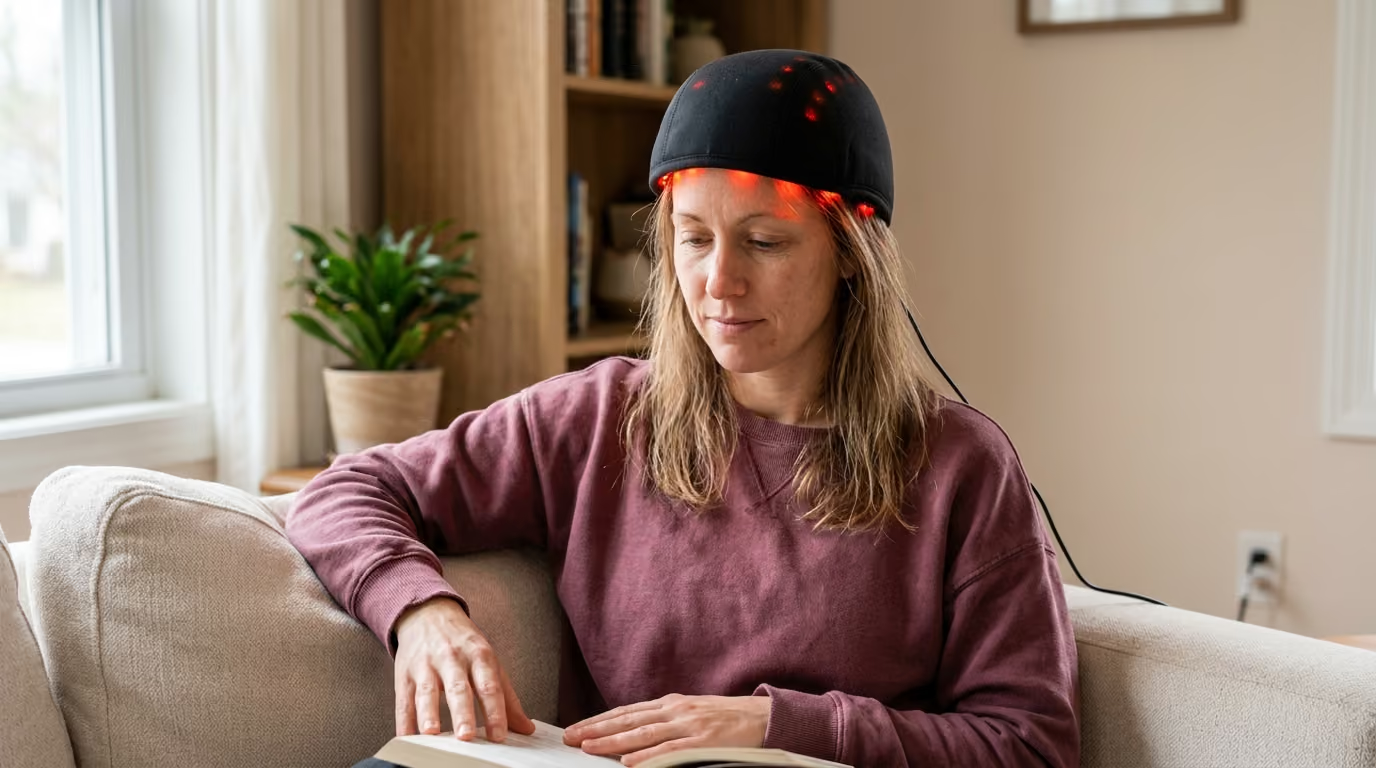

While often marketed as an instant cure, low-level red light therapy supports hair density through specific cellular mechanisms across clinical trials.





Low-level light therapy for hair loss is a non-invasive treatment that delivers specific wavelengths of red and near-infrared light to the scalp to stimulate follicular activity. It is not an overnight remedy, nor is it a guaranteed solution for every type of thinning. In clinical literature, this modality is referred to as low-level laser therapy, photobiomodulation therapy, or red light therapy.
Navigating this field requires distinguishing between biological plausibility, measured clinical data, and consumer marketing. Many commercial claims blur the lines between laboratory mechanisms and visible cosmetic outcomes. This guide examines the underlying cellular biology, clinical trial results, hardware parameters, regulatory classifications, and practical protocols to help you evaluate light therapy objectively.
The clinical evidence for light therapy centers on specific types of thinning and distinct physical parameters. Decades of laboratory investigation and randomized controlled trials offer several key insights:
Understanding these foundational points prevents unrealistic expectations. Light therapy represents a supportive physical intervention for viable follicles. It cannot revive follicles that have undergone complete fibrous regression. You can learn more about comprehensive hair health within our research-backed hair longevity resources.
Low-level light therapy operates through photobiomodulation. Unlike surgical lasers that vaporize tissue, photobiomodulation relies on low-irradiance light that triggers photochemical reactions within targeted cells. The process begins when photons in the red or near-infrared spectrum penetrate the scalp to reach the hair follicle bulb.
The primary cellular receptor for red light is cytochrome c oxidase, an enzyme located inside the mitochondrial electron transport chain. When hair follicle cells absorb these photons, the energy state of the enzyme shifts. This process facilitates the displacement of inhibitory nitric oxide from the catalytic center of the enzyme.
As nitric oxide is released, electron transport accelerates. This acceleration increases the mitochondrial membrane potential and boosts the synthesis of adenosine triphosphate, the basic energy currency of the cell. The localized release of nitric oxide also promotes mild vasodilation, which may support nutrient and oxygen delivery to the dermal papilla.
This cascade produces a brief, controlled shift in reactive oxygen species. Rather than causing cellular damage, these low levels of reactive oxygen species act as gentle physiological signals. They activate redox-sensitive transcription factors that upregulate protective cellular proteins, reduce local inflammatory markers, and stimulate cellular proliferation.
In the context of hair biology, these signaling events influence the hair cycle. They encourage resting telogen follicles to transition into the active anagen growth phase. They also help prolong the duration of the anagen phase while preventing premature transition into catagen.
Over multiple cycles, this sustained metabolic support can counteract follicular miniaturization. A miniaturizing follicle gradually produces a thicker, more pigmented terminal hair shaft. However, cellular plausibility in a laboratory setting does not automatically guarantee identical clinical outcomes for every individual. Exploring the broader discipline of rigorous beauty science helps contextualize how these laboratory findings translate to human physiology.
Light therapy is not a universal treatment for every scalp condition. Selecting the right intervention requires an accurate understanding of the underlying cause of hair loss. Applying red light to an incorrect diagnosis often leads to disappointment and delayed medical care.
Androgenetic alopecia, commonly known as pattern hair loss, is a progressive condition driven by genetic sensitivity to androgens. In susceptible follicles, the enzyme 5-alpha reductase converts testosterone into dihydrotestosterone. Dihydrotestosterone binds to androgen receptors in the dermal papilla, initiating follicular miniaturization.
Over successive cycles, the anagen phase shortens while the telogen phase lengthens. The follicle shrinks, producing finer, shorter, and less visible hairs until the follicle becomes dormant. In men, this presents as recession at the temples and thinning at the crown, classified by the Norwood-Hamilton scale. In women, it presents as diffuse thinning across the mid-scalp and widening of the central part line, classified by the Ludwig-Savin scale.
Pattern hair loss is the primary condition studied in clinical trials for light therapy. The therapy provides energetic and vascular support to counteract miniaturization, though it does not lower dihydrotestosterone levels.
Telogen effluvium is a reactive shedding state triggered by a physiological or psychological disruption. Common triggers include high fever, major surgery, severe nutritional deficiencies, thyroid abnormalities, rapid weight loss, and postpartum hormonal shifts.
In this condition, an abnormally high percentage of growing follicles prematurely enter the telogen phase. Approximately two to three months after the trigger, diffuse shedding occurs across the entire scalp. Telogen effluvium does not involve progressive follicular miniaturization.
Light therapy has not been rigorously validated as a standalone treatment to stop an active telogen effluvium episode. The primary management strategy requires identifying and correcting the underlying systemic trigger. Once the trigger is resolved, the hair cycle typically normalizes on its own over several months.
Alopecia areata is an autoimmune condition in which the body targets its own hair follicles. This immune attack arrests follicular activity, resulting in round or oval patches of smooth hair loss. In more severe cases, it can progress to complete scalp or body hair loss.
The clinical evidence supporting light therapy for alopecia areata is very limited and inconclusive. Autoimmune conditions require targeted immunomodulatory or anti-inflammatory therapies managed by a dermatologist. Relying on red light therapy caps for active autoimmune hair loss can delay effective clinical treatment.
Scarring alopecias, or cicatricial alopecias, are inflammatory disorders that permanently destroy the hair follicle stem cell reservoir. Conditions in this category include lichen planopilaris, frontal fibrosing alopecia, and central centrifugal cicatricial alopecia.
These conditions often present with scalp redness, severe scaling, burning sensations, tenderness, or follicular pustules. Once the stem cells within the follicle bulb are replaced by fibrous scar tissue, hair regrowth is biologically impossible.
Light therapy should never be used as a primary treatment for scarring alopecia. Any individual experiencing scalp pain, visible inflammation, or rapid patchy hair loss should seek immediate medical evaluation. You can review our detailed guides within the hair health editorial hub to better understand various thinning patterns.
Multiple randomized, double-blind, sham-controlled clinical trials have evaluated low-level light therapy for pattern hair loss. These trials provide quantitative data regarding what users can realistically expect in terms of hair count and thickness.
A landmark 24-week multicenter trial evaluated a helmet emitting 630, 650, and 660 nanometer light in 40 patients with androgenetic alopecia. Participants used either the active device or an identical sham helmet for 18 minutes daily. The active device delivered an irradiance of 92.15 mW/cm² and a cumulative energy density of 47.90 J/cm².
At the conclusion of 24 weeks, the active light therapy group demonstrated a statistically significant increase in hair density compared with the sham group. The active group gained an average of 17.2 hairs per square centimeter, whereas the sham group experienced a slight loss of 2.1 hairs per square centimeter. The active group also showed a statistically significant improvement in mean hair shaft diameter.
Blinded investigator global assessments showed significant visible improvement in the active group compared to the control. Interestingly, subjective self-assessments completed by the participants themselves did not show a statistically significant difference between the two groups. This contrast demonstrates an important clinical reality: measured increases in follicle count under a microscope do not always translate into immediate, dramatic changes in the mirror.
In a randomized, sham-controlled study evaluating women with pattern hair loss, 42 participants completed a 16-week treatment course using a 655-nanometer device. Baseline hair counts averaged 209.6 hairs in the active cohort and 228.2 hairs in the sham cohort.
Following 16 weeks of consistent therapy, post-treatment counts reached 309.9 hairs in the active group compared to 252.1 hairs in the sham group. The active group achieved a mean increase of 100.3 hairs across the evaluated site compared to a change of 23.9 hairs in the sham group, representing a statistically significant outcome (p < 0.0001). No severe adverse events were reported.
Systematic reviews and meta-analyses support these individual findings across larger sample sizes:
Researchers have also evaluated whether combining light therapy with established pharmaceutical interventions produces additive benefits. A meta-analysis analyzed trials comparing topical minoxidil combined with light therapy against topical minoxidil alone.
The combination group achieved a greater increase in hair density than minoxidil monotherapy, with a reported mean difference of 6.62 hairs per square centimeter (95% confidence interval, 2.04 to 11.20; p = 0.005). The combination also yielded a small improvement in hair shaft thickness, showing a mean diameter increase of 0.01 millimeters.
Furthermore, overall patient satisfaction was higher among participants using both modalities, showing a relative risk of 1.71 (95% confidence interval, 1.23 to 2.38). The incidence of adverse effects remained comparable between both treatment groups. However, some independent trials have noted no significant additive benefit, indicating that individual responses to combination therapy can vary.
While published clinical data shows statistically significant benefits, evaluating this therapy requires looking closely at study limitations and methodological constraints.
Most published randomized controlled trials monitor participants for 16 to 26 weeks. Because hair growth operates on slow biological cycles, a six-month trial captures only the initial response to treatment.
Very few peer-reviewed studies follow participants continuously over two to five years. Consequently, we lack robust data regarding whether density improvements plateau, decline, or require adjusted treatment frequencies over long periods.
Meta-analyses examining light therapy report high statistical heterogeneity, with I² values frequently exceeding 80%. High heterogeneity indicates substantial variation among individual study results, clinical methodologies, device designs, and participant demographics.
Because studies differ widely in light output, treatment schedules, and participant profiles, a positive overall meta-analysis cannot guarantee that every commercial device will reproduce the published results.
Designing an effective sham device for phototherapy trials is technically challenging. A convincing control device must look, weigh, and feel identical to the active unit without delivering therapeutic optical energy.
Active light devices generate minor warmth and visible illumination during use. If a sham device emits zero light or produces no warmth, participants may easily deduce their assigned group, compromising study blinding. Several clinical trials have noted that imperfect sham controls represent an important source of potential bias.
Most clinical studies rely on macro-photographs, phototrichograms, or automated digital hair counting within a small tattooed dot on the scalp. These measurements provide precise, objective data for scientific evaluation.
However, an increase of 15 to 20 fine hairs per square centimeter across an isolated test patch does not always translate into substantial scalp coverage. As observed in the 24-week helmet trial, measured hair density increases do not always correlate with a dramatic change in patient satisfaction.
A significant percentage of published trials evaluating branded laser caps and helmets are funded, sponsored, or directly managed by device manufacturers. Commercial entities have a clear financial incentive to publish positive outcomes. Independent academic trials without industry ties remain relatively scarce in this field.
Evaluating home-use light therapy devices requires assessing specific, measurable hardware parameters rather than relying on promotional marketing terms.
Wavelength determines the depth of optical penetration into human tissue. Light therapy devices for hair loss operate within the optical window of visible red and near-infrared light, typically between 630 and 660 nanometers.
Power and total energy dosage determine whether a device delivers a biologically meaningful treatment.
$$\text{Fluence } (\text{J/cm}^2) = \frac{\text{Irradiance } (\text{mW/cm}^2) \times \text{Time } (\text{seconds})}{1000}$$
In clinical trials, effective fluences for hair stimulation typically range between 2 and 6 J/cm² per session at the follicle level. Total device energy density over an entire session often ranges between 15 and 50 J/cm² depending on emitter distance and scalp geometry.
A central debate in light therapy centers on whether laser diodes outperform light-emitting diodes:
Clinical studies confirm that both laser and LED devices can increase hair density when designed with appropriate irradiance. However, pure laser systems generally deliver a higher, more consistent energy dose to deeper dermal layers when hair is present.
The physical form factor directly influences ease of use, treatment adherence, and light distribution:
Understanding the balance between cellular biology and lifestyle factors is essential for any longevity routine. You can explore these connections in our overview of lifestyle and environmental influences on tissue health.
One of the most widespread sources of confusion in beauty tech marketing involves regulatory claims. Many commercial products prominently display an FDA cleared badge, which consumers often mistake for a guarantee of efficacy.
There is a fundamental regulatory difference between clearance and approval:
When a light therapy cap receives 510(k) clearance, that authorization applies exclusively to specific clinical indications and demographic categories.
Most cleared devices are indicated strictly for promoting hair growth in men with androgenetic alopecia who exhibit Norwood-Hamilton classifications IIa through V, and in women with Ludwig-Savin classifications I through II. Furthermore, these clearances are typically granted for individuals with Fitzpatrick skin phototypes I through IV.
Clearance for pattern hair loss in light-to-medium skin tones does not mean the device has been validated for other conditions, such as alopecia areata or scarring disorders. It also does not guarantee that every user will experience measurable cosmetic improvement.
Marketing narratives often misrepresent photobiology to create appealing sales pitches. Examining these common misconceptions helps clarify what the evidence actually supports.
Many consumers assume that a device delivering maximum power or hundreds of extra diodes will yield faster, thicker regrowth. In photobiology, cellular response follows a biphasic dose-response curve, known as the Arndt-Schulz rule.
Low levels of light energy stimulate cellular metabolism up to an optimal physiological plateau. Once the energy dose surpasses this threshold, biological benefits diminish. Excessive irradiance or prolonged exposure can induce localized thermal stress, inhibit mitochondrial respiration, and suppress follicular activity. More energy is not inherently better.
Commercial advertisements often imply that using a laser helmet provides a permanent solution for thinning hair. In reality, androgenetic alopecia is an ongoing genetic condition.
Light therapy supports cellular energetics, but it does not inhibit 5-alpha reductase or prevent dihydrotestosterone from binding to androgen receptors. If an individual discontinues light therapy, the supportive energetic stimulus is lost. Over the subsequent three to six months, treated follicles typically resume their miniaturization trajectory.
Some consumers attempt to treat hair loss using inexpensive consumer red bulbs or general-purpose ambient lighting panels. These consumer light sources rarely deliver the appropriate physical parameters required for scalp therapy.
Stimulating hair follicles requires a specific optical wavelength (typically 630 to 660 nm) delivered at an irradiance sufficient to penetrate the dermal layer. Standard ambient red bulbs lack the narrow spectral control, collimation, and power density necessary to transfer meaningful energy to the follicle bulb.
When beginning light therapy, some users experience a temporary increase in daily hair shedding during the first four to eight weeks. This can lead individuals to assume the device is harming their scalp.
This initial shedding often reflects a synchronizing follicular shift. As resting telogen follicles are stimulated by photobiomodulation, they enter the anagen growth phase. The newly forming hair shaft pushes out the old, resting telogen hair, causing a brief shedding phase before new growth emerges. While shedding can occasionally indicate mild irritation, transient shedding is a recognized physiological response during early therapy.
To complement external therapies, optimizing foundational nutrition can support healthy follicular cycling. You can read our detailed guide on nutrition and internal beauty support for deeper insights.
If you and your healthcare provider determine that low-level light therapy is suitable for your hair loss pattern, establishing a structured protocol helps ensure consistent, safe application.
Prior to purchasing hardware, schedule an evaluation with a dermatologist or trichologist. Confirm that your thinning is primarily driven by androgenetic alopecia rather than telogen effluvium, an autoimmune disorder, or an inflammatory scarring condition. A professional can assess scalp health using dermoscopy to verify active follicular miniaturization.
When comparing commercial devices, prioritize verified physical parameters over marketing slogans:
Because hair density changes occur slowly over several months, relying on casual mirror checks or memory is unreliable.
Take high-resolution photographs of your scalp before starting your first session. Maintain consistent lighting conditions, dry hair, a fixed central parting, and standardized camera angles covering the frontal hairline, vertex, and crown. Repeat these standardized photos every eight weeks under identical conditions.
Consistency is critical for photobiomodulation. Follow the manufacturer's validated treatment schedule, which typically ranges from 10 to 25 minutes per session, three to seven days per week.
Avoid increasing session duration or frequency beyond recommended guidelines. As established by the biphasic dose-response curve, excessive exposure can reduce treatment efficacy and induce localized scalp irritation. Keep a simple session log to track adherence over time.
Review all contraindications before initiating therapy:
If you use topical solutions such as minoxidil or scalp serums, coordinate their application timing carefully.
Apply light therapy to a clean, dry scalp before applying topical medications or heavy styling products. Heavy leave-in conditioners, cosmetic fibers, and dense topical ointments can scatter or absorb incoming light photons, reducing the energy dose delivered to the follicles. Once your light session is complete, apply your topical solutions as directed.
Hair follicles require multiple biological cycles to transition from telogen back into sustained anagen growth. Expecting noticeable cosmetic changes within four to six weeks is biologically unrealistic.
Maintain your protocol consistently for a full 24 weeks before assessing overall efficacy. Compare your 24-week photographs directly against your baseline images. Look for stabilization of shedding, modest increases in part-line density, and thicker hair shafts. If no stabilization or improvement is observed after six to nine months of consistent use, consult your dermatologist to re-evaluate your treatment strategy.
To learn more about structural aging and tissue longevity across the body, explore our comprehensive guide to healthy aging and skin longevity.
Light therapy is not a proven primary treatment for acute telogen effluvium triggered by psychological stress, illness, or postpartum hormonal shifts. Reactive shedding resolves when the underlying physiological stressor is identified and corrected. While light therapy supports cellular metabolism, it does not address the underlying hormonal or systemic causes of diffuse shedding.
Most over-the-counter red light caps and helmets do not require specialized safety goggles because the diodes face downward onto the scalp. However, you should avoid looking directly into the active diodes or viewing direct reflections of the laser beams. Many quality devices include built-in safety sensors that automatically deactivate the emitters whenever the helmet is lifted from the head.
If you discontinue light therapy, the supportive photochemical stimulation delivered to your hair follicles ceases. Because light therapy does not alter underlying genetic or hormonal drivers of androgenetic alopecia, treated follicles will gradually revert to their baseline state. Over three to six months, hair shedding will typically resume, and progressive miniaturization will continue.
Dense or dark hair shafts can absorb and scatter incoming light photons, reducing the total energy dose that reaches the scalp surface. Devices featuring integrated comb teeth help physically part hair during application, creating a direct path for the light. If you use a standard helmet device, parting your hair into sections or ensuring close contact with the scalp helps maximize light delivery to thinning areas.
Stay connected for research and practical guidance on skin, hair, collagen, nutrition and beauty longevity. Clear ideas for people who want to understand how appearance changes with age and make better-informed choices over time.


Understand your skin, hair and body better without chasing every new trend, treatment or promise.
explore the Blog