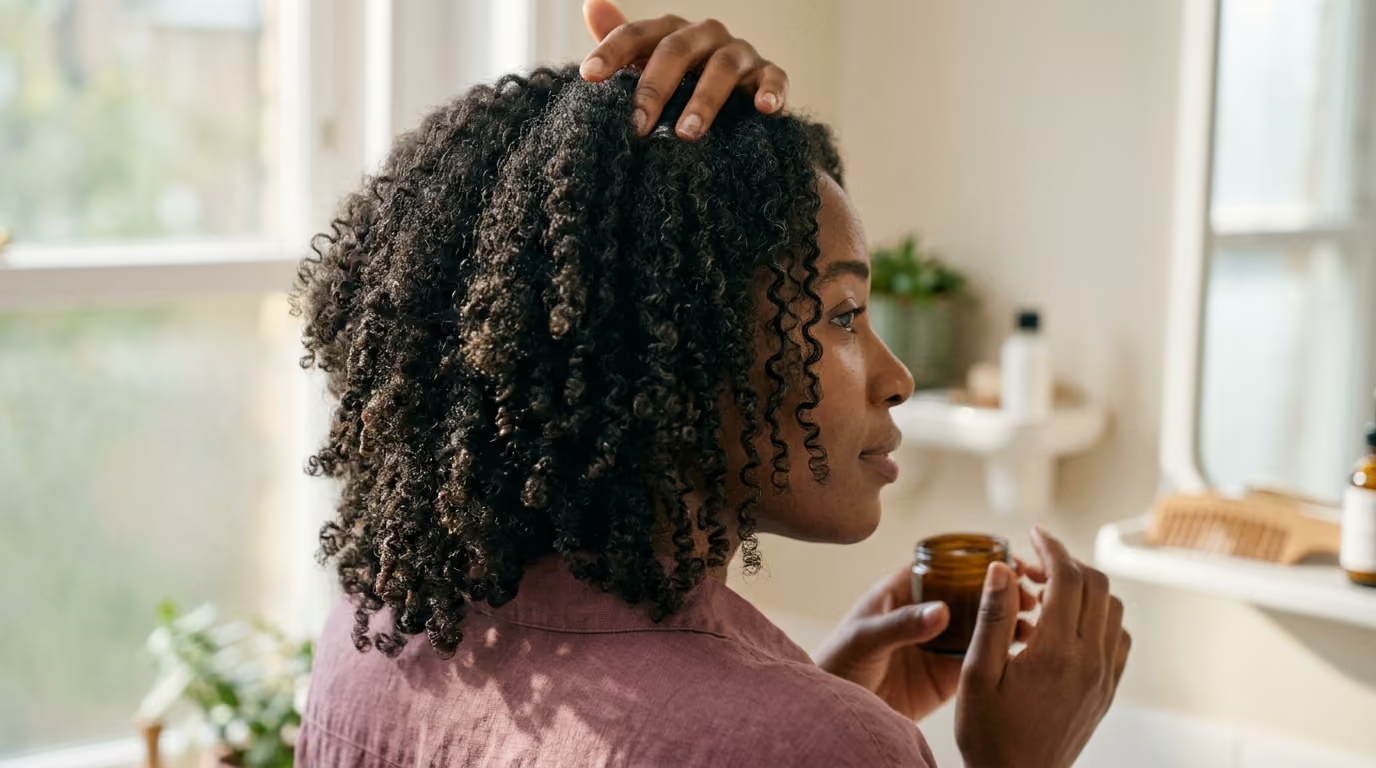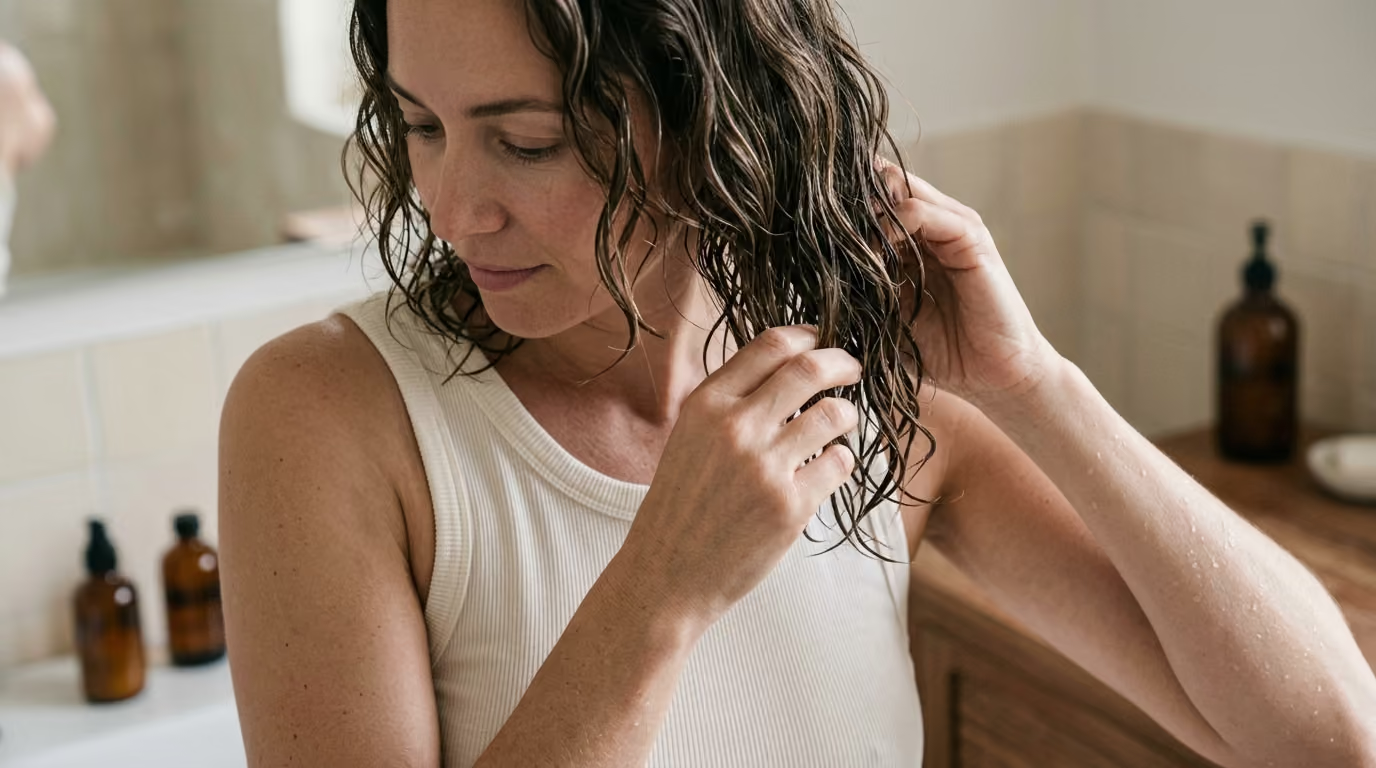

Six to ten overlapping cuticle layers protect delicate hair fibers during cleansing, detangling, and drying routines that minimize wet mechanical breakage.





Popular beauty advice often suggests that the simplest way to prevent hair damage is to wash it as infrequently as possible. Many believe that water and shampoo are inherently destructive to the hair fiber. The biological reality is quite different.
Infrequent cleansing can allow sebum, sweat, styling products, and dead skin cells to accumulate on the scalp. This buildup can create an environment ripe for irritation and flaking. The primary cause of wash-day damage is rarely the water or the surfactant itself. Instead, the damage stems from the aggressive mechanical friction applied while the hair is wet, fragile, and swollen.
Understanding how to cleanse the scalp thoroughly while shielding the delicate hair lengths from mechanical stress changes your entire routine. When you adjust your washing, conditioning, detangling, and drying methods to match your hair fiber architecture, you can maintain a clean scalp without sacrificing length. This comprehensive guide examines the science of fiber friction, wet-hair vulnerability, and practical routines tailored to every hair texture.
Scientific investigations into hair mechanics reveal clear patterns regarding how everyday handling alters the hair shaft. Laboratory assessments provide valuable insights into where fiber damage occurs and how to prevent it:
To handle hair without snapping the fibers, one must understand the biological architecture of the hair shaft. The hair fiber consists of two primary structural regions relevant to everyday care: the outer cuticle and the inner cortex. Some thicker hairs also contain a central core called the medulla.
The cuticle forms the outermost protective shield. It is composed of flattened, overlapping keratin scales that point downward from the root toward the tip, much like shingles on a roof. A healthy cuticle lies flat and smooth, presenting a low-friction surface that reflects light and resists external stressors. Beneath this protective shield lies the cortex. The cortex contains bundled keratin proteins, water, and melanin granules, providing the fiber with its tensile strength, elasticity, and color.
Water significantly alters the physical properties of the hair shaft. When hair is submerged in water, water molecules penetrate the porous cuticle layers and enter the cortex. These water molecules temporarily disrupt the weak hydrogen bonds that stabilize the keratin matrix. As a result, wet hair swells in diameter by up to 15% to 20% and gains substantial elasticity.
While this increased elasticity allows wet hair to stretch further without immediately snapping, the wet fiber possesses a lower tensile yield point. When stretched beyond a safe limit during wet detangling, the internal protein structure deforms permanently. Once stretched past this elastic recovery threshold, the fiber weakens, forms irregular thinned regions, and eventually fractures.
Water also softens the cuticle scales. When wet hairs rub against each other during lathering or rough towel drying, the softened cuticle edges catch on adjacent fibers. This interaction produces high frictional resistance. The resulting abrasion strips away the protective cuticle layers, exposing the delicate cortical keratin beneath to environmental degradation.
A critical step in managing hair health is distinguishing between mechanical breakage and biological shedding. You can learn more about systemic hair cycles through our hair growth and fiber longevity resources.
Shedding is a natural physiological process. During the telogen phase of the hair growth cycle, the follicle releases the entire hair strand. A shed hair consistently features a small, white, bulbous root at one end. Finding shed hairs on your brush or shower floor is a normal consequence of follicle turnover.
Mechanical breakage occurs when the hair shaft fractures along its length. Broken hairs typically present as shorter fragments without a visible root bulb. These pieces often exhibit frayed ends, split tips, or microscopic white nodules where the fiber buckled under stress. Breakage is an engineering problem caused by physical force exceeding the mechanical strength of the fiber.
Cuticle damage is permanent because the visible hair fiber contains non-living keratinized cells that cannot biologically regenerate. When mechanical friction strips away a cuticle scale, that structural protection is lost permanently. The older ends of long hair have experienced years of environmental exposure, washing, and friction. Consequently, they possess significantly fewer intact cuticle layers than the newly formed fiber near the scalp.
As the cuticle wears away, the cortex absorbs and loses water much faster, leading to chronic dryness and roughness. The exposed cortex tangles readily, leading to tight knots that require more mechanical force to separate. This creates a cycle of mechanical stress where damaged hair becomes increasingly difficult to detangle without causing further breakage.
Understanding these biological vulnerabilities highlights why gentle handling is necessary. Every wash day presents an opportunity to either protect or degrade the structural integrity of the hair shaft.
Cosmetic scientists and dermatologists evaluate hair fiber integrity using mechanical testing instruments. These devices measure tensile strength, friction coefficients, and the physical force required to comb through hair tresses under standardized conditions.
A landmark study published in the Journal of the Society of Cosmetic Chemists analyzed the physical forces exerted on hair fibers during routine grooming. The researchers measured the mechanical work required to draw a comb through hair tresses under various wash and conditioning protocols.
The data revealed that applying a rinse-out conditioner after shampooing reduced the mechanical work of combing by 33% to 73%, depending on the baseline fiber texture and moisture levels. The presence of conditioning agents deposits a microscopic lubricating layer across the hair shaft. This layer neutralizes static charges, smooths lifted cuticle scales, and dramatically reduces inter-fiber friction.
The same study evaluated how conditioner application impacts knot removal. When knots were combed out of untreated, wet hair, the high frictional resistance generated substantial fiber breakage and cuticle tearing. When conditioner was applied directly before knot removal, grooming damage decreased by up to 82%. The lubricating film allowed tangled fibers to slide past one another rather than catching and snapping under tensile load.
The researchers also quantified the rate of cuticle erosion during repeated grooming cycles. Under experimental conditions simulating routine home care, the combination of standard shampooing, vigorous towel drying, and wet combing removed approximately 1 to 2.5 cuticle layers every 50 wash cycles.
Human hair typically features between six and ten cuticle layers near the scalp. Based on these erosion rates, the study calculated that an aggressive washing and grooming routine performed twice weekly could wear through all protective cuticle layers within 14 to 60 months.
For someone maintaining shoulder-length or waist-length hair, the ends may be two to five years old. Without low-friction handling techniques, the older regions of the hair shaft can easily lose their entire protective cuticle coating before reaching the desired length.
Further research published in the International Journal of Cosmetic Science evaluated the distinct morphological damage caused by wet versus dry combing. The findings demonstrated that dry combing primarily causes longitudinal splitting and cuticle flaking due to static electricity and bending stiffness. Conversely, wet combing produces transverse fractures and stretching deformities when excessive force is applied to tangled segments.
The data confirms that the safest detangling method depends heavily on the presence of slip. Wet hair detangled without adequate lubrication suffers severe stretching damage. Dry hair combed aggressively suffers frictional abrasion. Lubrication, rather than moisture status alone, serves as the primary protector against mechanical failure.
While mechanical testing provides essential insights into fiber physics, laboratory experiments have inherent limitations that must be considered when translating data to daily routines.
First, many grooming studies utilize automated combing instruments that draw a rigid mechanical comb through hair swatches at a constant, unyielding speed. In a laboratory setting, when the mechanical comb encounters a knot, it pulls through the obstruction with continuous force. This action can artificially inflate the recorded work and breakage values. In contrast, an attentive individual can feel resistance, pause, apply more slip, and gently separate the knot using their fingers.
Second, sample sizes in detailed cosmetic microscopy studies are frequently small. Some published trials rely on tresses from a single donor or include on-head evaluations involving only one or two subjects. Human hair exhibits enormous diversity across ethnicities, diameters, porosities, and curl patterns. A fine, straight Caucasian hair fiber responds differently to moisture and surfactants than a high-density, coily Afro-textured fiber.
Third, laboratory studies often isolate single variables, such as comparing a surfactant base against water. In real-world environments, consumers use complex regimens containing styling polymers, leave-in serums, botanical oils, and varying water mineral contents. Hard water minerals, for instance, can bind to hair proteins and alter friction dynamics in ways that pure laboratory water cannot replicate.
Finally, dermatological guidance from organizations like the American Academy of Dermatology represents clinical consensus rather than universal, double-blind randomized trials. These guidelines offer sound, evidence-based principles for minimizing trauma, but they cannot prescribe a single, rigid wash schedule that suits every individual scalp and fiber profile.
Establishing a gentle wash day routine begins with a fundamental principle: wash the scalp according to its biological needs, and protect the lengths from unnecessary abrasion. For broader context on scientific care principles, read our beauty science research overview.
The scalp is living skin rich in sebaceous glands, whereas the hair shaft is non-living keratin. Cleansing products must primarily remove excess sebum, sweat, exfoliated corneocytes, and environmental pollutants from the scalp surface. The hair lengths, however, require moisture retention and lubrication rather than intensive degreasing.
No universal wash schedule exists for every individual. Wash frequency should be determined by how rapidly your scalp produces oil and accumulates residue.
Fine, straight hair allows sebum to travel rapidly down the smooth fiber shaft. Individuals with fine hair and high sebum production may need to wash daily or every other day to prevent oil accumulation and scalp inflammation. Frequent cleansing is not damaging if the technique is gentle and the lengths are shielded from rough handling.
Conversely, thick, curly, and coily hair structures make it difficult for sebum to migrate down the spiral fiber path. Furthermore, highly textured hair tends to have fewer cuticle scale layers at the curves of the curls, making the shaft naturally drier. For dry or textured hair, the American Academy of Dermatology suggests washing less frequently, such as once a week or every two to three weeks, depending on lifestyle and product use.
Evaluate the following factors when selecting your wash cadence:
Applying shampoo directly to the lengths of your hair and scrubbing them together like fabric creates severe mechanical abrasion. Follow this low-friction washing sequence:
Different cleansing formulas serve distinct purposes within a healthy hair regimen. Alternating between cleanser types based on need helps maintain scalp hygiene without stripping the fiber:
Conditioning is an indispensable step for fiber preservation. Conditioners work by depositing positively charged cationic surfactants and polymers onto the negatively charged surfaces of damaged hair fibers. This electrostatic binding neutralizes negative charges, flattens lifted cuticle scales, and creates a hydrophobic barrier that repels excess water while locking in softness.
Integrating different types of conditioners provides complete structural protection across the wash cycle:
Applying conditioner incorrectly can lead to either weighed-down roots or brittle, snapping ends. Tailor your placement to your hair characteristics:
For a broader perspective on hair maintenance, review our guide to healthy hair fiber care.
Detangling is the most mechanically demanding phase of any hair routine. Forcing a comb through knotted, resistant hair generates excessive tensile stress, causing the hair shaft to stretch past its yield point and snap. A gentle, methodical approach eliminates unnecessary fiber fracture.
The safest time to detangle varies significantly depending on your curl pattern and fiber thickness:
Adopt these mechanical best practices whenever removing tangles:
The tools you choose directly dictate the level of mechanical friction applied to your hair fiber:
The transition from wet hair to dry hair represents another period of mechanical and thermal vulnerability. Traditional drying habits, such as rough towel scrubbing and high-heat blow drying, frequently undo the benefits of gentle washing.
Standard terrycloth bath towels feature looped cotton fibers that grab, twist, and abrade lifted hair cuticles when rubbed vigorously over the head.
Instead of rubbing, use gentle absorption techniques. Wrap your hair in a smooth microfiber towel or a clean, soft cotton T-shirt. Microfiber cloths possess fine, non-abrasive fibers that absorb moisture rapidly through capillary action without catching on cuticle scales.
Gently press and blot the fabric against your hair in sections to squeeze out excess water. Never twist the hair tightly or wring it out like a wet cloth, as wet hair has lower resistance to torsional stress.
Air drying minimizes thermal exposure, but leaving hair soaked with water for hours can cause prolonged swelling of the inner cortex. When blow-drying your hair, follow these guidelines to balance thermal safety and drying efficiency:
Styles that exert continuous tension on the hair roots can cause a form of localized hair loss known as traction alopecia. Dermatological research shows that sustained pulling from tight ponytails, high buns, cornrows, and heavy extensions damages both the hair follicle and the shaft.
Wear updos, braids, and ponytails loosely. Use soft, silk-covered or satin-covered elastic scrunchies rather than bare rubber bands, which snag and break the hair fiber upon removal. Change your hairstyle regularly so that mechanical tension is not concentrated on the same sections of hair day after day.
During sleep, your head moves across your pillow, generating continuous friction against the fabric. This friction can lead to morning tangles, frizz, and fiber breakage.
To reduce nighttime mechanical friction, consider sleeping on a smooth satin or silk pillowcase. These fabrics feature a tight, low-friction weave that allows hair strands to slide smoothly as you move. Alternatively, protect your hair by wearing a loose satin bonnet or wrapping your hair in a silk scarf.
If you prefer to tie your hair up at night, secure it in a loose, high bun (often called a "pineapple") using a soft scrunchie, ensuring there is no tension along your hairline.
Different hair textures, porosities, and chemical histories require customized care strategies. Adjust your washing, conditioning, and handling techniques to support your specific hair profile.
Fine hair fibers possess a smaller cross-sectional diameter, making them naturally more pliable and easily weighed down by heavy products. The smooth, straight structure allows scalp sebum to travel quickly down the shaft.
Coarse hair fibers feature a wide diameter and often contain a prominent central medulla. While naturally strong, thick hair takes longer to dry and can develop high inter-fiber friction if the surface becomes rough.
Curly hair fibers grow from asymmetrical, curved follicles, creating an elliptical or flattened cross-section. The natural twists and bends along the curl shaft create points of structural vulnerability where the cuticle scales tend to lift.
Coily and kinky hair types feature tight spiral patterns, high density, and variable porosity. The sharp turns along the tight coils make it difficult for sebum to travel down the shaft, leaving the ends prone to chronic dryness. Furthermore, the coils can readily interlock, forming tiny knots if handled without adequate slip.
Chemical processes such as bleaching, permanent dyeing, relaxing, and perming alter the hair fiber. Bleaching agents dissolve natural melanin granules and oxidize the disulfide bonds that give the cortex its strength, leaving the fiber porous and fragile.
For more in-depth analyses on overall skin, hair, and structural biology, visit our beauty longevity library to learn more about our research methodology.
Misconceptions surrounding hair care often lead people to adopt damaging habits. Review these common myths alongside the biological facts:
Many believe that extending the time between washes to two or three weeks is universally beneficial for hair retention. While reducing wash frequency can limit mechanical handling for dry, textured hair, leaving an oily scalp unwashed can lead to seborrheic dermatitis, malassezia yeast overgrowth, and inflammation around the hair follicles. Chronic scalp inflammation impairs healthy hair growth and can lead to increased shedding. Cleanse your scalp whenever it feels oily or irritated, using gentle techniques that shield the hair lengths from stress.
People often notice a sudden accumulation of loose hair in their hands when applying conditioner, leading them to believe the product is causing their hair to fall out. In reality, hair follicles shed 50 to 100 hairs daily as part of the natural telogen cycle. These shed hairs often remain trapped within the surrounding hair mass. When you apply a slippery conditioner, you reduce friction, allowing those previously shed strands to slide out freely. Conditioner does not cause follicular shedding.
A popular myth claims that rinsing with ice-cold water forces the hair cuticles to close tightly, creating mirror-like shine. Hair cuticles are non-living, keratinized structures that do not possess muscular mechanisms to open and close in response to temperature. Cuticle scales swell and lift primarily due to changes in pH and water absorption. Lukewarm water is ideal for cleansing and rinsing, as it effectively removes product residue without freezing your scalp.
Protective styles such as tight braids, cornrows, weaves, and ponytails are often worn to shield hair from daily manipulation. However, if these styles are installed with heavy tension, they pull continuously on the hair follicles and stress the fragile hair shaft at the root. Over time, this mechanical traction can cause permanent hair loss along the hairline and temples. A protective style is only truly protective if it is comfortable, pain-free, and loose at the roots.
Examine the ends of the hair strand closely under good lighting. A naturally shed hair will feature a tiny, round, white or translucent bulb at one end, which represents the keratinized root that released from the follicle. A broken hair will lack this root bulb and will instead display a blunt, split, or frayed edge at both ends.
No cosmetic product can permanently mend a split end. Split ends occur when the protective cuticle is stripped away and the cortical keratin bundles unravel like the strands of a frayed rope. Deep conditioners, oils, and silicone serums can temporarily glue the split ends together, smoothing the appearance and reducing friction until the next wash. However, the only permanent solution for split ends is to trim them off with sharp hair shears before the split travels further up the hair shaft.
Detangling dry hair is safe only for straight or slightly wavy hair that has minimal tangling and has been treated with a smoothing leave-in product. For curly, coily, or highly textured hair, dry detangling is very damaging because the lack of slip causes the comb to tear through intertwined curl patterns. If you must detangle dry hair, apply a light oil or silicone serum first to provide slip, and gently separate knots with your fingers before using a wide-tooth comb.
Yes. Hard water contains high concentrations of dissolved minerals, primarily calcium and magnesium ions. These positively charged minerals can bind to the negatively charged keratin proteins in your hair shaft, forming an insoluble film. This mineral buildup makes the hair fiber feel stiff, dry, and rough, which increases friction during combing and washing. If you live in an area with hard water, using a chelating shampoo once a month or installing an ion-exchange shower filter can help reduce mineral deposits.
If you notice sudden, diffuse hair thinning, patchy bald spots, significant widening of your hair part, or persistent scalp pain, burning, redness, or scaling, schedule an evaluation with a board-certified dermatologist. These symptoms often indicate an underlying medical condition, such as telogen effluvium, androgenetic alopecia, alopecia areata, or a scalp disorder, which requires targeted clinical diagnosis and treatment rather than routine grooming changes.
By shifting your wash day focus from aggressive scrubbing to scalp cleansing and gentle fiber handling, you can protect your hair from preventable breakage and support its natural strength over time.
Stay connected for research and practical guidance on skin, hair, collagen, nutrition and beauty longevity. Clear ideas for people who want to understand how appearance changes with age and make better-informed choices over time.


Understand your skin, hair and body better without chasing every new trend, treatment or promise.
explore the Blog