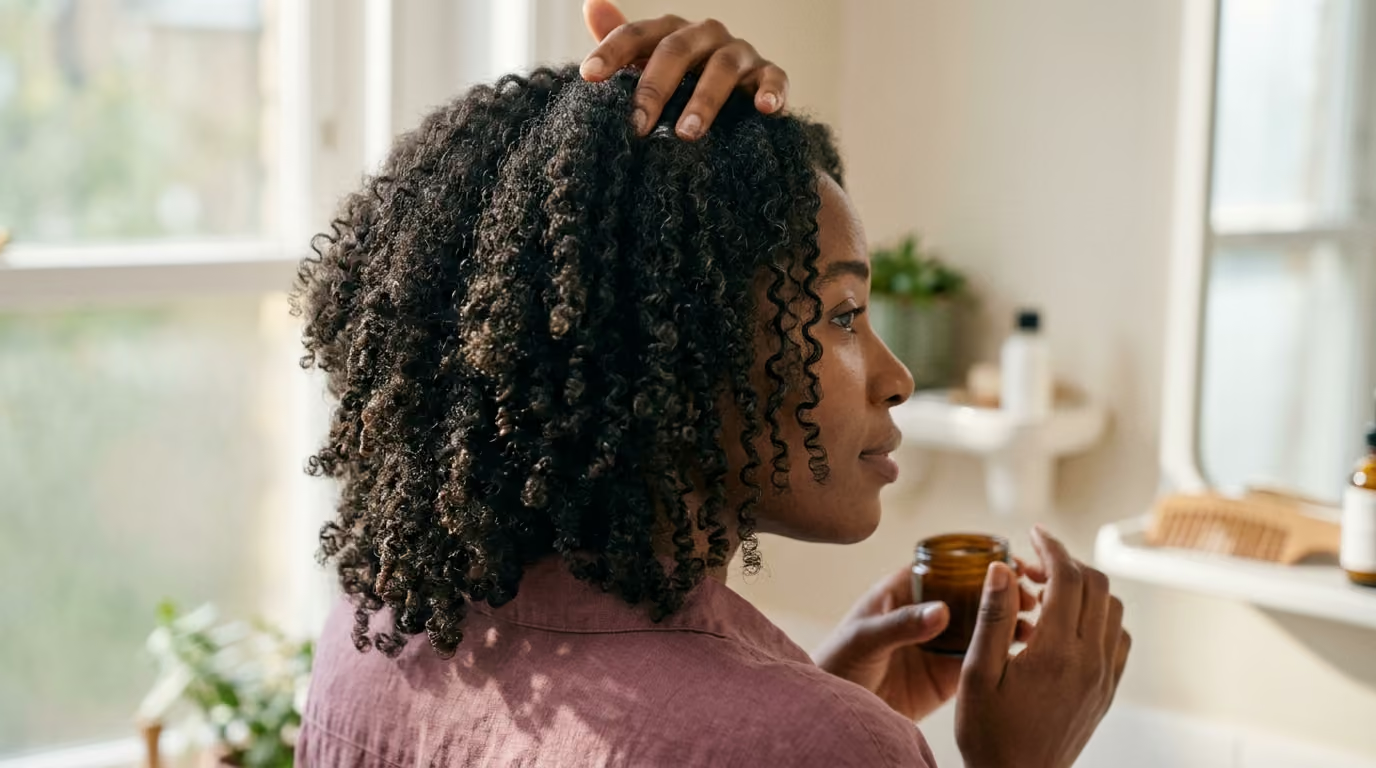

Restoring hair shaft integrity begins with distinguishing mechanical breakage from root shedding, evaluating structural fiber damage.





Hair breakage is a physical disruption of the hair shaft rather than a disorder of follicular cycling or root shedding. It occurs when mechanical, thermal, chemical, or biological forces exceed the structural capacity of the hair fiber. It is not an inevitable consequence of aging, nor is it identical to diffuse shedding.
Understanding why hair fractures requires distinguishing between true follicular hair loss, normal shedding, and mechanical failure along the shaft. This guide examines the structural biology of hair fragility, outlines diagnostic workflows to identify specific shaft defects, evaluates clinical data regarding hair repair, and provides evidence-based strategies to protect fiber integrity.
Patients and consumers frequently describe all visible hair loss as hair falling out. Clinical management requires distinguishing whether hairs are releasing from the root or snapping along the shaft. Failing to make this distinction often leads to inappropriate treatments, such as applying follicle-stimulating serums to treat purely mechanical fiber damage.
Hair shaft breakage produces distinct physical signs during daily grooming and examination:
In contrast, shedding originates at the base of the hair follicle. Telogen effluvium and other shedding disorders present with full-length hairs that have a small, white, club-shaped bulb at the proximal end. The scalp may show a diffuse reduction in overall density rather than localized patches of short, broken stubble. A standardized hair-pull test conducted by a clinician extracts intact telogen hairs from the root rather than snapping fibers mid-shaft.
Breakage and shedding can occur at the same time. A person undergoing diffuse telogen shedding may also have fragile, over-processed lengths that fracture during brushing. Furthermore, sustained mechanical tension from tight hairstyles can cause both shaft breakage along the hairline and follicular injury known as traction alopecia. Differentiating these components ensures that both the follicle and the fiber receive appropriate interventions. Readers can review our broader hair longevity resources to understand how follicle health and fiber retention interact over time.
To understand why hair fractures, one must examine the micro-architecture of the hair fiber. A fully formed hair shaft is a non-living biological composite consisting of three distinct layers: the medulla, the cortex, and the cuticle.
The cuticle is the outermost protective barrier of the hair shaft. It consists of six to ten layers of overlapping, flattened, keratinized cells that point toward the distal tip of the fiber. These cells are glued together by a protein-lipid matrix known as the cell membrane complex. The outermost surface of each cuticle cell is coated with a specialized fatty acid layer, primarily 18-methyl eicosanoic acid, which provides natural water repellency and lubrication.
When the cuticle is intact, friction between adjacent fibers remains low. Grooming tools glide smoothly across the surface without catching. However, physical friction, heat, and alkaline chemical services strip the protective lipid layer and lift the cuticle scales. Once the cuticle is weathered or stripped away, the inner cortex is exposed directly to environmental trauma.
The cortex comprises the bulk of the hair fiber and determines its physical strength, elasticity, and color. It consists of tightly packed spindle-shaped cortical cells filled with keratin intermediate filaments embedded in a sulfur-rich protein matrix. These keratin proteins are stabilized by robust covalent disulfide bonds, ionic salt bridges, and weak hydrogen bonds.
Disulfide bonds provide the fiber with tensile strength and resistance to stretching. When chemical relaxers, perms, or bleaching agents disrupt these disulfide linkages, the cortex loses its internal cohesion. The hair becomes brittle, elongates poorly under tension, and fractures easily under routine physical strain. The innermost layer, the medulla, is an irregular core that contributes minimally to overall tensile resistance.
Hair fibers undergo natural progressive degradation from root to tip, a process termed weathering. As hair grows, the distal ends experience months or years of repeated washing, ultraviolet radiation, ambient humidity fluctuations, and styling. This cumulative exposure gradually erodes the cuticle layer.
When cuticle erosion reaches the distal tip, the cortical fibers splay apart, resulting in trichoptilosis, commonly known as split ends. Trichoptilosis represents a physical separation of cortical cell bundles along the longitudinal axis of the fiber. Once a split begins, mechanical friction causes the split to propagate upward toward the scalp, weakening greater lengths of the shaft.
Hair fragility rarely stems from a single isolated event. It typically reflects the cumulative total of physical, chemical, and biological stressors acting upon the fiber structure.
Excessive physical force is the most common cause of acquired hair fragility according to clinical reviews from DermNet. Normal grooming applies low friction that healthy fibers tolerate easily. However, aggressive habits dramatically accelerate structural breakdown:
Over time, this mechanical fatigue fractures the edges of cuticle scales. Once the cuticle cells crack and dislodge, cortical microfibrils separate under normal grooming tension.
Tight hairstyles create persistent mechanical strain along the shaft and at the follicle base. DermNet specifically identifies tight braids, extensions, weaves, and rigid ponytails as primary triggers for localized structural fractures.
Traction damages hair through two distinct mechanisms. First, localized mechanical strain bends the shaft repeatedly at high-stress angles, producing traumatic trichorrhexis nodosa fractures. Second, continuous tension pulls on the follicle, creating perifollicular erythema, follicular pustules, and eventual traction alopecia. If a styling practice causes persistent scalp tenderness or redness, it is placing the hair shaft and follicle at structural risk.
High-temperature styling tools compromise hair integrity rapidly. When heat is applied to a dry or damp fiber, it can denature the helical keratin proteins in the cortex, reducing their elasticity.
When heat tools are applied to damp hair, residual moisture trapped within the cortex vaporizes into steam rapidly. This rapid expansion creates micro-cavities within the shaft, a clinical condition known as bubble hair. The peer-reviewed literature in pediatric and general dermatology reports that bubble hair can form when blow dryers operate at 175 degrees Celsius or higher, or when curling irons and flat irons reach 125 degrees Celsius and contact the hair directly.
Bubble hair creates localized zones of extreme weakness. Under magnification, the shaft reveals irregular air cavities that deform the fiber geometry. Affected strands feel stiff, dry, and brittle, snapping off abruptly under minimal tension.
Chemical alterations such as permanent dyeing, bleaching, chemical waving, and alkaline relaxing rely on lifting the cuticle and modifying internal cortical bonds.
Bleaching agents use alkaline peroxide systems that solubilize melanin granules while oxidizing disulfide bonds into cystic acid. Chemical relaxers and permanent waves break disulfide bonds to reshape the fiber before neutralizing them in a new configuration. Although virgin hair can often withstand a carefully formulated, single chemical process, repeated chemical overlap on previously treated lengths severely depletes cortical protein integrity. This leaves the fiber porous, spongy, and prone to transverse fractures.
Ultraviolet radiation and water exposure act as continuous environmental amplifiers of hair damage. Sunlight generates reactive oxygen species within the shaft, degrading both melanin pigments and keratin proteins. This photo-degradation weakens the cell membrane complex, making the cuticle more susceptible to mechanical lifting.
Frequent swimming in chlorinated pools or salt water further strips natural surface lipids and leaves mineral deposits on the fiber. As chlorinated water dries, it alters the ionic balance within the shaft, raising friction levels and causing fibers to snag during daily brushing.
While external styling causes most breakage, internal biological health dictates the initial quality of the hair shaft produced by the follicle. The comprehensive pediatric review by dermatologists lists several systemic associations with structural fragility:
Systemic conditions impair the follicle's ability to synthesize high-quality keratin intermediate filaments. However, nutritional support should remain targeted. Taking random high-dose supplements without clinical testing rarely corrects hair fragility unless a true underlying deficiency exists. Readers interested in physiological support can review our guide to nutrition from within for an evidence-led perspective.
Certain medications alter the quality and texture of emerging hair shafts. Oral retinoids, including isotretinoin and acitretin, are clinically recognized causes of increased hair fragility and acquired texture changes. These medications can induce acquired progressive kinking of the hair or produce structural irregularities similar to pili torti. Evaluating whether hair texture changed shortly after starting a new prescription helps identify medication-related fragility.
Trichorrhexis nodosa is widely cited in dermatological literature as the most frequent structural defect of the hair fiber. It is characterized by localized points of weakness along the shaft where cortical cells separate, creating visible swellings or nodes.
Under microscopic examination, the node of trichorrhexis nodosa is not a true cellular growth or deposit. Instead, it is a structural fracture zone. The protective cuticle layer at that specific site has been worn away completely. Without cuticular confinement, the internal cortical fibers splay outward longitudinally.
When physical tension is applied, the hair snaps at this node. The resulting fracture resembles two paintbrushes or brooms pushed firmly against one another. To the naked eye, these nodes appear as tiny white or yellowish specks along the hair shaft, frequently mistaken for nits or dandruff flakes.
Trichorrhexis nodosa presents in two primary forms:
Not all brittle hair is simple acquired trichorrhexis nodosa. Several specific genetic, structural, and acquired hair-shaft disorders produce distinct clinical patterns that require formal differentiation.
Trichoptilosis is the clinical term for distal split ends. Unlike branching genetic defects where the shaft divides near the scalp, trichoptilosis begins strictly at the distal tip of the hair fiber. It is an acquired consequence of cumulative weathering, grooming friction, and moisture loss.
Monilethrix is a genetic condition characterized by a beaded or necklace-like hair shaft. The shaft exhibits regularly spaced elliptical nodes separated by narrow, constricted internodes. The internodes lack normal medullary structure and are exceptionally fragile, leading to extensive breakage near the scalp surface.
Monilethrix is typically inherited as an autosomal dominant trait, giving an affected individual a 50 percent chance of transmitting the condition to each child. Mutations in hair cortex keratin genes, including KRT31, KRT86, and KRT81, underlie this condition. Clinically, patients present with short, brittle hair concentrated at the nape and occiput, often accompanied by rough perifollicular hyperkeratosis.
Pili torti is characterized by a flattened hair shaft that is twisted around its longitudinal axis by approximately 180 degrees at irregular intervals. These twists create localized structural stress zones that fracture easily. The hair appears dry, light-colored, and fragile, rarely achieving normal length.
Inherited pili torti can occur in isolation or alongside neurosensory hearing loss in Björnstad syndrome, or as a manifestation of Menkes disease. Acquired pili torti can develop later in life secondary to severe malnutrition, oral retinoid therapy, or scarring inflammatory scalp disorders like lichen planopilaris.
Trichorrhexis invaginata, or bamboo hair, occurs when the soft, incompletely keratinized proximal hair shaft invaginates into the firmer, fully keratinized distal segment. This creates a distinct ball-and-socket or matchstick deformity under dermoscopic examination.
This finding is the diagnostic hallmark of Netherton syndrome, an autosomal recessive condition that also includes ichthyosis linearis circumflexa and severe allergic atopic tendencies. Identifying a single bamboo hair can help establish the clinical diagnosis of Netherton syndrome in an infant presenting with generalized erythroderma.
Trichothiodystrophy is a rare inherited disorder defined by sulfur-deficient, highly brittle hair. The hair fibers lack normal sulfur-rich matrix proteins and demonstrate significantly reduced levels of the amino acid cysteine.
Under polarized light microscopy, hair shafts from affected patients exhibit an alternating dark and bright banding pattern known as a tiger-tail appearance. Patients often present with short stature, intellectual disability, recurrent infections, photosensitivity, and nail dystrophy.
Uncombable hair syndrome, also known as pili trianguli et canaliculi, presents with dry, unruly, silvery-blond hair that stands out from the scalp in multiple directions. Under scanning electron microscopy, the hair shafts show a characteristic triangular cross-section with longitudinal grooving.
Crucially, hair in uncombable hair syndrome is not structurally fragile. It grows at normal rates and resists tensile fracture despite being completely resistant to flat styling. This condition serves as an important reminder that unruly or difficult-to-manage hair does not automatically indicate structural damage or breakage.
Pili annulati produces a distinctive banded appearance along the hair shaft due to air-filled cavities within the cortex. These light and dark bands span between 50 and 100 percent of the shaft thickness. Most individuals with pili annulati experience no increased fragility, although a small subset can develop concurrent trichorrhexis nodosa.
Woolly hair presents with tightly curled, fine hair characterized by elliptical cross-sections and axial twisting. It may appear as an isolated familial trait or form part of systemic cardiocutaneous conditions such as Naxos disease. Because woolly hair can display irregular diameters and twisting, it is often evaluated alongside other congenital fragile hair disorders. For a deeper understanding of hair biology and morphology, explore our foundational hair care science materials.
Accurate diagnosis requires a systematic approach to determine whether hair fragility is caused by daily styling, scalp inflammation, or an underlying medical disorder.
The diagnostic process begins by establishing when the fragility started and how styling habits have evolved:
Mapping where the breakage occurs provides immediate diagnostic clues. Damage limited to the crown and ends of long hair typically points to thermal and chemical weathering. In contrast, short broken hairs concentrated along the frontal hairline point toward mechanical traction from tight styling. Breakage occurring uniformly across the entire scalp, down to the roots of untreated hair, warrants investigation into systemic or metabolic factors.
The scalp must be inspected thoroughly to rule out inflammatory dermatoses. The presence of follicular scale, erythema, pustules, burning, or loss of follicular openings indicates an inflammatory or scarring scalp disease, such as lichen planopilaris or folliculitis decalvans. Tufted hair, where multiple shafts emerge from a single dilated follicular opening, is a key marker of scarring conditions.
The ends of the hair fibers should also be inspected against a high-contrast white or black background. This helps the clinician distinguish between naturally tapered ends, clean scissor-cut ends, split ends, and brush-like fractures.
A gentle tug test helps evaluate physical shaft fragility. The clinician grasps a small bundle of hair a few centimeters from the distal tips and applies gentle, steady outward tension. If the hair is fragile, short fragments measuring 2 to 4 millimeters will release easily from the shaft without extracting the root. Forceful tugging must be avoided, as excessive tension can fracture healthy hair.
Trichoscopy allows non-invasive magnification of hair fibers and scalp skin directly in the clinic:
If the clinical history or physical examination suggests internal contributors, targeted blood work should be ordered. Relevant assessments may include thyroid function tests, complete blood counts, ferritin levels, and serum zinc levels. In pediatric cases presenting with early-onset fragility and developmental delays, urinary and plasma amino acid analyses are critical to screen for metabolic disorders like argininosuccinic aciduria.
Marketing campaigns frequently claim that topical products can repair, rebuild, or restore fractured hair to its original virgin state. Clinical science presents a more grounded reality.
The hair shaft is composed of non-living, non-vascularized, cornified tissue. It does not contain living cells, blood vessels, or cellular repair mechanisms. Once the covalent disulfide bonds within the cortex are severed or cortical proteins are lost, the hair cannot naturally regenerate those structures.
Topical conditioning agents, cationic polymers, hydrolyzed proteins, and bond-building additives can temporarily improve the physical handling of damaged hair. They deposit a thin coating on the cuticle, bridge microscopic fissures, reduce wet friction, and increase fiber lubrication. However, these cosmetic treatments wash out over time and cannot permanently fuse a fractured shaft or restore missing cuticular architecture.
Clinical reviews indexed in PubMed, such as those by Haskin and colleagues, emphasize that managing acquired trichorrhexis nodosa relies on damage mitigation and protective care rather than prescription cures. A scalp biopsy in acquired trichorrhexis nodosa yields limited diagnostic value because the underlying hair follicles are histopathologically normal.
Similarly, while isolated case reports mention improvement in hair density using low-dose oral minoxidil in patients with structural disorders, DermNet notes that robust, randomized controlled trials demonstrating structural shaft repair are absent. Minoxidil may stimulate follicular proliferation and slightly increase hair fiber diameter, but it does not reverse mechanical or chemical damage on existing lengths.
True clinical repair of acquired hair fragility means stopping further structural degradation, lubricating the fiber to lower grooming friction, and gradually trimming away fractured lengths as healthy new hair emerges from the scalp.
Interpreting hair research requires recognizing several methodological and structural limitations present across the published literature.
Most published literature on structural hair-shaft defects consists of observational case series, single-patient reports, and retrospective reviews. Randomized, double-blind, placebo-controlled trials evaluating targeted therapies for structural fragility are rare. Because hair grows slowly, running long-term clinical trials with controlled styling habits across large cohorts is logistically challenging.
Much of our understanding of thermal and chemical hair damage stems from laboratory bench tests conducted on isolated hair tresses. While these studies provide precise measurements of tensile strength, water retention, and cuticle erosion, they do not perfectly simulate the daily wear, natural sebum distribution, and combined styling habits of real individuals.
Structural hair disorders frequently present with overlapping morphological features. Pili torti, monilethrix, and trichorrhexis nodosa can occasionally coexist on the same scalp or present in subtle, localized forms. Distinguishing between a primary genetic disorder with mild expression and severe acquired weathering requires specialized microscopy that is not available in every general clinical practice. Understanding these diagnostic nuances is a core focus of evidence-based beauty science.
Managing fragile hair requires an evidence-based care strategy that reduces mechanical friction, moderates heat exposure, eliminates chemical overlap, and protects the existing shaft.
Navigating hair care advice requires separating biological realities from widespread consumer myths.
Reality: The belief that vigorous daily brushing distributes natural oils to strengthen hair is incorrect. DermNet identifies excessive grooming and repeated brushing as primary drivers of acquired cuticle loss and mechanical breakage. Brushing should be limited strictly to gentle detangling and styling.
Reality: While certain polymer-rich styling products can temporarily glue split ends together until the next shampoo, they do not repair the broken keratin structure. The only permanent solution for trichoptilosis is cleanly trimming away the split segment.
Reality: The vast majority of hair breakage cases in healthy adults are caused by external physical, thermal, and chemical trauma rather than internal nutritional deficits. Taking high-dose biotin or multivitamin supplements without a diagnosed medical deficiency will not reinforce hair fibers damaged by heat or bleach.
Reality: Small white specks scattered along the hair shaft are frequently misidentified as lice nits or dandruff flakes. In patients with trichorrhexis nodosa, these specks are actually microscopic brush-like fractures where the cortex has splayed outward.
Reality: Hair growth occurs exclusively within the living follicle situated deep within the scalp dermis. Trimming the non-living distal ends of the hair shaft has no physiological influence on follicular growth rates or cycling. Trimming simply preserves overall length by preventing broken ends from snapping off.
A single, correctly timed bleaching process on healthy virgin hair weakens tensile strength slightly but rarely leads to severe, spontaneous breakage. However, leaving bleach on for too long, using high-volume developers, or applying bleach over previously lightened hair can cause immediate shaft breakage. The hair will break along the over-processed zones, but newly emerging hair from the follicle will grow with normal structural strength.
Hypothyroidism can alter the follicular synthesis of keratins, producing hair shafts that are dry, coarse, and structurally brittle across the entire scalp. If your hair fragility is accompanied by generalized thinning, fatigue, unexplained weight gain, cold intolerance, dry skin, or brittle nails, consult a physician for a serum thyroid panel. Breakage caused strictly by external styling habits usually does not present with systemic symptoms.
Silk and satin pillowcases feature smooth, tightly woven surfaces that generate less physical friction than standard coarse cotton fabrics. For individuals with fragile, textured, or chemically processed hair, reducing nocturnal friction can decrease morning tangling and lower mechanical breakage. However, while a silk pillowcase helps minimize surface friction, it cannot reverse pre-existing internal cortical damage caused by heat or chemical over-processing.
Stay connected for research and practical guidance on skin, hair, collagen, nutrition and beauty longevity. Clear ideas for people who want to understand how appearance changes with age and make better-informed choices over time.


Understand your skin, hair and body better without chasing every new trend, treatment or promise.
explore the Blog