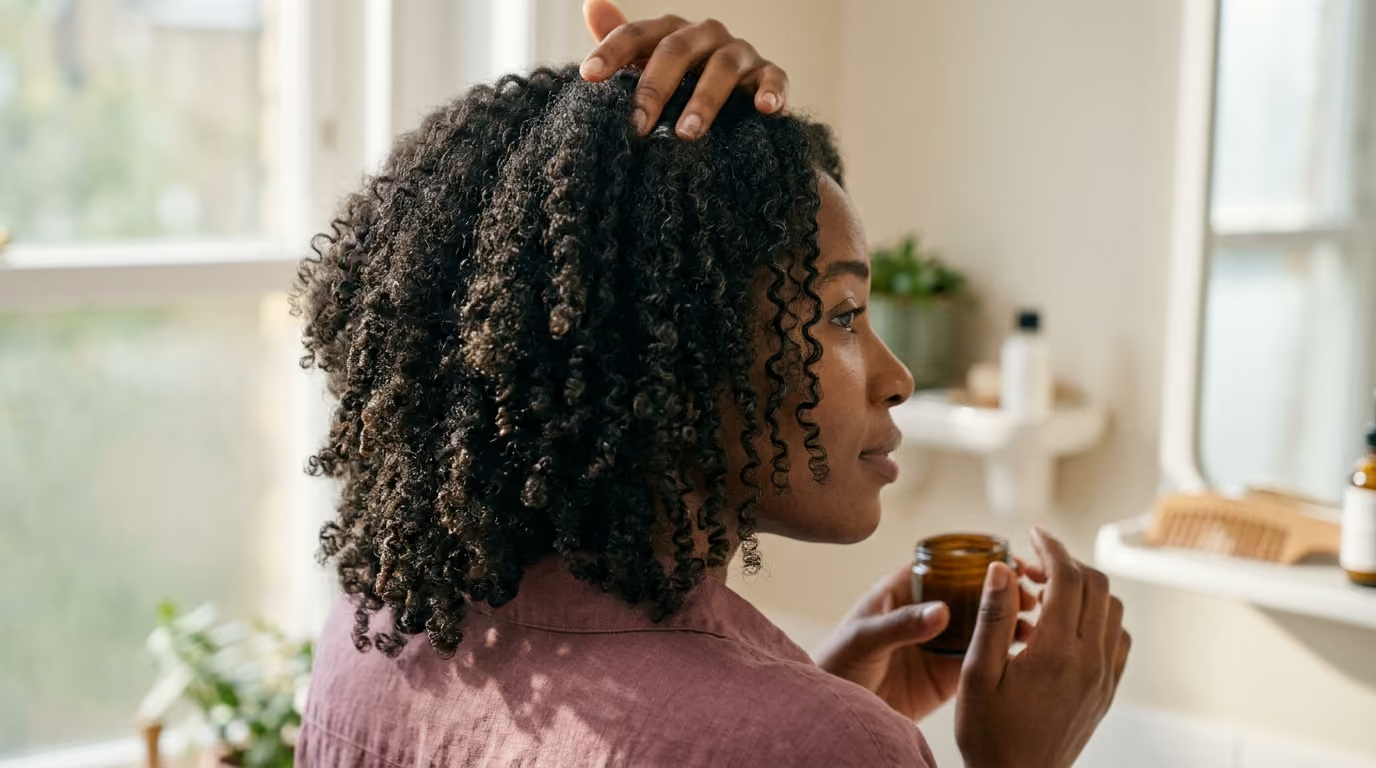

Around 3.5 micrograms of protein is lost per gram of hair during acid smoothing treatments, making targeted fiber protection essential for long-term strand strength.





Hair longevity is fundamentally an issue of fiber preservation rather than cellular regeneration. The visible hair shaft emerging from your scalp is nonliving keratinized protein, which means it cannot biologically self-repair once structural bonds, outer cuticle layers, or surface lipids are lost. While the living hair follicle beneath the scalp continues to produce new cells, the existing lengths must endure daily friction, thermal styling, and chemical processing. Preserving long-term hair quality is about managing the cumulative wear on this nonliving fiber, rather than expecting damaged strands to heal themselves over time.
Understanding this principle clarifies how cosmetic treatments alter your hair over months and years. Permanent color, bleach, chemical relaxers, keratin smoothing treatments, and hot tools all modify the physical architecture of the fiber to change its shape or appearance. When these interventions are applied without a clear understanding of fiber mechanics, cumulative damage leads to increased porosity, lost elasticity, and severe shaft breakage. This comprehensive guide examines the structural biology of hair, reviews the laboratory data on chemical and thermal stress, and provides a clear framework for protecting your hair over its entire lifespan.
Rigorous cosmetic and dermatological research has clarified how various salon services and styling tools alter human hair. Key findings from peer-reviewed literature and experimental hair biology show:
To understand how chemical services and heat tools cause damage, it is helpful to look closely at the architecture of the hair shaft. Hair consists of three distinct concentric layers: the cuticle, the cortex, and occasionally the medulla. Each layer plays a specific mechanical role in preserving the integrity of the strand.
The cuticle is the outermost protective envelope, composed of overlapping, scale-like cells arranged like shingles on a roof. A healthy cuticle lies flat, regulating moisture exchange, minimizing friction between neighboring strands, and preventing environmental chemicals from easily reaching the inner core. Bound to the surface of these cuticle cells is a specialized fatty acid known as 18-methyl-eicosanoic acid, or 18-MEA. This lipid layer gives healthy hair its hydrophobic, water-repellent nature and allows grooming tools to glide smoothly over the surface.
Beneath the cuticle lies the cortex, which makes up roughly 80 to 90 percent of the total fiber mass. The cortex contains long chains of keratin proteins organized into intermediate filaments, embedded in an amorphous, sulfur-rich protein matrix. The structural strength and elasticity of the cortex depend heavily on disulfide bonds, which are strong chemical linkages formed between sulfur-containing cysteine amino acids. The cortex also houses the melanin pigments that give hair its natural color. At the very center of thick or coarse hair lies the medulla, an open, spongy core that contributes minimally to the mechanical strength of the fiber.
When hair undergoes processing, damage generally falls into two distinct categories: surface damage and internal damage. Understanding the difference between these two states is essential for managing hair health over time:
Surface damage begins when the delicate 18-MEA lipid layer is stripped by alkaline products, oxidative chemicals, or excessive heat. Once this hydrophobic barrier disappears, the cuticle scales swell, lift, crack, and eventually chip away.
This creates significant microscopic friction between neighboring hairs, leading to constant tangling, a rough texture, and visible dullness. Because the cuticle is responsible for reflecting light, raised or eroded scales scatter light unevenly, making the hair look matte and lifeless.
Internal damage occurs when chemical agents or intense heat penetrate past the cuticle and alter the cortex. Oxidative agents break disulfide bonds, degrade keratin-associated proteins, and create microscopic voids within the structural matrix.
This internal degradation sharply reduces the tensile strength and elasticity of the fiber. The hair loses its natural ability to stretch under tension and snap back safely, becoming brittle and prone to fracturing under ordinary combing or styling.
Hair porosity describes how easily a hair fiber absorbs and loses moisture, processing chemicals, and conditioning agents. Rather than being a fixed genetic trait, porosity is largely an indicator of physical and chemical wear along the length of the shaft.
Low-porosity virgin hair has tightly aligned cuticle scales that resist water penetration and chemical entry. In contrast, high-porosity damaged hair has an open, fractured cuticle layer and an oxidized cortex, allowing water to rush into the fiber rapidly.
While high-porosity hair absorbs water quickly, it loses that moisture just as fast because it lacks the protective lipid barrier needed to retain internal hydration. This constant rapid swelling and shrinking when wet, known as hygral fatigue, places repeated physical stress on the structural proteins of the cortex. High-porosity hair frequently feels rough, dries unevenly, tangles easily, and becomes exceptionally fragile when wet.
You can learn more about managing fiber mechanics and structural integrity across our comprehensive hair health guides.
Cosmetic science evaluates hair damage using quantitative mechanical testing, biochemical assays, and electron microscopy. These laboratory methods provide an objective view of how specific chemical services and thermal practices degrade the fiber.
Alkaline relaxers work by permanently straightening curly or coiled hair through the deliberate disruption of cortical disulfide bonds. Sodium hydroxide, guanidine hydroxide, calcium hydroxide, and ammonium thioglycolate products operate at high pH levels, usually between 11 and 14.
This intense alkalinity forces the hair shaft to swell dramatically, lifting the cuticle scales and allowing the chemical agent to reach the cortex. Once inside, the relaxer breaks disulfide linkages, converting cystine into lanthionine through a process called lanthionization.
While this chemical restructuring effectively changes the curl pattern, it significantly weakens the structural integrity of the fiber. Comparative experimental studies have shown that conventional chemical straighteners cause approximately 2.5 micrograms of protein loss per gram of hair, compared to only 1.12 micrograms per gram in untreated virgin hair.
The high pH also strips away the protective 18-MEA lipid layer completely. Repeated overlapping applications compound this protein loss, leading to severe localized weakness and shaft breakage.
Many salon smoothing treatments are marketed as gentle or organic alternatives to traditional alkaline relaxers. These treatments often use glyoxylic acid or related aldehyde derivatives combined with intense flat-iron heat.
However, laboratory data reveal that these acid systems can cause substantial structural degradation. In controlled comparative experiments, glyoxylic-acid treatments caused approximately 3.5 micrograms of protein loss per gram of hair, the highest level among tested straighteners.
These acid smoothing systems operate at an acidic pH below 2.0 and require flat-iron temperatures around 200 degrees Celsius (392 degrees Fahrenheit) to cross-link proteins and seal the hair into a straight alignment. The combination of an extremely low pH, chemical restructuring agents, and high heat places substantial stress on the keratin matrix.
Electron microscopy of hair treated with acid-smoothing systems reveals notable cuticle irregularity, reduced water retention capacity, and diminished resistance to mechanical fracture.
Permanent hair coloring relies on an alkaline base, usually ammonia or ethanolamine, combined with hydrogen peroxide and oxidative dye precursors. The alkaline component swells the shaft and lifts the cuticle, allowing small dye intermediates and peroxide to penetrate deep into the cortex.
Inside the cortex, hydrogen peroxide oxidizes natural melanin granules to lighten baseline pigment while polymerizing dye precursors into larger, colored molecules that become trapped within the fiber.
This oxidative process permanently alters both the surface and the interior of the shaft. Tensile testing demonstrates that permanent oxidative dyeing reduces the breaking strength and total tensile energy of the fiber.
In one mechanical study, dyed hair exhibited an average tensile strength of 13.69 grams per square centimeter, compared to 14.66 grams per square centimeter in untreated virgin hair. While this reduction may seem modest after a single application, repeated all-over coloring causes cumulative cuticle lifting, cortical porosity, and progressive brittleness.
Bleaching is the most structurally destructive chemical service routinely performed on human hair. Lightening requires high concentrations of hydrogen peroxide combined with persulfate salts to deeply oxidize and dissolve melanin pigments.
Because persulfate-driven oxidation is non-specific, it degrades not only melanin but also the structural proteins of the cortex. Bleaching oxidizes cystine disulfide bonds, converting them into cysteic acid residues that cannot support the structural framework of the fiber.
Research indicates that bleaching rapidly penetrates the cortex as the protective cuticle is degraded. The severity of protein leaching increases directly with the strength of the developer and the processing time.
Bleaching degrades both cortical intermediate filaments and the sulfur-rich keratin-associated protein matrix. In mechanical assessments, bleaching has been shown to reduce Young's modulus, a standard measure of material stiffness and elasticity, by more than 1.5 times compared to oxidative coloring alone. This substantial loss of elasticity explains why heavily bleached hair frequently stretches like rubber when wet and snaps under gentle tension.
Thermal styling tools, including blow dryers, curling irons, flat irons, and hot combs, alter the temporary hydrogen bonds that hold keratin chains in place. When heat is applied, hydrogen bonds break, allowing the hair to be molded into a new shape that temporarily sets as the fiber cools and dries.
However, high temperatures also cause physical and chemical changes within the shaft. Heat evaporates both free and bound water from the fiber, leading to internal dehydration.
When wet or damp hair is heated above the boiling point of water, moisture trapped within the cortex vaporizes rapidly. This sudden expansion creates microscopic steam bubbles inside the shaft, a structural defect known clinically as bubble hair.
Bubble hair severely compromises the cortex, leaving the fiber brittle and prone to snapping at the site of each void. Furthermore, temperatures above 160 degrees Celsius (320 degrees Fahrenheit) cause the thermal breakdown of keratin proteins, weaken the cuticle, and increase combing friction.
Our deep reviews of published beauty science research highlight how cumulative thermal exposure progressively reduces tensile resilience across all hair textures.
While laboratory studies provide crucial insights into hair fiber mechanics, these findings come with important caveats that should shape how you interpret the evidence.
Most cosmetic testing is performed on standardized switches or tresses of harvested human hair in controlled laboratory settings. In these experiments, hair is exposed to uniform chemical concentrations, exact processing times, and mechanical pulling devices that apply constant, linear tension.
In real life, hair exposure is far more variable. Environmental factors such as ultraviolet radiation, water hardness, fluctuating humidity, shampoo habits, and friction against clothing all interact with chemical and thermal damage in ways that laboratory tress tests cannot fully replicate.
Tensile testing machines evaluate the maximum force required to pull a single hair fiber until it snaps. While tensile strength is an essential engineering metric, everyday breakage rarely occurs from pure linear pulling.
Instead, hair typically fractures due to complex, multidirectional forces: repeated bending, friction from brushing, snagging on rough tools, twisting, and sustained tension from tight hairstyles. A hair fiber that retains acceptable tensile strength in a laboratory pulling test may still break easily when subjected to everyday grooming friction.
Hair diameter, natural curl pattern, baseline porosity, and prior processing history vary widely across individuals. Thick, coarse fibers possess a larger cortex and can withstand more absolute protein loss before fracturing than fine, delicate strands.
Similarly, tightly coiled fibers have natural structural pivot points along the shaft that make them inherently more susceptible to mechanical friction and tension than straight fibers. Many published studies evaluate only one specific hair type, meaning precise numerical findings cannot be applied universally to all textures and backgrounds.
Many commercial hair treatments rely on silicones, cationic polymers, and conditioning oils to coat the shaft, smooth raised cuticle scales, and reduce surface friction. In consumer trials, these ingredients produce immediate improvements in combability, softness, and visible shine.
However, an improved cosmetic appearance does not indicate that broken disulfide bonds have reformed or that lost cortical proteins have been replaced. Conflating surface smoothness with structural repair is a common limitation in both consumer perceptions and industry marketing.
When you notice more hair in your brush, on your clothing, or in the shower drain, it is critical to determine whether you are experiencing shaft breakage or follicular shedding. Treating breakage with scalp treatments will not protect fragile lengths, and treating diffuse shedding with deep conditioners will not resolve underlying follicular triggers.
Hair breakage occurs when structural degradation along the nonliving shaft causes the fiber to fracture. Breakage is an engineering failure of the keratin structure, driven by chemical processing, excessive heat, physical friction, or chronic mechanical tension.
Common visual and physical indicators of breakage include:
Follicular shedding occurs when the living hair follicle completes its growth cycle and releases an intact hair strand from beneath the scalp. Normal hair cycling involves shedding between 50 and 100 hairs per day as follicles transition from the active growing phase (anagen) through regression (catagen) to the resting phase (telogen).
Telogen effluvium is a common form of excessive, diffuse shedding that occurs when a systemic stressor shifts a large percentage of growing follicles into the telogen phase prematurely. Triggers can include severe psychological stress, acute illness, high fever, childbirth, hormonal shifts, nutritional deficiencies, or rapid weight loss.
Indicators that favor follicular shedding over shaft breakage include:
It is entirely possible to experience both shaft breakage and follicular shedding at the same time. For instance, someone recovering from an acute illness might develop telogen effluvium while also experiencing breakage along older lengths from regular bleaching or hot-tool use.
Similarly, continuous physical tension from tight braids, weaves, or extensions can cause mechanical shaft fracture while simultaneously stressing the follicle, a condition known as traction alopecia. If your hair shedding is sudden, patchy, accompanied by scalp burning, redness, or tenderness, consult a board-certified dermatologist for a comprehensive clinical evaluation.
For more diagnostic perspectives, explore our hair preservation resources in our dedicated longevity library.
Preserving hair quality requires a systematic approach to managing chemical and physical stress. By viewing your hair as having a finite structural reserve, you can make informed choices that reduce breakage while maintaining your desired style.
Think of your hair shaft as possessing a non-renewable damage budget. Virgin hair begins with a full structural reserve: an intact 18-MEA lipid layer, aligned cuticle scales, and an uncompromised cortex with intact disulfide bonds. Every chemical service, heat application, and aggressive brushing session spends a portion of that reserve.
To prevent premature breakage, avoid combining multiple high-cost interventions simultaneously. If you choose to chemically relax or bleach your hair, reduce your use of hot tools and avoid adding additional oxidative chemical services.
When scheduling chemical services, how you sequence appointments and apply products determines how much structural integrity your hair retains over time.
Heat styling can be managed intelligently to minimize thermal degradation and prevent cuticle cracking.
Because damaged hair loses its natural 18-MEA lipid layer, replacing that lubricity with topical conditioning agents is essential to prevent mechanical breakage during detangling.
To see how these principles work in practice, consider five common damage patterns and their evidence-based recovery strategies.
For more lifestyle and structural longevity frameworks, explore our beauty longevity editorial articles.
Understanding hair fiber science requires separating commercial marketing narratives from genuine biological facts.
Discover more evidence-based analyses of modern cosmetic ingredients across the Younell beauty longevity library.
No topical cosmetic product can permanently fuse split ends back together. The hair shaft is nonliving keratin, so unraveled or fractured cortical proteins cannot undergo biological repair.
Certain conditioning serums and polymer treatments can temporarily glue split ends together until your next shampoo, improving combability and visual smoothness. However, once the cuticle has stripped away and the cortex has split, the only permanent solution is to trim the damaged section above the fracture point. Trimming prevents the split from traveling further up the hair shaft.
The American Academy of Dermatology recommends waiting at least two weeks between a chemical relaxer or perm and an oxidative hair color service. Undergoing both treatments in a single salon visit subjects the hair shaft to intense alkaline swelling and oxidative stress all at once, dramatically increasing the risk of immediate breakage.
While waiting two weeks does not reverse the damage caused by the relaxer, it allows the fiber to re-equilibrate its moisture content and lets the scalp recover its natural protective lipid barrier. When you do color your hair, opt for deposit-only or demi-permanent formulas rather than high-lift permanent dyes whenever possible.
While air-drying avoids the thermal degradation caused by hot tools, it is not entirely free of physical stress. When hair remains wet for extended periods, the inner cortex absorbs water and swells, placing sustained tension on the outer cuticle scales.
This prolonged swelling can weaken the cell membrane complex over time, a process known as hygral fatigue. The most protective approach is hybrid drying: allow your hair to air-dry naturally until it is roughly 70 to 80 percent dry, then finish drying with a blow dryer on its lowest heat and airflow setting from a distance of six inches.
This point along the fiber is called the line of demarcation. It represents a sharp physical junction between newly emerged virgin hair and previously processed, chemically altered hair.
These two sections possess very different textures, surface friction levels, swelling behaviors, and mechanical elasticity. When you comb, brush, or style your hair, mechanical stress concentrates directly at this transition point. If the previous chemical service overlapped onto that junction, the local structural reserve becomes severely depleted, making the fiber snap at that specific boundary.
Stay connected for research and practical guidance on skin, hair, collagen, nutrition and beauty longevity. Clear ideas for people who want to understand how appearance changes with age and make better-informed choices over time.


Understand your skin, hair and body better without chasing every new trend, treatment or promise.
explore the Blog