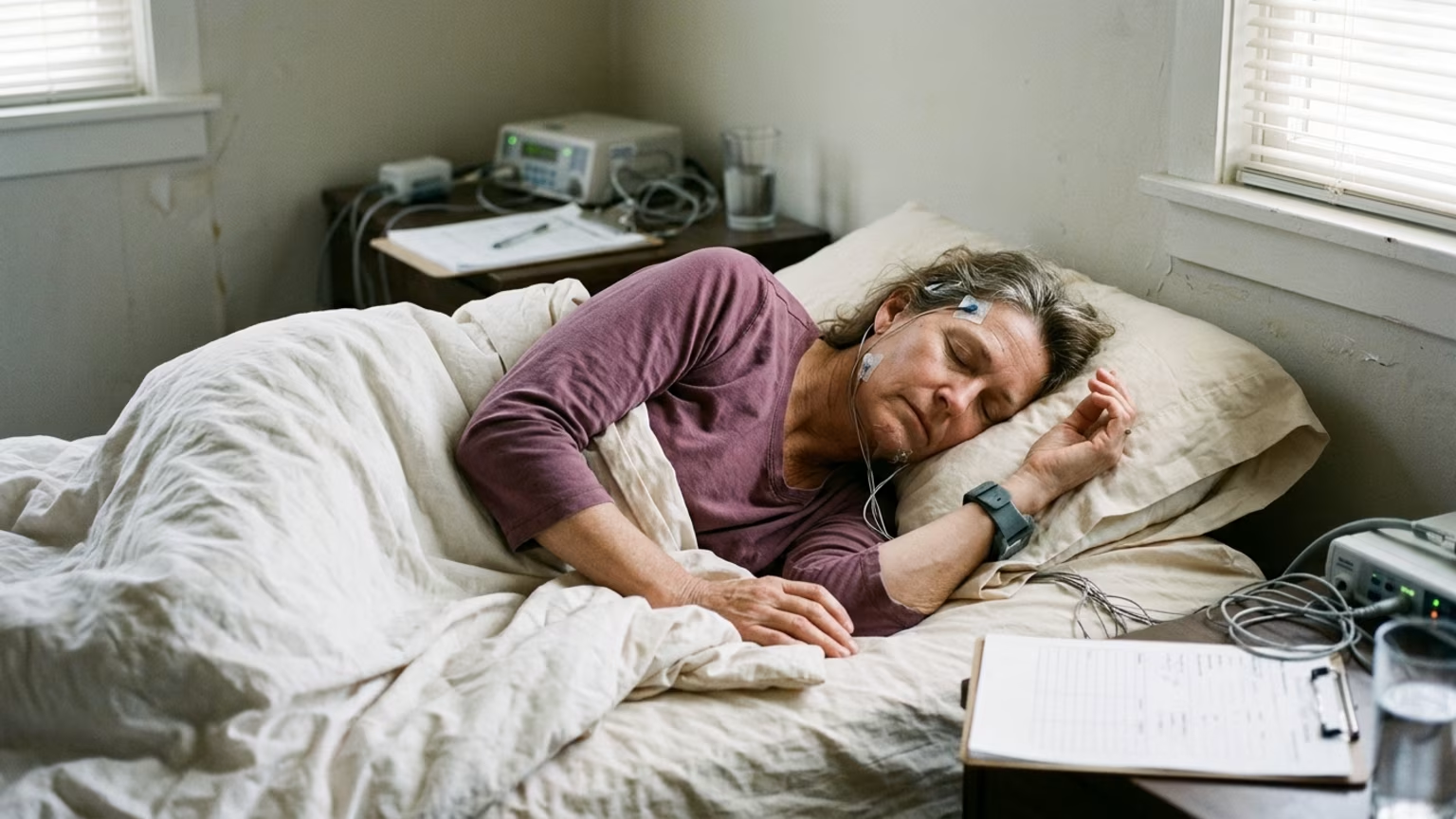

A large Nature study linked sleep duration with biological-aging markers. We explain the estimated range, skin finding and practical limits.





On May 13, 2026, Nature published “Sleep chart of biological ageing clocks in middle and late life.” The large observational study examined how reported sleep duration related to biological-aging measures across the body. Its findings included a skin-related signal and an estimated range that deserves careful interpretation.
According to ScienceDaily’s coverage, researchers examined self-reported sleep duration in roughly 500,000 UK Biobank participants aged 37 to 84. They compared those reports with 23 biological-aging clocks spanning 17 organ systems.
These clocks drew on imaging, plasma proteins and metabolites. They estimated biological-age gaps rather than simply recording chronological age. The researchers were therefore looking at how reported sleep hours related to different measures of biological aging.
That distinction matters when reading the results. A biological-aging clock is a research measure. An association with its estimates answers a different question from whether participants experienced a change in their health or appearance.
The Nature paper also reported associations between short or long sleep and systemic disease outcomes and all-cause mortality. This broadened the analysis beyond aging markers alone. Those outcome associations still need to be interpreted within the study’s observational design.
For a beauty-and-longevity readership, one measure was especially relevant: a skin proteomic aging clock. The researchers found a U-shaped relationship between reported sleep duration and this protein-based measure of skin aging. It places skin within the study’s wider examination of sleep and biological-aging signals across organs.
The Nature study reported statistically significant nonlinear associations for nine of its 23 biological-aging clocks. In everyday language, the relationship was not a straight line in which every additional hour of sleep corresponded to a lower biological-age gap.
Instead, the researchers observed a U-shaped pattern. As reported by Huffington Post UK, participants reporting under six or over eight hours of sleep had higher biological-age gaps than those in the comparison category of six to eight hours.
Across the significant clocks, estimated minimum biological-age gaps generally fell between 6.4 and 7.8 hours. Huffington Post UK reported that these low points varied by organ and sex.
The variation is part of the finding. There was not a single estimated low point shared across every measure. Nor did every clock show a statistically significant nonlinear association with sleep duration.
The researchers also used six to eight hours as the “normal” category for downstream analyses. That category and the estimated low points serve different analytical purposes. Neither should be read as a newly established clinical sleep recommendation.
The authors identify several limits that shape how these findings should be understood. First, the study was observational and its cross-sectional design limits causal conclusions. It did not establish that changing sleep duration would slow biological aging or produce a particular real-world health outcome.
Second, sleep duration came from participants’ reports. The researchers note that self-reported sleep is less objective than actigraphy or polysomnography. The study also did not directly assess sleep fragmentation or circadian misalignment, so its findings should not be treated as a complete assessment of sleep quality or timing.
Third, the analysis was restricted to participants of predominantly European ancestry. The authors caution that this limits how confidently the findings can be generalized to more diverse populations. The large sample does not remove that limitation.
The researchers also could not exclude residual confounding or reverse causality. Other influences may contribute to the observed associations. Underlying health conditions could affect how long someone sleeps, rather than sleep duration alone accounting for differences in biological-aging measures.
Finally, the skin finding concerns a molecular aging measure. The study did not test visible skin appearance, wrinkles or collagen. It also did not test whether a sleep intervention improved those outcomes.
Together, these limits separate an observed population pattern from an intervention result. The study provides evidence about relationships among reported sleep hours and aging measures. It does not provide a demonstrated method for changing those measures.
The 6.4 to 7.8-hour interval is a population-level range estimated across different clocks. It is not a universal prescription. The authors also note that definitions of sleep duration vary across studies and contexts.
The clearest practical implication is therefore not to trim sleep to fit the reported interval. Someone who feels they need more sleep should not restrict it simply to match these numbers. Sleeping within the range is not a guarantee of slower aging either.
Unusually short or long sleep also should not become a self-diagnosis based on this paper. Personal concerns about sleep patterns are better discussed with a qualified healthcare professional. An aging-clock association cannot identify why an individual’s sleep has changed.
For readers interested in skin health, the finding offers a reason to pay attention to research connecting sleep with skin-related biology. It does not provide a basis for choosing a beauty product or treatment. No product outcome was tested in this analysis.
Younell’s coverage of sleep duration in the context of biological aging offers related reading on this subject. Our analysis of daytime light and sleep-related research addresses a separate part of the broader sleep discussion. Keeping duration, quality and timing distinct helps prevent evidence about one feature from becoming a claim about all of them.
The useful shift is from asking which decimal-point target to follow toward asking what the study actually measured. Here, that means reported hours of sleep and their relationship with biological-aging estimates across several body systems.
A useful next research question is whether deliberately changing sleep duration alters these biological-aging measures over time. Another is whether any resulting change would correspond to meaningful health outcomes. For skin specifically, molecular aging measures and visible appearance would need to be assessed as distinct outcomes.
This study adds a substantial observational dataset to the discussion of sleep and healthy aging. Its value lies in showing a pattern across multiple measures while making the differences among those measures visible. The evidence supports taking sleep patterns seriously without turning an estimated population range into a personal beauty target.
Stay connected for research and practical guidance on skin, hair, collagen, nutrition and beauty longevity. Clear ideas for people who want to understand how appearance changes with age and make better-informed choices over time.


Understand your skin, hair and body better without chasing every new trend, treatment or promise.
explore the Blog


