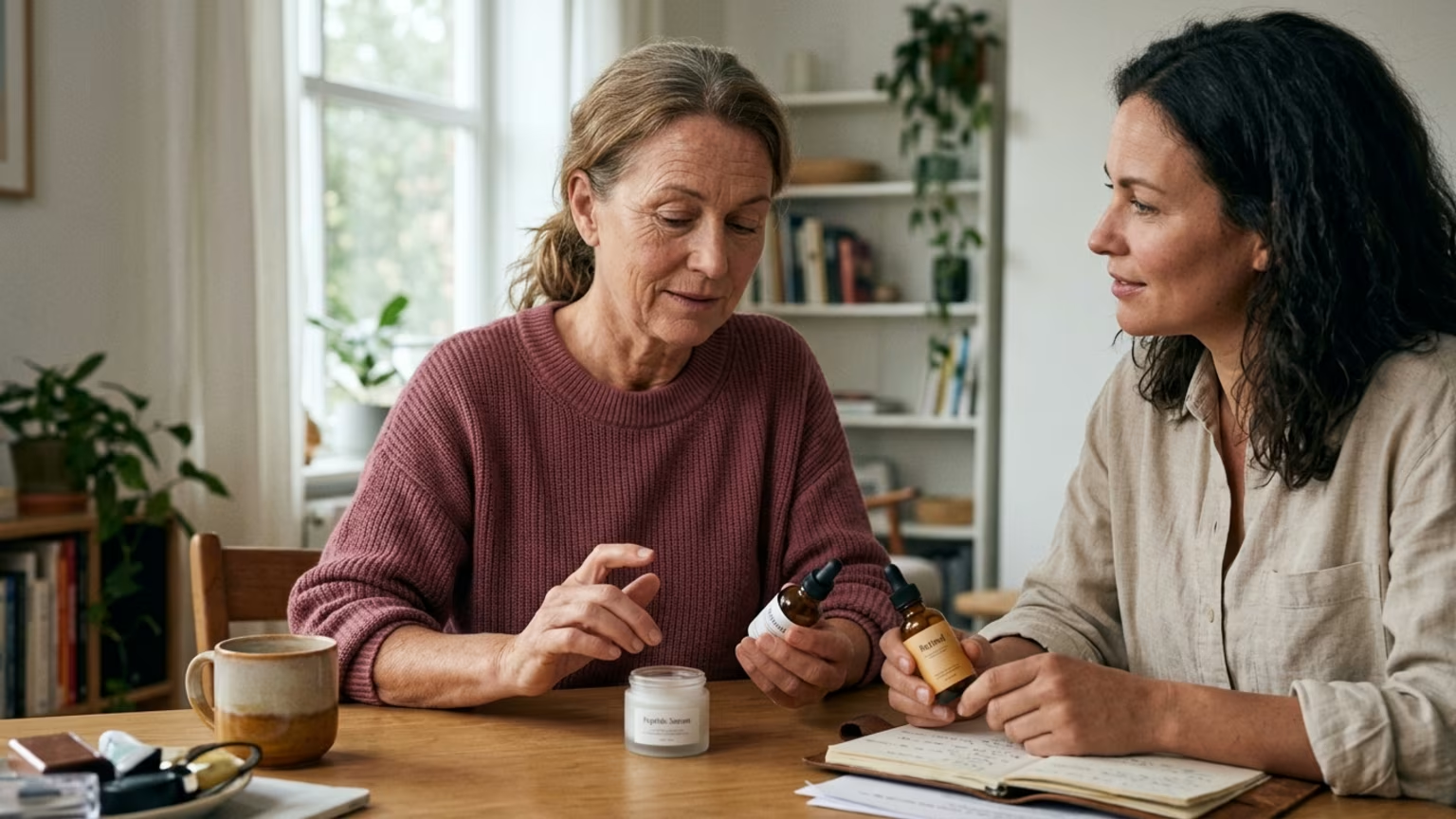

A 2025 clinical trial found a specific hexapeptide-9 serum improved wrinkles better than retinol. We review the data, limitations, and realistic takeaways.





In 2025, a randomized clinical trial evaluated cosmetic peptides for photoaged skin. The study compared a specially formulated hexapeptide-9 serum with a retinol formulation in people showing signs of skin aging. After eight weeks, the hexapeptide-9 formulation improved several measures of forehead and crow's-feet wrinkles. Mathrubhumi reports it performed better than the retinol formulation on most measured outcomes.
This finding provides a helpful benchmark for cosmetic formulation science. However, researchers caution against generalizing the result to all cosmetic routines. Because the trial evaluated one specially formulated hexapeptide-9 serum, it cannot establish that peptides generally outperform retinol. A separate 2023 clinical study of a multi-peptide eye serum showed similar encouraging signals.
That 2023 study involved 32 participants and lasted 28 days. Researchers reported improvements in wrinkle appearance, hydration, elasticity, and firmness. Mathrubhumi characterizes its small size and limited reported design as encouraging rather than definitive. We must look closer at biological mechanisms to understand why individual formulas vary so widely.
Peptides are essentially short chains of amino acids. In targeted skincare, some topical peptides are intended to signal pathways associated with collagen production. They also interact with skin repair mechanisms and the extracellular matrix. The biological label covers multiple ingredients with entirely different cellular functions.
Therefore, the presence of a peptide on an ingredient list does not predict a specific cosmetic result. Formulators face significant challenges regarding stability and skin penetration. The chosen delivery system, active concentration, and the finished product vehicle may materially affect performance. A poorly constructed formula may prevent the active molecules from reaching their intended cellular targets.
This aligns with our previous analysis on how peptides operate in daily routines. A 2024 review of cosmeceuticals for photoaged skin found a relatively strong evidence base for peptides compared with several other ingredients. However, the review noted that earlier research included substantial laboratory and animal work. Claims about collagen stimulation based only on cell experiments should not be presented as proof of visible clinical improvement.
The recent hexapeptide-9 trial is interesting, but retinoids maintain a substantially larger body of aggregated data. A 2025 network meta-analysis evaluated 23 randomized trials involving 3905 participants. This extensive review found clear benefits from retinoid treatments for photoaging outcomes like fine wrinkles and hyperpigmentation. A separate 2025 systematic review of eight randomized trials involving 1361 participants confirmed similar outcomes.
The Beauty Briefing reports that topical tretinoin improved fine and coarse facial wrinkles caused by photodamage compared with vehicle treatments. The retinoid evidence base therefore includes substantially more randomized trial data than the specific hexapeptide-9 comparison. Retinoid evidence should also be interpreted carefully regarding over the counter products. Evidence for prescription tretinoin cannot simply be transferred to every cosmetic retinol serum.
Retinol and tretinoin differ in potency, conversion rates, formulation stability, and regulatory status. Recent reports also highlight a stark contrast in human trial volume. The Beauty Briefing notes a 2026 meta-analysis of 19 randomized trials encompassing 1341 participants. Crucially, only two of those 19 trials evaluated topical peptide formulations.
Those two topical trials represented just 105 participants, while the remaining participants used oral peptides. This distribution means pooled evidence cannot automatically be interpreted as validation for topical serums. Oral and topical products utilize different administration routes, formulations, and biological pathways. Consumers learning how to evaluate topical longevity ingredients should recognize these important clinical distinctions.
Try-Astra characterizes peptide, vitamin C, and botanical studies as often small and short. They observe that some clinical trials lack an inert control arm for proper comparison. Their report states pooled peptide findings were more consistent for hydration and brightness than for actual wrinkle reduction. They describe the measured wrinkle effect as modest and largely influenced by oral polypeptide studies.
The 2025 hexapeptide-9 study contains several visible clinical limitations. The available report does not provide the trial sample size, participant ages, sex distribution, or skin types. It also omits the specific peptide concentration, retinol concentration, application frequency, and statistical results. This absence of core data prevents an independent assessment of clinical importance.
An eight-week study is simply too short to establish long-term wrinkle prevention. It cannot determine durability after stopping treatment, or whether the active compound remains effective over longer periods. Furthermore, differences in vehicle, moisturizer content, and tolerability may have contributed to the specific result. There is no proof that the retinol comparator represented the most effective available regimen.
Evidence for one hexapeptide-9 serum should not be generalized to copper peptides, signal peptides, or neurocosmetic peptides. It also does not apply to products that merely use the category word in their marketing materials. The beauty market has also expanded messaging beyond conventional topical skincare into clinic-based injectable treatments. Mathrubhumi reports the U.S. Food and Drug Administration has raised concerns about several compounded injectable peptides.
The agency cited limited human safety information alongside possible impurities and potential immune reactions. They noted specific concerns regarding compounded BPC-157, CJC-1295, and injectable GHK-Cu. These injectable safety concerns should never be conflated with the use of a properly labeled cosmetic serum. They concern the route of administration, product quality, and strict regulatory status.
A clinical trial on a topical serum cannot justify claims about injectable therapy. Consumers considering injectable treatments must ask for specific human safety evidence and proper regulatory approval. Health conscious women aged 30 to 60 can use this clinical context to refine their expectations. Treat the 2025 result as a reason to look for product specific clinical evidence rather than replacing retinol automatically.
When evaluating a serum, check the finished formula, delivery claims, and study duration. Be cautious when a brand advertises a vague peptide complex without providing human data on the finished product. Use moisturizer and barrier supportive care alongside any active ingredient rather than treating one serum as a complete regimen. We often recommend using a safe framework for resolving skin problems when integrating new compounds.
During our comprehensive review of environmental aging, we tested how various lifestyle factors impact skin barrier recovery. It was fascinating to see the data clearly show that simple habits like sleep and basic hydration often outperform the most expensive topical treatments. This reinforced our commitment to emphasizing foundational health over product hype. Basic hydration consistently protects the dermal barrier during cellular turnover.
Continue prioritizing daily sunscreen because limiting ultraviolet exposure remains central to reducing ongoing photoaging. If pigmentation, acne, or irritation are significant concerns, discuss options with a qualified dermatologist before changing treatments. A well formulated peptide serum is an optional addition for those seeking a potentially gentler product. Current evidence does not justify calling peptides a proven replacement for retinoids.
The clinical landscape for cosmetic formulations is slowly shifting from small laboratory studies to comparative trials. As research standards improve, we expect to see larger populations tested over much longer durations. The recent data provides a fascinating glimpse into how tailored formulas might one day match established gold standards. How will future comparative studies finally isolate the exact long-term impacts of targeted active ingredients?
Stay connected for research and practical guidance on skin, hair, collagen, nutrition and beauty longevity. Clear ideas for people who want to understand how appearance changes with age and make better-informed choices over time.


Understand your skin, hair and body better without chasing every new trend, treatment or promise.
explore the Blog