A 2025 observational study of 1,510 Indian women links higher heat index to increased odds of facial pigmentation and wrinkles. Read our practical breakdown.





In 2025, an observational study of 1,510 Indian women highlighted high heat and humidity as independent environmental factors that influence visible facial aging. According to a beauty feature published in the Times of India, researchers evaluated participants aged 20 to 91 across three metropolitan areas. The primary goal of the research was to understand how cumulative exposure to specific weather conditions affects skin quality over time. These new findings demonstrate that broader climate conditions play a measurable role in long term skin longevity.
The core scientific finding centers entirely on the heat index, a combined measurement of ambient temperature and atmospheric humidity. In highly humid conditions, sweat remains trapped on the surface of the skin for much longer periods. This lingering moisture can fundamentally alter the local microbial environment, and it often increases perceived oiliness throughout the day. A persistently damp environment also amplifies physical friction from clothing and intensifies the oxidative stress placed on the skin by urban air pollution.
These combined environmental pressures directly impact the biological behavior of our skin cells. A 2026 narrative review on cutaneous aging in skin of color provides important biological context. The review reports that heat exposure can promote new melanin production through complex signaling between keratinocytes and pigment-producing cells. This mechanism helps explain why delayed onset of certain wrinkles can coexist with a greater burden of pigmentation issues.
When our team tested how environmental factors impact skin barrier recovery over time, the data revealed a fascinating pattern. We noticed that aggressive attempts to scrub away humidity-induced oiliness consistently disrupted the skin barrier far more than the humid weather itself. This observation reinforced our belief that adapting to seasonal climate changes requires gentle consistency rather than harsh interventions.
To measure these environmental effects objectively, the 2025 study utilized the SCINEXA skin-ageing score. This system is a clinically validated dermatological tool specifically designed for grading visible aging markers. Researchers found specific statistical correlations by modeling participants against temperature, humidity, ultraviolet radiation and air pollution. For every 1°C increase in the heat index, the reported odds of forehead pigmentation increased by 31%.
The clinical data also showed a 30% increased odds of under-eye wrinkles and a 17% increase for crow’s feet. These reported associations are particularly notable because they remained steady after researchers adjusted the final data for age and UV exposure.
This specific statistical adjustment led the report to describe the heat index as an independent predictor of these facial markers. However, it is essential to interpret these numbers with practical caution. Real world outcomes always depend on a much wider range of personal lifestyle habits, genetics, and foundational health factors. These figures represent mathematical odds within a very specific research cohort rather than guaranteed aesthetic outcomes for every individual.
Making scientific uncertainty visible is a central part of how Younell evaluates beauty research. The most significant limitation of this report is its fundamental study design. Because this was strictly an observational study, it establishes a mathematical association rather than proving that heat directly causes wrinkles or pigmentation. The published feature reports percentage increases in odds, but it does not provide absolute baseline risks or complete confidence intervals.
Without these detailed metrics, the practical size of the risk for an individual woman cannot be accurately calculated. Additionally, the research focused exclusively on 1,510 Indian women living in three unnamed metropolitan areas. These exact findings cannot automatically be generalized to men, other ethnic groups, or populations living in vastly different global climates. The available reporting also lacks complete transparency on how comprehensively variables like indoor heating or socioeconomic factors were controlled.
It is also unclear whether air pollution was fully isolated in the final adjustment model. Therefore, these findings should be viewed as an early observational signal rather than absolute proof of direct causation.
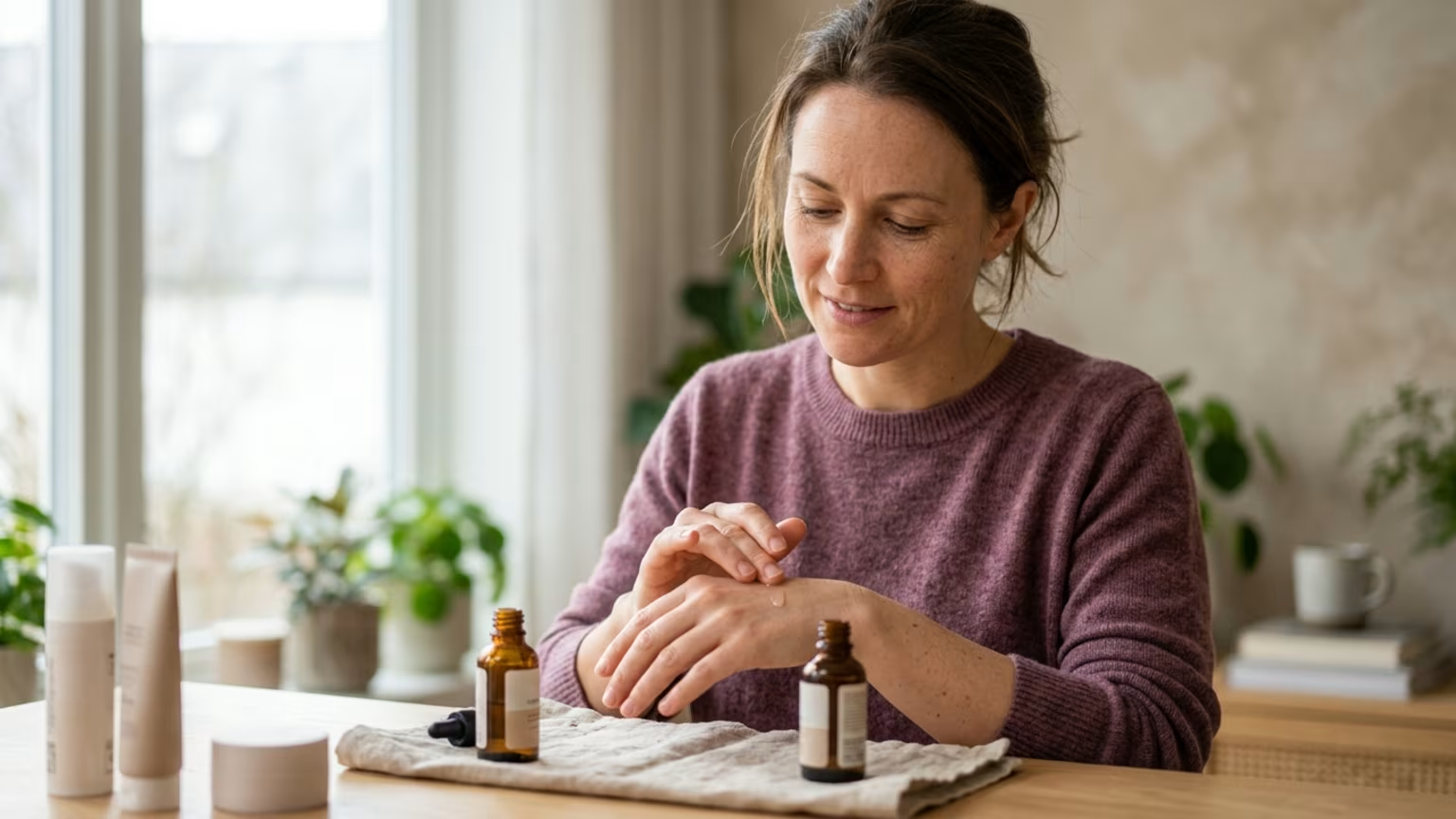
Translating these environmental findings into a practical routine requires a calm focus on gentle barrier support. These steps should be viewed as sensible climate adaptations rather than guaranteed preventive solutions.
As researchers continue to investigate the complex interactions between local climate and human biology, the scientific conversation is fundamentally shifting. We are moving from simple sun avoidance to a broader focus on total environmental resilience. Will future formulations focus heavily on specific thermoprotective ingredients to shield the cellular barrier from extreme humidity and temperature spikes? As we gather more long term data on the heat index, our understanding of environmental adaptation will undoubtedly evolve.
Stay connected for research and practical guidance on skin, hair, collagen, nutrition and beauty longevity. Clear ideas for people who want to understand how appearance changes with age and make better-informed choices over time.




Understand your skin, hair and body better without chasing every new trend, treatment or promise.
explore the Blog