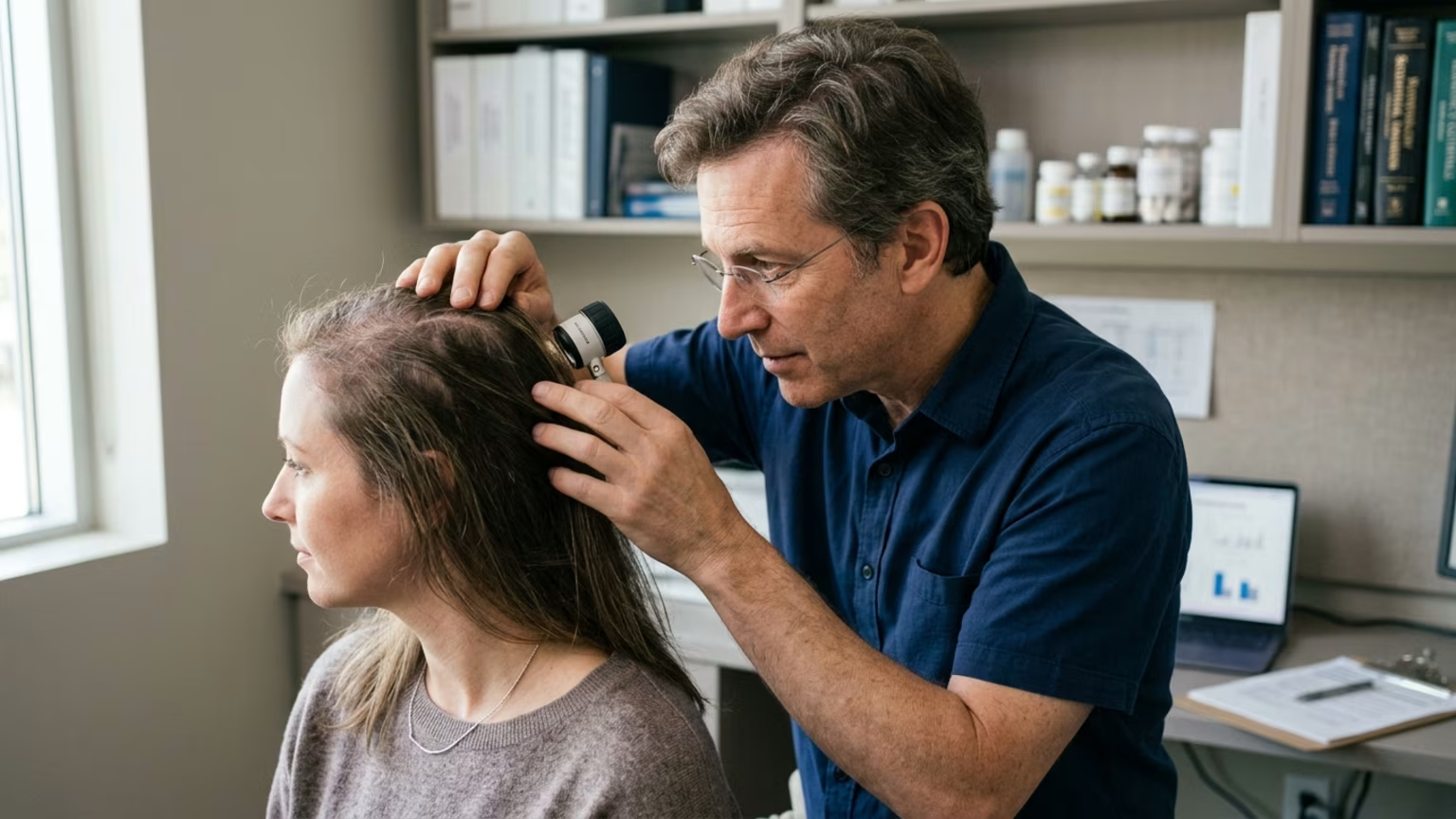

A clinical review of emerging hair loss treatments, explaining why medical diagnosis must come before experimental therapies like exosomes or stem cells.





On September 17, 2026, a comprehensive review published by the Brazilian outlet O Globo examined the clinical reality of new regenerative therapies for thinning hair. The piece was featured in the publication's Ela section and evaluated emerging procedures like stem cell applications, exosomes and growth factor therapies. While these treatments are gaining significant attention in specialized clinics, the review noted that many of them remain in their early stages. The article firmly guided readers to prioritize medically evaluated therapies rather than experimental procedures marketed without robust long term data.
The conversation around hair restoration often focuses on the procedures themselves rather than the biology of the scalp. The O Globo article discussed a wide array of options currently offered in clinics. These included platelet rich plasma, lasers and photobiomodulation. The article also examined microneedling, mesotherapy and the microinfusion of medicines. However, dermatologist Guilherme Triches, a physician at the Onne Clinic in Rio de Janeiro, emphasized in the article that hair loss is a symptom rather than a diagnosis.
Causes can range from hormonal shifts and nutritional deficiencies to inflammatory diseases, medications, genetic predisposition and major physical stress. O Globo's Ela section thoroughly detailed that these treatments function differently based on the exact stage of hair loss. Regenerative approaches are designed to complement care only when hair follicles remain preserved. They cannot create new follicles or restore structures that have been completely destroyed by advanced conditions. Because hair grows in a notoriously slow cycle, results from any intervention must be assessed over several months rather than judged in the first few days.
When evaluating regenerative medicine, looking closely at the clinical trial data is essential for setting realistic expectations. A 2026 review on extracellular vesicle treatments for androgenetic alopecia showed that clinical evidence remains highly limited. The researchers noted that most reported clinical data for these therapies come from single arm studies rather than robust comparative trials. Furthermore, the review identified only two randomized controlled trials across systematic reviews.
Both of those randomized trials featured limited sample sizes, making broad clinical conclusions difficult to draw. The same 2026 review highlighted a one year retrospective study involving exactly 60 patients with mild to moderate androgenetic alopecia. While this data point is interesting, it represents a particular study finding rather than definitive proof of general efficacy. It certainly does not prove that the approach works broadly or specifically for women experiencing structural thinning.
The O Globo review explicitly stated that much of the research on stem cell and exosome approaches relies on small patient groups. Larger studies and longer follow up periods are necessary to establish clear uses, expected results and safety precautions. Additionally, products marketed as exosomes may differ substantially in their origin, composition and concentration. The same variation applies to products labeled as growth factors, which differ widely in their scientific support.
These diverse therapies should not be grouped as if they share the identical evidence base. Platelet rich plasma, lasers and microneedling all have different mechanisms of action and varying levels of clinical validation. For instance, the American Academy of Dermatology explicitly advises patients to consult a dermatologist before attempting microneedling. This procedure can actually worsen certain scalp conditions, and the specific type of device used matters greatly for patient safety.
These limitations remind us of a core philosophy here at Younell. I remember speaking with a dermatologist who told me her patients were coming in with severe anxiety about normal skin aging. That anxiety was driven entirely by social media filters and aggressive marketing. That conversation became a cornerstone of our philosophy. We decided right then that our publication would never frame natural changes like wrinkles or thinning hair as personal failures. Aggressive marketing exploits that very anxiety to sell experimental procedures before long term data exists.
For health conscious women dealing with changes in hair density, the most practical first step is a formal medical assessment. The American Academy of Dermatology advises that effective treatment must start with identifying the specific cause of the shedding. This evaluation often involves a detailed patient history, a scalp examination and targeted tests like blood work or a biopsy when indicated. Because visually similar shedding can stem from entirely different triggers, understanding how hair loss is diagnosed is essential for preventing wasted time.
If you are considering options for a confirmed diagnosis, the clinical expectations are quite specific. The American Academy of Dermatology identifies topical minoxidil as an FDA approved and highly recommended treatment for female pattern hair loss. However, meaningful visible results typically take six to 12 months of consistent application. Furthermore, continued daily use is required to maintain any structural benefits you achieve over time, making it crucial to evaluate prescription treatments for female hair loss with a long term mindset.
Another practical consideration is the difference between temporary shedding and progressive structural loss. The American Academy of Dermatology emphasizes that some types of hair loss may eventually regrow on their own depending on the initial cause. Intervening with expensive regenerative procedures for a temporary shedding phase is entirely unnecessary. Proper medical testing helps you determine if active intervention is required or if careful monitoring is a safer approach.
When discussing emerging therapies with a clinician, it is vital to ask direct questions about the clinical evidence. Patients should ask what specific diagnosis is being treated and what robust data supports the exact product being offered. O Globo noted that products under the same exosome or growth factor label may differ significantly in quality and efficacy. You have a right to know if the formulation your clinic uses has actually been tested on patients with your specific condition.
Do not assume that dietary supplements are necessary simply because your hair is shedding. The American Academy of Dermatology notes that vitamins and minerals are typically recommended only when a medical test confirms a specific nutritional deficiency. Buying over the counter vitamins without blood work often delays proper treatment for the true underlying cause. This is a key concept to remember when researching female pattern hair loss causes and developing a sensible management plan.
The science of scalp care and follicle preservation is moving rapidly, but genuine clinical validation takes time. As researchers continue to standardize exosome formulations and run larger clinical trials, our understanding of these therapies will undoubtedly become clearer. Until then, patience and careful medical assessment remain your most reliable tools. As we watch this sector mature, one cannot help but wonder: how will the next decade of rigorous clinical testing reshape our baseline expectations for regenerative hair therapies?
Stay connected for research and practical guidance on skin, hair, collagen, nutrition and beauty longevity. Clear ideas for people who want to understand how appearance changes with age and make better-informed choices over time.





Understand your skin, hair and body better without chasing every new trend, treatment or promise.
explore the Blog