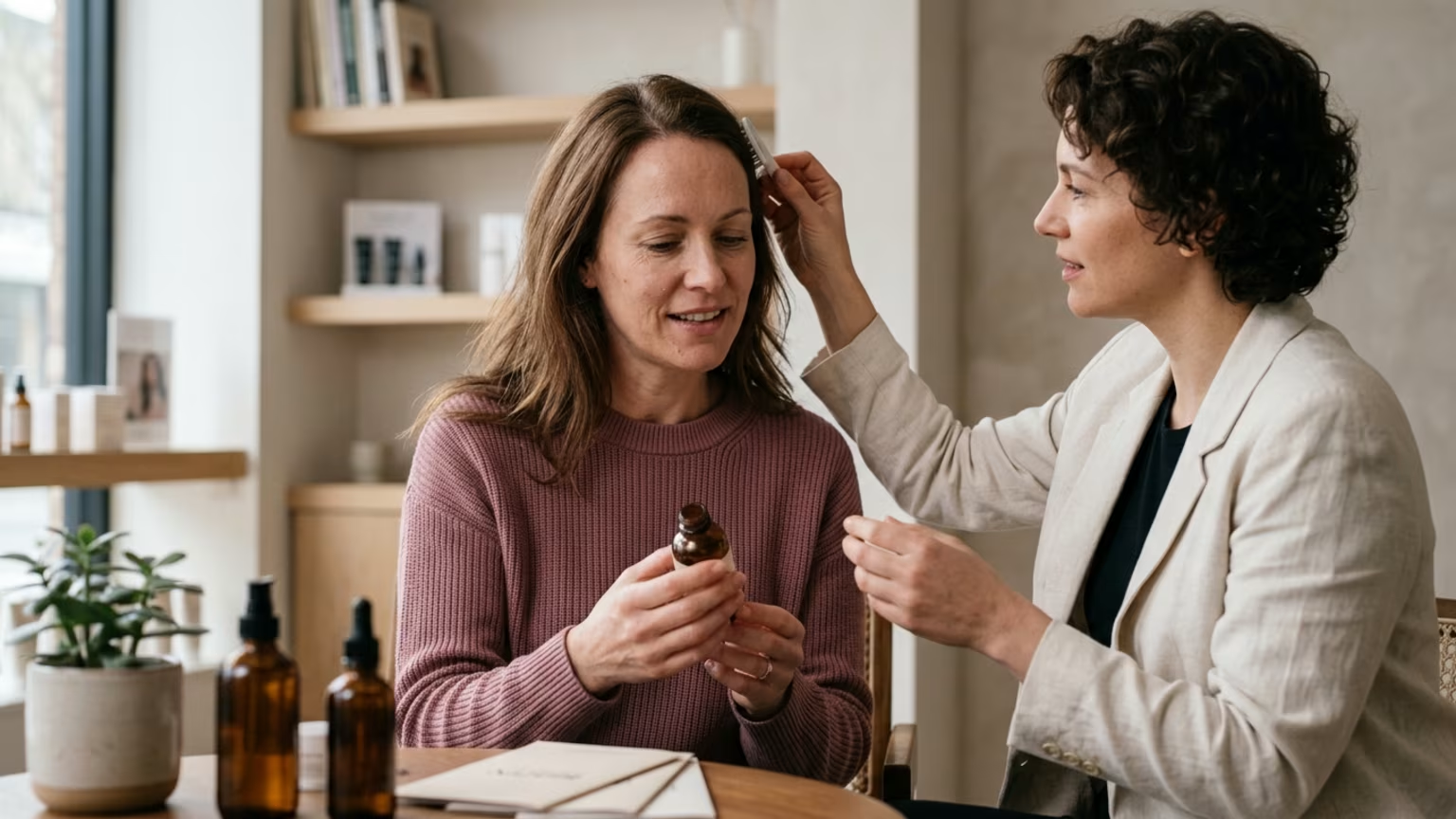

Reviewing the new Biotin Xtreme Hair Care scalp program for GLP-1 thinning. We examine the biological links, clinical limitations, and practical care steps.





On September 8, 2026, Biotin Xtreme Hair Care announced the launch of a natural scalp support program. The initiative is positioned specifically for consumers experiencing shedding after rapid weight loss or GLP-1 treatment. The Atlanta-based hair care company describes the launch as a three-step regimen designed to address thinning hair. This move highlights a growing consumer concern about medication-related hair changes and systemic stress.
The brand was founded by salon specialists. Biotin Xtreme Hair Care reports having more than 30 years of salon experience. The brand also cites more than 30,000 in-salon client consultations. These figures are company-reported rather than independently audited in the announcement.
The distributing page states that the company is solely responsible for the accuracy of the press release. The announcement reflects a broader wellness opportunity created by the growing use of metabolic therapies. Consumer demand is clearly emerging around hair shedding during weight loss. However, the exact mechanisms and best preventive strategies remain incompletely established in clinical settings.
Biotin Xtreme Hair Care connects this thinning primarily to rapid weight reduction and physiological stress. The company characterizes the condition as telogen effluvium. The release describes telogen effluvium as a temporary process. During this process, hair follicles prematurely enter a resting phase after a shock to the system.
According to Steve Haymes, the company co-founder, significant weight loss is a positive health milestone. However, he notes that associated metabolic stress can trigger distressing scalp shedding. Clients often report seeing substantial shedding after rapid weight loss. Haymes said the company reassures clients that telogen effluvium can be managed by supplying nutrient-dense ingredients.
Hair shedding during a period of rapid weight loss can have multiple potential contributors. These include the pace of weight reduction, reduced protein intake, pre-existing pattern hair loss, and unrelated scalp conditions. The brand attributes a specific role to dihydrotestosterone or DHT in this process. Haymes stated that the regimen focuses on addressing what he called DHT obstacles on the scalp.
Emerging research is attempting to separate the effects of GLP-1 medicines themselves from the effects of metabolic change. A Journal of Investigative Dermatology study recently evaluated this area. MedPage Today reported that this Mendelian-randomization research suggested a possible relationship between GLP-1-related biology and hair loss risk. This risk appeared higher in men genetically predisposed to androgenetic alopecia.
This genetic proxy research does not prove that the treatment directly causes hair loss. It also should not be presented as direct evidence for all women using these medicines. The available report concerns men with a specific genetic predisposition. Therefore, it does not establish that a person taking a prescribed medicine will definitively experience shedding.
The brand states that its new regimen is drug-free and between 95 percent and 99.7 percent natural. The program lineup includes a biotin hair growth shampoo and a deep conditioner. The shampoo features biotin B-complex, jojoba, and honeysuckle extract. The conditioner contains plant-derived keratin and vitamins.
The third step in the regimen is a botanical leave-in spray. The spray contains botanical extracts including ginseng and saw palmetto. Biotin Xtreme Hair Care presents the botanical spray as a natural DHT-blocking option. The company markets the spray as supporting scalp micro-circulation and nourishing dormant follicles.
While these figures emphasize botanical formulation, they are product claims rather than evidence of effectiveness. The use of terms like follicle restoration describes intended product positioning. These terms do not represent demonstrated clinical outcomes for the regimen.
I remember speaking with a dermatologist who told me her patients were coming in with severe anxiety about normal skin aging. That anxiety was driven entirely by social media filters and aggressive marketing. That conversation became a cornerstone of our philosophy. We decided right then that our publication would never frame natural changes like wrinkles or thinning hair as personal failures.
When reviewing new cosmetic programs, we must make scientific uncertainty visible. The company press release does not provide clinical trial data, quantified hair regrowth outcomes, or a recovery timeline. There is no independent dermatologist validation or regulatory approval mentioned in the announcement. Furthermore, the announcement lacks evidence that the products alter hair follicle biology in people taking GLP-1 medicines.
Natural and drug-free designations do not automatically mean a product is entirely risk-free. The announcement does not provide detailed adverse event data, allergy information, or independent safety testing. Additionally, the release does not establish that the products treat telogen effluvium or any diagnosed medical condition.
Saw palmetto and ginseng are named as key ingredients in the spray. However, the announcement does not provide human clinical evidence showing that this particular formulation blocks DHT. The nutritional explanation should be handled cautiously because it does not document actual user protein intake or laboratory results. Hair shedding after weight loss may be temporary, but the announcement supplies no evidence-based duration for recovery.
Women noticing shedding after starting a GLP-1 medicine should record when the shedding began. It is helpful to note how quickly your weight changed and whether the loss is diffuse. You should discuss the symptom with the prescribing clinician. This is particularly important if weight loss has been rapid or if food intake has fallen substantially.
A clinician may need to distinguish diffuse telogen effluvium from female pattern hair loss or thyroid problems. You can learn more about this process by reviewing a diagnostic framework for thinning hair. The Biotin Xtreme announcement does not provide a diagnostic method for making that clinical distinction. Persistent, patchy, or rapidly worsening hair loss deserves professional medical assessment.
Reliance on a cosmetic scalp care program alone is not sufficient. Implementing gentle hair practices is a reasonable and low-risk strategy. You can support your strands by avoiding excessive heat, tight hairstyles, harsh chemical processing, and aggressive brushing. Those looking to manage their appearance may find value in a cosmetic strategy guide for styling support.
Consumers considering the Biotin Xtreme regimen should ask for the full ingredient list and allergy warnings. Nutrition should always be approached as part of overall medical care. Consumers should avoid high-dose supplements or restrictive diets unless a qualified clinician identifies a clear need. If you are experiencing changes, understanding the evidence behind targeted solutions can help you make informed decisions.
Scalp support products may be used as supportive care during times of physical transition. However, they should not replace a proper evaluation of persistent hair loss. They also must never replace adjustments to medically necessary weight management treatments. People should not stop, reduce, or change a prescribed GLP-1 medicine because of shedding without medical guidance.
As metabolic therapies continue to evolve, consumer demand for related cosmetic support will likely grow. Will the beauty industry respond with rigorously tested clinical trials to validate these topical formulas? How will future research untangle the complex biological relationship between rapid weight loss, medication mechanisms, and our hair follicles?
Stay connected for research and practical guidance on skin, hair, collagen, nutrition and beauty longevity. Clear ideas for people who want to understand how appearance changes with age and make better-informed choices over time.


Understand your skin, hair and body better without chasing every new trend, treatment or promise.
explore the Blog