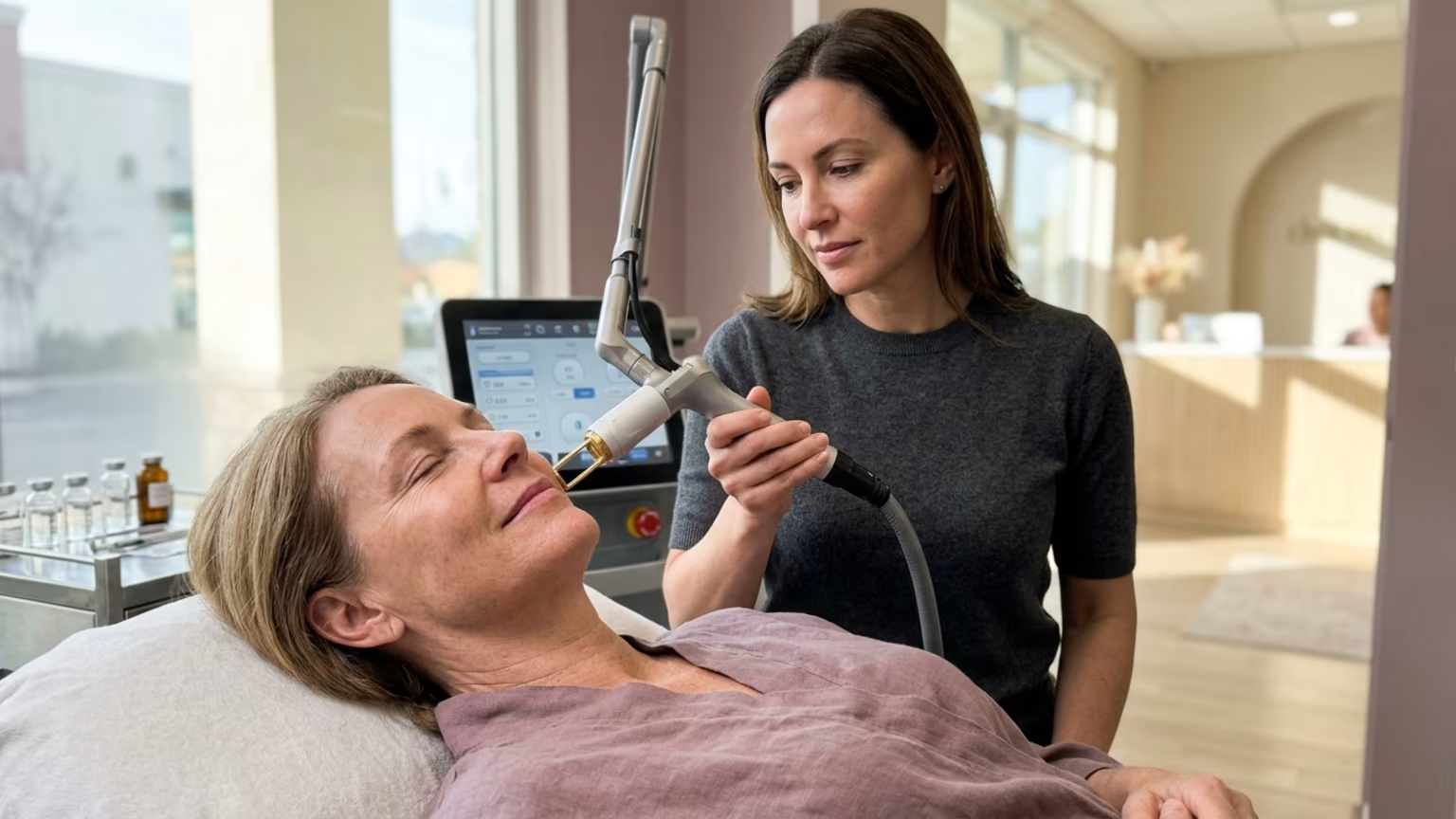

Discover why the science of beauty longevity challenges the marketing behind laser, radiofrequency, and microneedling treatments, plus how to evaluate them.





Despite the endless marketing for in-office energy devices, the science of beauty longevity points in the exact opposite direction. You cannot simply laser, heat, or needle your skin into permanent youth. Blasting tissue with generalized energy does not automatically result in structural health. Understanding how these tools actually interact with human biology is the only way to separate meaningful clinical results from expensive noise.
A recent review highlights this disconnect between clinical reality and marketing claims clearly. ScienceAlert reported on a recent review stating that 26 of 34 assessed studies were classified by the authors as having inadequate evidence for biological rejuvenation. This figure represents 76.5 percent of the assessed primary studies in that review. These numbers show how often cosmetic device claims outpace the verified biological facts.
The appeal of energy-based aesthetic treatments is easy to understand. Health-conscious adults frequently experience anxiety about visible changes in their skin as time passes. Marketers answer this anxiety with promises of profound collagen stimulation and minimal recovery time. Procedures using noninvasive radiofrequency, focused ultrasound, and intense pulsed light are frequently positioned around convenience.
This creates a compelling narrative that you can achieve significant tissue remodeling without interrupting your daily life. The phrase minimal downtime has become a powerful positioning strategy for clinics. However, the concept of no downtime should usually be understood as a marketing shorthand for no formal work absence. It rarely guarantees an absence of redness, swelling, tenderness, or strict aftercare requirements.
Patients often choose these treatments hoping for surgical results from noninvasive tools. A treatment promising complete convenience often trades a stronger remodeling stimulus for that easier recovery. When clinics offer a single session as a total reset, they are selling an emotional resolution rather than a biological reality.
The primary problem with this marketing is that it lumps entirely different biological mechanisms into a single category of collagen stimulation. Biological targets matter far more than clinical branding. Lasers and intense pulsed light use specific wavelengths to target pigment, water, or blood vessels. Meanwhile, radiofrequency and ultrasound use thermal energy to heat tissue at selected depths.
A nonablative fractional laser, an ablative laser, and a pigment laser do not share the same target, recovery timeline, or risk profile. Ablative systems deliberately remove portions of the epidermis, while nonablative systems heat the tissue without removing the surface layer. Intense pulsed light uses broad-spectrum pulses of light rather than a single laser wavelength. A dermatology review identifies intense pulsed light as an option for superficial pigmentation but cautions about post-inflammatory hyperpigmentation.
Mechanical microneedling relies on entirely different pathways through controlled micro-injuries to trigger wound healing. The American Academy of Dermatology describes microneedling as collagen-induction therapy that stimulates new collagen and elastin. However, forcing a wound-healing response does not guarantee a durable or visible cosmetic improvement. Even if collagen remodeling occurs, the visible change may be modest, temporary, or overshadowed by facial volume loss.
Combining modalities increases both the complexity and the potential risks of a procedure. Radiofrequency microneedling combines controlled needle injury with heat delivered below the skin surface. The American Academy of Dermatology notes that some small studies suggest radiofrequency microneedling may achieve results similar to lasers with less downtime or fewer side effects. However, they also point out that those studies involved small numbers of darker-skinned participants.
Furthermore, these thermal procedures carry real biological risks that are often downplayed. FDA reporting has identified serious complications with certain uses of radiofrequency microneedling. These reported complications include severe burns, visible scarring, and unpredictable fat loss. Additional adverse events involve permanent disfigurement and localized nerve damage.
The risk discussion should include the possibility that a treatment intended to tighten skin may produce an undesirable loss of facial fullness if energy reaches deeper tissue.
Younell focuses on an evidence-based treatment-selection framework for long-term structural health. Before scheduling any procedure, you must match the biological mechanism to your specific tissue concern. We encourage readers to review our resources on at-home beauty devices compared for additional context on mechanical versus thermal action. A proper framework helps you ask better questions during your consultation.
If your primary problem involves superficial brown spots, intense pulsed light might be a logical choice. If you are dealing with acne scars, mechanical microneedling or fractional lasers are common options. However, AAD acne guidance says evidence is insufficient for recommendations about several procedural approaches. These unsupported approaches include laser treatments, light-based devices, and mechanical microneedling.
When evaluating focused ultrasound for laxity, remember that measurable changes are often quite small. The Ulthera System is described as FDA-cleared for specific lifting indications, including the brow and lax tissue under the chin and in the neck. However, one review summary reported relatively modest objective changes in the studies it examined. These changes included brow-lift measurements of 0.47 to 1.7 millimeters. A single named clearance for brow lifting does not prove a device works for all facial concerns.
You must evaluate the evidence quality behind any clinical recommendation carefully. A small preliminary report summarized by DermaColumn followed 20 participants after one radiofrequency microneedling session without an untreated control group. This study lasted only 28 days, which cannot establish long-term effectiveness or safety. Ask your practitioner to share independent studies that involve your specific age range, skin tone, and diagnosis.
Clarify the realistic recovery schedule and the complete safety profile of the proposed device. FDA-reported radiofrequency microneedling complications should be discussed during consent before any treatment begins. Published practice estimates range from a few hours of redness for noninvasive treatments to several days for fractional resurfacing. Your individual healing timeline will depend heavily on the device settings, your biology, and the operator technique.
Maintenance is an inescapable part of any clinical treatment plan, yet available materials do not establish one universal interval for any energy-based modality. Device marketing frequently avoids discussing the ongoing financial commitment required to maintain results. Ask your practitioner how many sessions are normally proposed, when the result typically peaks, and how long it may last. A sensible plan should always include daily photoprotection and management of the underlying condition.
Navigating the world of aesthetic technology requires patience and a healthy degree of skepticism. The goal is not to chase every new device, but to make informed choices that respect your basic biology. Distinguishing established clinical evidence from optimistic marketing claims will protect both your skin barrier and your budget. By maintaining this focus, you can build a sustainable, thoughtful routine for beauty longevity.
Remember that true long-term structural health depends heavily on consistent daily habits and proper photoprotection. No single clinical session will completely reshape your facial structure or halt cellular changes. Ask targeted questions, demand realistic outcome data, and walk away from providers who dismiss the documented risks.
Stay connected for research and practical guidance on skin, hair, collagen, nutrition and beauty longevity. Clear ideas for people who want to understand how appearance changes with age and make better-informed choices over time.


Understand your skin, hair and body better without chasing every new trend, treatment or promise.
explore the Blog