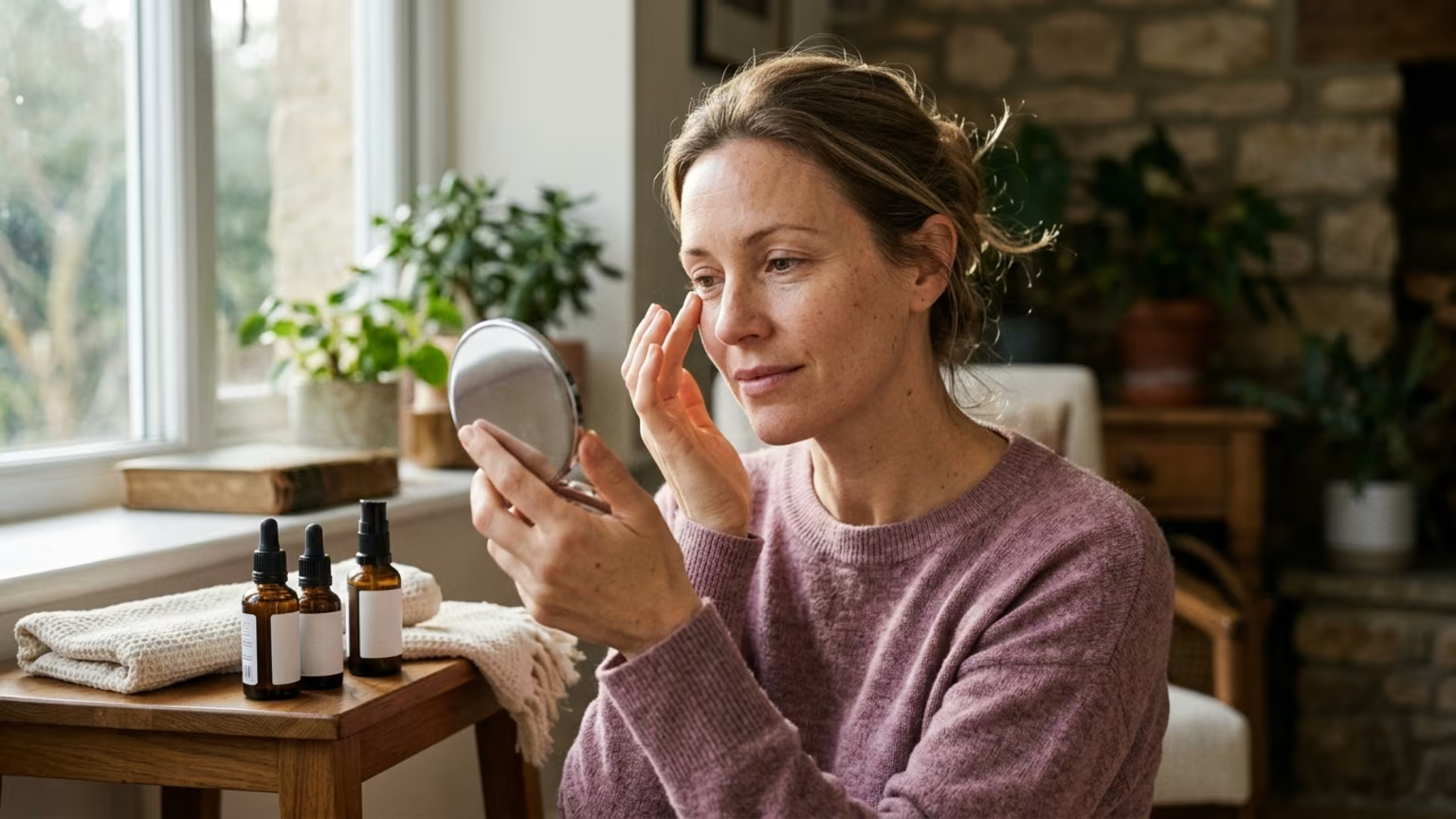

A dermatologist review of electrolyte face creams shows limited clinical evidence supporting their superiority over standard moisturizers with ceramides.





In September 2026, a new report published in The Telegraph examined the growing interest in electrolyte face creams. The analysis featured insights from Arunima Ray, a dermatologist at Narayana RN Tagore Hospital in Kolkata. Ray noted that while the concept has merit, evidence specifically supporting electrolyte creams remains limited. She explained that these products have not been shown to outperform a well-formulated moisturizer containing established ingredients like hyaluronic acid or ceramides.
This news report provides a timely opportunity to evaluate a highly visible skincare claim. Ray emphasized that the idea of using electrolytes in skincare is not completely baseless. However, a plausible biological rationale does not mean an electrolyte-labeled cream is automatically better than an ordinary moisturizer. As part of our ongoing coverage of beauty longevity, Younell regularly evaluates these kinds of emerging formulations against established clinical benchmarks.
Our primary goal is to help readers understand the science behind visible aging so they can separate useful evidence from marketing noise. We translate dense biology into clear everyday language. In this case, the dense biology surrounds how the skin naturally retains water. By looking closely at the findings, we can make informed decisions about whether this trend is worth an investment.
To understand why skincare brands are focusing on these minerals, we have to look at how our skin functions. Human skin naturally contains minerals including sodium, potassium, and magnesium. These specific minerals play a vital role in water balance and overall barrier function. When the skin barrier operates correctly, it keeps essential hydration trapped inside and prevents external irritants from entering.
The theory behind these new formulations is that applying these minerals topically might support this natural physiological process. The report noted that some lightweight versions of these creams may feel comfortable for people with oily skin. Additionally, Ray suggested that formulation-dependent moisture retention could be particularly useful in hot and humid weather. However, these points reflect expert commentary rather than demonstrated comparative clinical results.
Many consumers feel confusion over conflicting skincare advice when new ingredients flood the market. This confusion often leads to wasting money on ineffective products that do not deliver on their bold promises. By understanding that skin health relies on complex barrier functions, we can better evaluate new product claims. A single ingredient rarely dictates the entire success of a hydrating product.
A close look at the available data reveals significant gaps in the current body of research. Ray emphasized that much of the enthusiasm for these creams comes from ingredient-level research and brand studies. She pointed out a distinct lack of extensive dermatological trials verifying these specific product claims. This means consumers are often reading marketing materials based on isolated ingredients rather than robust human trials.
Furthermore, the presence of an electrolyte on an ingredient list does not guarantee superior performance. Many electrolyte creams actually rely on other established hydrating ingredients to deliver their promised results. Any potential moisture retention benefits depend entirely on the overall formulation. A product must be judged on its complete ingredient profile rather than a single trending component.
During our comprehensive review into environmental aging, we tested how various lifestyle factors impact skin barrier recovery. It was fascinating to see the data clearly show that simple habits like sleep and basic hydration often outperform the most expensive topical treatments. This reinforced our commitment to emphasizing foundational health over product hype. We consistently find that well-rounded routines matter more than isolated specialty ingredients.
Our focus remains on promoting well-being over time instead of chasing fleeting trends. We make scientific uncertainty and limitations visible rather than hiding them behind enthusiastic marketing copy. In the case of electrolyte creams, the scientific uncertainty lies in the lack of direct comparative studies. Without these studies, we cannot conclusively say these creams are superior to standard, well-formulated alternatives.
For women looking to build a reliable skincare routine, evaluating the complete formulation is highly recommended. The American Academy of Dermatology advises looking for proven ingredients like ceramides and hyaluronic acid when selecting a moisturizer. Ceramides act as waxy lipids that help hydrate the skin, while hyaluronic acid brings known moisturizing qualities. Ray similarly pointed out that an electrolyte cream works best as part of a complete routine.
She noted that a successful regimen should include a cleanser, a moisturizer, and a daily sunscreen. Texture also plays a massive role in how a product interacts with your specific skin type. The American Academy of Dermatology highlights that there is no single moisturizer suitable for everyone. Their guidance notes that gels tend to feel lighter, making them a practical choice for acne-prone skin.
Conversely, dermatologists suggest thicker creams and ointments for people dealing with dry skin. If you have sensitive skin, Ray strongly advises performing a patch test before applying a new product. She noted that skin irritation is often linked to added fragrances rather than the core active ingredients. She also cautioned that layering several mineral-heavy products can cause unnecessary irritation for sensitive individuals.
Tracking these evolving recommendations can feel overwhelming for anyone simply trying to care for their skin. That is why our beauty longevity blog continues to monitor dermatological guidelines as they develop. We believe that informed consumers make better long-term choices for their physical resilience. Staying updated on established evidence helps reduce the anxiety caused by aggressive marketing campaigns.
Sometimes, over-the-counter formulations simply cannot provide enough relief for compromised skin barriers. The American Academy of Dermatology recommends seeking professional dermatological care if dryness becomes severe. Specifically, you should consult a doctor if your skin becomes painful, cracked, bleeding, or stinging. A professional assessment can help identify deeper issues beyond basic moisture loss.
As research into skin hydration continues to evolve, the focus is shifting from single-ingredient trends to complete formulations. Will future dermatological studies finally standardise how we measure the specific impact of topical minerals on the skin barrier?
Stay connected for research and practical guidance on skin, hair, collagen, nutrition and beauty longevity. Clear ideas for people who want to understand how appearance changes with age and make better-informed choices over time.





Understand your skin, hair and body better without chasing every new trend, treatment or promise.
explore the Blog