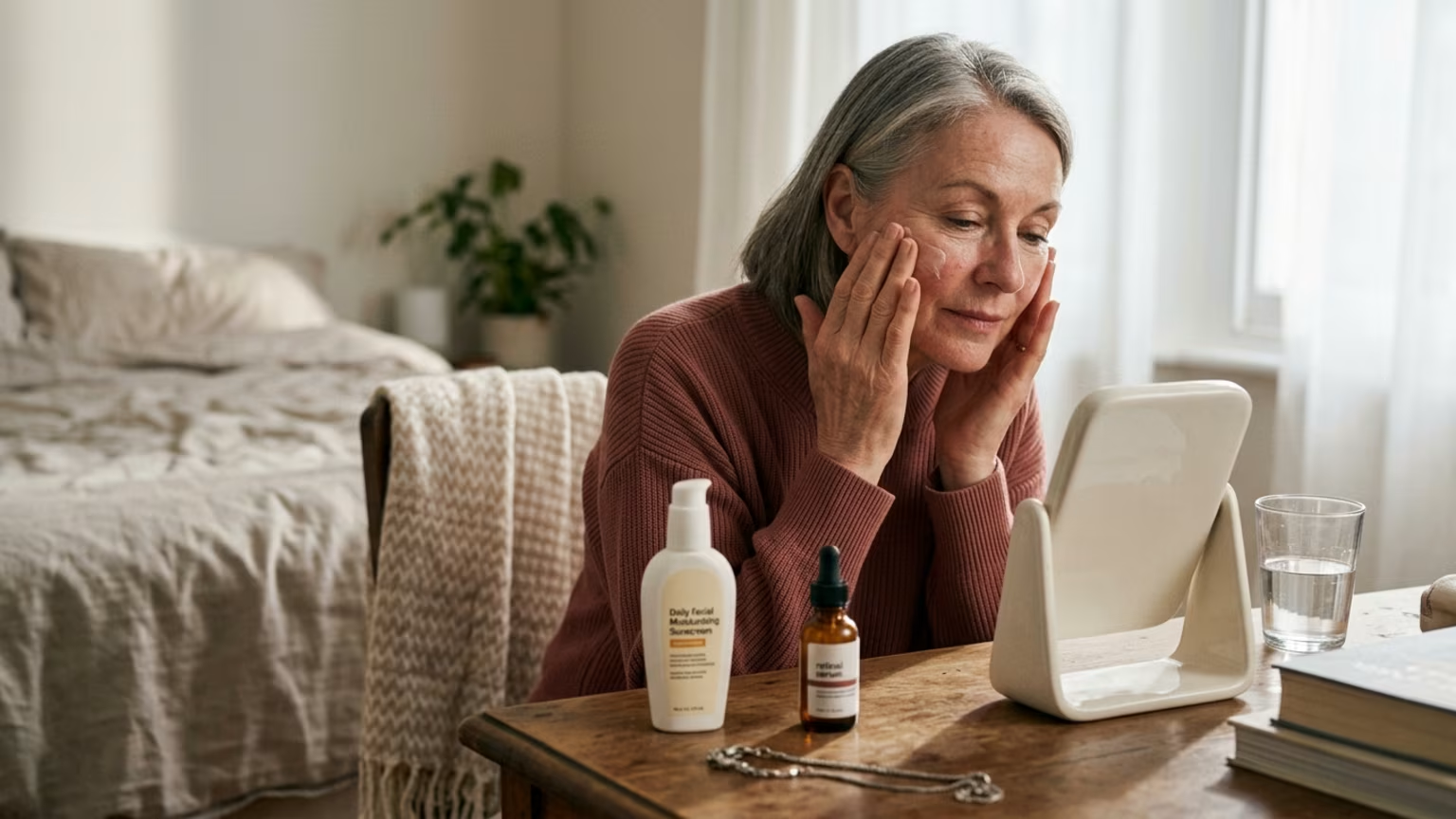

Read how daily sunscreen, retinoids, and hydration form the foundation of skin longevity. We review the clinical evidence behind preventative skincare habits.





In September 2026, GB News featured detailed insights from double-board-certified facial plastic surgeon Dr. Diana Ponsky. The report focused on evidence-based strategies to maintain a younger-looking complexion without resorting to surgery. Ponsky advised readers to prioritize daily sun protection, nighttime retinoids, and adequate hydration well before considering any cosmetic procedures. Her central message emphasized protecting existing skin quality rather than relying on later corrective treatments.
The article highlighted a growing medical consensus around preventative skin health. Ponsky described broad-spectrum sunscreen as the single most important topical product in her own daily routine. She noted that these simple, repeatable habits form the true foundation of long-term skin resilience. This practical perspective aligns seamlessly with a broader industry shift toward preserving skin function rather than chasing aggressive aesthetic interventions.
To understand why these specific elements remain so critical, we must look at how the skin interacts with its daily environment. Ultraviolet radiation serves as the primary environmental driver of photoaging. This continuous daily exposure degrades the dermal matrix and alters healthy pigmentation over time. Applying a broad-spectrum sunscreen with SPF 30 or higher provides a reliable shield against these damaging ultraviolet rays.
The American Academy of Dermatology explains that broad-spectrum protection covers both UVA and UVB radiation. Meanwhile, the SPF rating primarily describes specific protection against UVB-induced sunburn. Consistent sun protection helps prevent the premature breakdown of collagen and halts the formation of new dark spots. While sunscreen defends the skin heavily during the day, topical retinoids support deep cellular function at night.
Ponsky specifically recommended retinoids like tretinoin and retinol to target fine lines, uneven pigmentation, and rough surface texture. These vitamin-A derivatives significantly increase cell turnover rates. This biological action efficiently clears away older surface cells and encourages the structural remodeling of collagen beneath the epidermis. Hydration plays an equally important structural and visual role in healthy skin maintenance.
Ponsky noted that drinking sufficient fluids helps prevent the skin from appearing excessively dry, dull, and fragile. On a physical level, adequate hydration plumps the uppermost layer of the epidermis to improve overall resilience. The American Academy of Dermatology adds that moisturized skin naturally reflects light more evenly. This simple mechanism can quickly minimize the appearance of fine lines without relying on aggressive ingredients.
The GB News report firmly grounded its prevention advice in long-term clinical data. It specifically cited a widely respected 2013 randomized trial published in the Annals of Internal Medicine. Researchers thoroughly monitored and followed 903 adults over a continuous period of four and a half years. The study carefully divided these participants into a daily sunscreen instruction group and a separate discretionary use group.
The clinical outcomes provided a highly compelling numerical metric for the value of preventative care. Participants who faithfully followed the daily sunscreen instruction experienced 24 percent less measurable skin aging progression than the discretionary users. This trial design is particularly strong because it directly compares consistent protection with typical, occasional usage over multiple years. It successfully isolates the exact benefit of daily behavioral consistency in real-world conditions.
However, interpreting this precise 24 percent statistic requires careful contextual framing. The reported result measures the delay in ongoing photoaging progression over the exact four and a half years of the study. It does not represent a guarantee that daily sunscreen application makes a person look 24 percent younger than their chronological age. The American Academy of Dermatology reminds consumers that skincare products generally produce modest, gradual results rather than immediate structural transformations.
Making scientific uncertainty visible is always crucial when discussing any beauty research or clinical trial. While the Annals of Internal Medicine trial strongly supports daily sun protection, it does not prove that sunscreen prevents all wrinkles or sagging. The data strictly measures delayed progression in specific, visually tracked aging markers. Furthermore, the trial does not show that sunscreen can reverse existing laxity or clear established sun damage once it occurs.
Similar clinical boundaries apply directly to the use of nighttime retinoids. While tretinoin and retinol effectively encourage cell turnover, they are not universally appropriate for every skin type or condition. The American Academy of Dermatology explicitly warns that introducing multiple active products too quickly can irritate the skin. Readers with highly sensitive skin or persistent barrier issues should proceed with extreme caution and seek professional guidance before starting a strong retinoid.
We must also maintain highly realistic expectations regarding the biological effects of drinking water. Ponsky accurately linked adequate fluid intake with a noticeable reduction in dry and dull-looking skin. However, the available article does not cite any randomized trial proving that drinking extra water produces a specific wrinkle reduction or a measurable collagen increase.
The American Academy of Dermatology further cautions that labels boasting terms like clinically proven do not guarantee that a product underwent a formal clinical trial or received FDA approval. General hydration and topical moisture support physical comfort, but they are not a targeted structural therapy for deep wrinkles.
In our experience researching environmental aging, we tested how various lifestyle factors impact skin barrier recovery. It was fascinating to see the data clearly show that simple habits like sleep and basic hydration often outperform the most expensive topical treatments. The American Academy of Dermatology firmly supports this perspective by stating that highly effective products are available across all price ranges.
They specifically caution consumers against assuming that higher prices automatically produce superior clinical results. This reinforced our commitment to emphasizing foundational health over product hype. Building a reliable routine requires dedicated consistency rather than a complicated or expensive product lineup. Health-conscious women can translate this clinical guidance into a highly effective daily regimen right now.
Begin by making a broad-spectrum, water-resistant sunscreen with SPF 30 or higher your non-negotiable morning step. The American Academy of Dermatology heavily advises applying it to all exposed skin before going outside. You should rigorously reapply sunscreen every two hours during outdoor exposure, and always reapply immediately after swimming or heavy sweating. If you are primarily concerned about uneven tone, consider actively adjusting your specific sunscreen formula.
The American Academy of Dermatology notes that tinted sunscreens containing iron oxide may offer critical additional protection against visible light. This visible light protection is especially relevant for individuals looking to actively manage dark spots and existing pigmentation. Pair this daytime protection with a reliable daily moisturizer to keep the delicate skin barrier comfortably intact. For your evening routine, focus strictly on targeted cellular support and barrier repair.
You can introduce a nighttime retinoid slowly to gradually address texture and fine lines without overwhelming the skin. Follow this active ingredient with a supportive moisturizer to effectively lock in hydration and minimize visible dryness. This measured approach prioritizes consistent skin longevity practices over fleeting trends. We also highly suggest focusing on hydration and skin barrier basics for long-term skin resilience.
The expanding middle ground between topical skincare and clinical procedures continues to evolve rapidly. While non-surgical options like Botox, dermal fillers, and laser treatments offer distinct alternatives to conventional surgery, they remain medical procedures rather than routine skincare. The true foundation of healthy skin will always remain firmly rooted in accessible, preventative daily habits. As clinical research provides deeper insights into cellular aging, one critical question remains for the industry.
How will future topical formulations successfully optimize these essential barrier defenses without increasing the persistent risk of daily skin irritation?
Stay connected for research and practical guidance on skin, hair, collagen, nutrition and beauty longevity. Clear ideas for people who want to understand how appearance changes with age and make better-informed choices over time.




Understand your skin, hair and body better without chasing every new trend, treatment or promise.
explore the Blog