
Long-term Harvard cohort data reveals a plant-forward nutrition pattern for healthy aging. Learn practical, evidence-based eating habits for women over 30.





In a Harvard-led analysis of 105,015 participants, fewer than 10% met the researchers' strict definition of healthy aging at age 70. This striking statistic highlights how challenging it is to preserve physical and cognitive health over decades. It also emphasizes the importance of building sustainable daily habits rather than chasing temporary diet trends. Long-term nutritional choices consistently outperform short-term restriction when it comes to supporting overall vitality.
A recent analysis evaluated dietary patterns and later-life health using data from two major cohorts. Researchers followed participants in the Nurses' Health Study and the Health Professionals Follow-up Study for up to 30 years. The average starting age was approximately 53, and women made up roughly 66% of the group. The findings identified distinct associations between daily eating habits and long-term wellness.
Participants with the highest adherence to the Alternative Healthy Eating Index showed remarkably better long-term outcomes. They had an 86% greater likelihood of healthy aging at age 70 than those with the lowest adherence. A separate 2025 analysis of 47,513 women found that higher intake of high-quality carbohydrates and dietary fiber provided similar benefits. This group saw a 6% to 37% greater likelihood of healthy aging over the observation period.
The women-only analysis offered specific insights into individual food categories. Each additional 5% of daily calories from vegetables was associated with 37% higher odds of healthy aging. Fruit intake showed a 22% positive association, while whole grains were associated with an 11% increase. These distinct measurements highlight the protective value of plant-based carbohydrates during midlife.
The biological mechanisms behind healthy aging rely heavily on consistent nourishment from whole foods. As the body ages, tissues require a steady supply of micronutrients and macronutrients for normal maintenance. Nutrition plays a critical role in providing these essential building blocks every single day. Without adequate nutritional inputs, cellular repair processes can become less efficient over time.
A diet centered around minimally processed plant foods provides abundant fiber, vitamins, and minerals. Foods like leafy vegetables, beans, and berries deliver components that support overall cellular function. This foundational support helps the body manage normal daily stressors effectively. These nutrients act as the baseline defense system for aging tissues.
While these nutrients support broad physical health, they also provide raw materials needed for normal tissue upkeep. For women navigating midlife changes, prioritizing nutrient density offers a realistic approach to skin longevity and healthy aging. The goal is to provide consistent nutritional support rather than searching for instant cosmetic results. A well-nourished body simply has more resources available to maintain its structures.
The Harvard cohort findings clearly reinforce the value of a comprehensive dietary pattern over isolated ingredients. Across the examined groups, successful aging was linked to higher intakes of plant foods and unsaturated fats. These foods included fruits, vegetables, and whole grains. Nuts and legumes were also highly beneficial. Conversely, lower odds of healthy aging were linked to trans fats, sodium, and processed meats.
Marta Guasch-Ferré, an adjunct associate professor of nutrition at Harvard T.H. Chan School of Public Health, emphasizes looking at the whole picture. She identifies vegetables, fruits, and whole grains as foods associated with better physical and mental health. Rather than demanding extreme restriction, she notes that moderate amounts of fish or eggs fit well into a healthy midlife diet.
Guasch-Ferré also highlights legumes as a useful component for maintaining muscle mass. Her central message is that healthy dietary patterns should be sustainable over a lifetime. This flexible approach is especially practical for women looking to support their long-term health without rigid rules. True dietary success requires a framework you can comfortably maintain for years.
It is important to understand what the data actually says and what it leaves unanswered. The Harvard cohort findings are based on observational evidence collected over several decades. This means researchers tracked habits and health outcomes, but they cannot prove that a specific diet caused healthy aging. People who eat more vegetables might also prioritize sleep, exercise, and preventative healthcare.
The composite outcome for healthy aging was exceptionally demanding in this context. It required reaching age 70 while maintaining good physical, cognitive, and mental health. Participants also had to be entirely free of major chronic diseases to meet the criteria. Therefore, the reported 86% greater likelihood represents this strict composite outcome rather than a guarantee of living longer.
Additionally, these long-term studies focus on broad physical and cognitive milestones. The researchers did not measure skin quality, hair density, or collagen production directly. Anyone looking into beauty science should view these nutritional patterns as foundational health support. They are not clinical cosmetic treatments for wrinkles or hair loss.
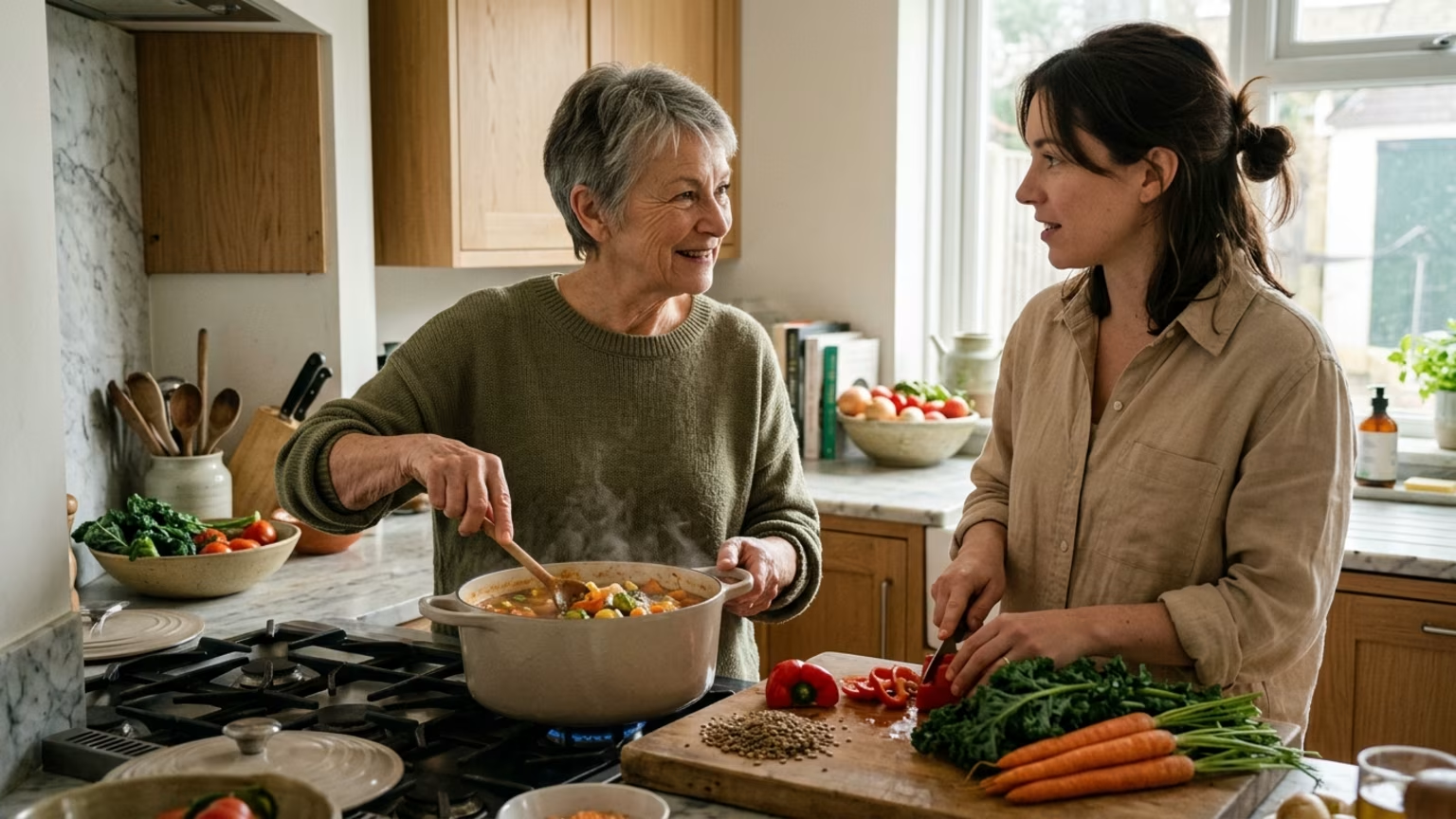
Translating this extensive research into daily life does not require complicated meal prep or severe restriction. The most practical takeaway for women aged 30 to 60 is to build meals around a repeatable structure. Start by filling half your plate with vegetables, making sure leafy greens appear regularly.
Dedicate one quarter of the plate to whole grains like oats, brown rice, or quinoa. Fill the remaining quarter with protein from beans, lentils, or poultry. Finally, incorporate healthy unsaturated fats from nuts, seeds, or extra-virgin olive oil. Finish your meal with a serving of whole fruit instead of a sugary dessert.
Replacing sugar-sweetened beverages with water or unsweetened tea is another straightforward adjustment that yields significant benefits. The objective is not to ban every packaged food entirely. Instead, the goal is to prevent processed meats and snacks from displacing nutrient-dense choices. Consistency with this plant-forward pattern offers a realistic path toward long-term wellness.
Marketing campaigns often isolate one specific ingredient as the ultimate solution for aging gracefully. However, Marta Guasch-Ferré cautions against looking for a single superfood that solves every aging-related problem. The health effects of a meal depend entirely on the combination of foods and overall portion sizes. A single food cannot compensate for an otherwise poorly constructed diet.
Berries receive frequent attention because they provide antioxidant vitamins and polyphenols. Experts have indeed connected berry consumption with research on cognitive health. Yet, the available evidence does not establish that berries directly prevent wrinkles or increase collagen in humans. True wellness stems from a varied diet, not a single type of fruit.
No, the findings support flexibility rather than an across-the-board vegan prescription. Guasch-Ferré specifically notes that moderate amounts of fish or eggs can be included in a healthy midlife protein approach.
The cited Harvard studies measured broad physical and cognitive outcomes rather than cosmetic results. A nutrient-dense diet provides raw materials for tissue maintenance, but it is not a guaranteed cosmetic treatment.
The evidence highlights the importance of consistency over nutritional perfectionism. Building a sustainable eating habit that accommodates personal preferences is far more effective than short-term dieting.
When researchers found that fewer than 10% of participants met the strict definition for healthy aging, it painted a challenging picture. Yet, the solution identified by decades of data is surprisingly accessible and grounded in simple daily choices. By prioritizing a sustainable pattern of vegetables, whole grains, and legumes, healthy aging becomes a realistic lifelong pursuit. Consistent, daily nourishment remains the most powerful tool for supporting long-term health.
Stay connected for research and practical guidance on skin, hair, collagen, nutrition and beauty longevity. Clear ideas for people who want to understand how appearance changes with age and make better-informed choices over time.



Understand your skin, hair and body better without chasing every new trend, treatment or promise.
explore the Blog