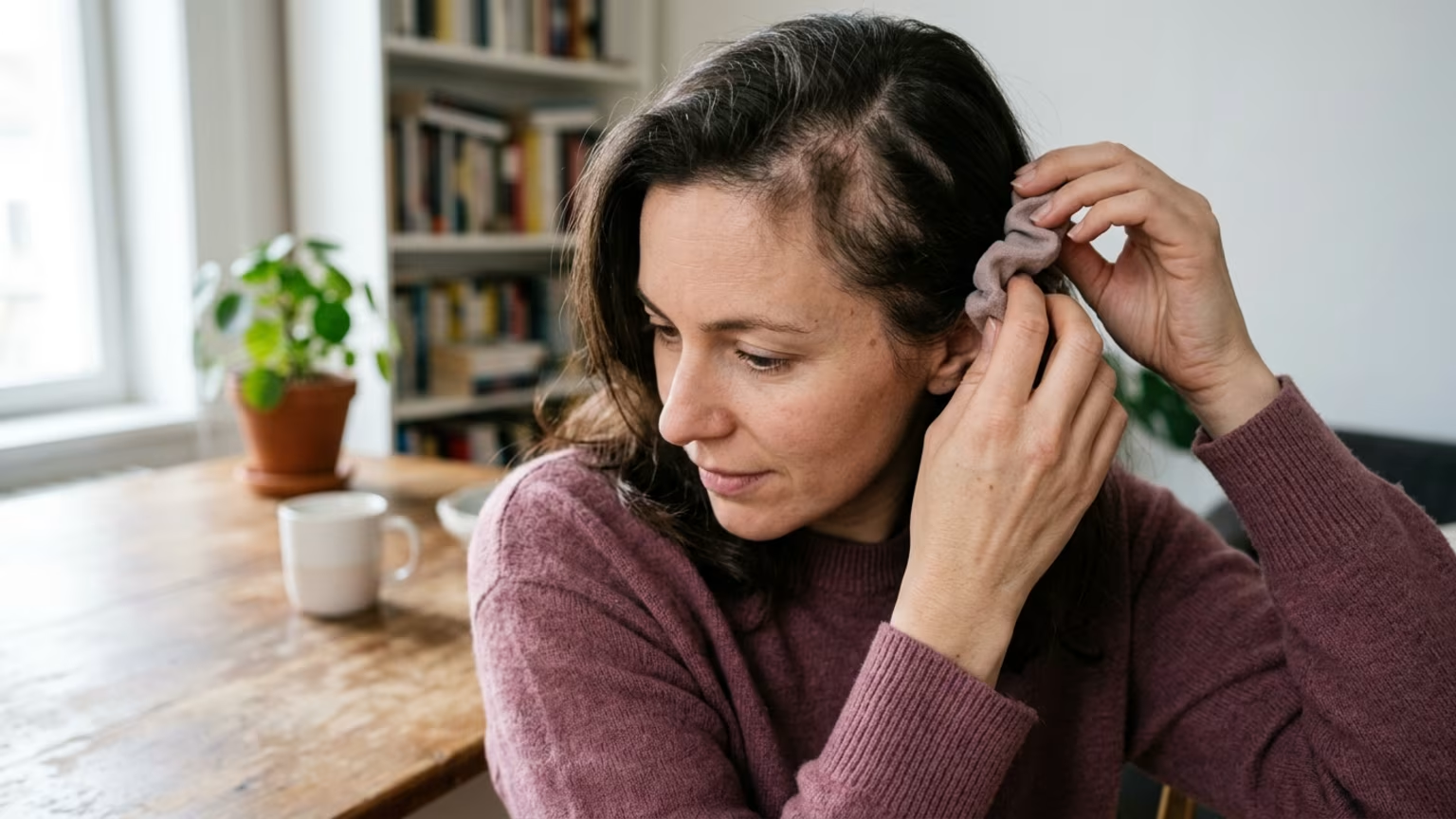

A new case series links everyday hair accessories to localized alopecia. Learn how to protect your scalp from mechanical stress without abandoning your style.





On September 7, a newly published clinical case series highlighted a highly relatable factor in women's long term hair health. The detailed report examined 10 women experiencing chronic localized alopecia in areas that corresponded directly to repeated contact with everyday hairstyling accessories. Rather than focusing on dramatic styling methods like heavy extensions, the findings draw careful attention to completely ordinary tools. Items such as hairpins and claw clips along with buns and ponytails were noted for their potential to place cumulative stress on specific scalp zones.
An overnight roller and a hair prosthesis were also identified among the daily items contributing to localized hair loss. The report offers a highly practical reminder for health conscious women to evaluate their styling routines calmly. By simply understanding how ongoing tension affects the scalp over time, you can make informed choices to preserve your hair density without needing to abandon your favorite accessories entirely.
The primary biological mechanism observed in this report aligns with a condition known as traction alopecia. This specific clinical condition occurs when constant pulling or friction creates ongoing mechanical stress on the hair follicles. Dr. Emrah Cinik of Dr Cinik Hair Clinic notes that concentrated pressure on a single small area over months or years can severely irritate the underlying follicles. This localized irritation happens even when the accessory itself does not feel overtly tight or uncomfortable to the wearer.
Over time, this constant low grade tension can structurally weaken the hair shaft and disrupt the normal biological growth cycle. The American Academy of Dermatology explains that continuing this physical tension can lead to visible hair thinning and eventual long term follicle damage. When a hard object rests continuously against the exact same patch of hair, the localized friction compounds the structural stress on the scalp. The hair fiber itself can literally fracture under the repetitive strain of being secured in the exact same position day after day.
This repetitive mechanical load forces the previously healthy follicle into a highly stressed state. If the tension is not relieved through styling changes, the follicle may eventually struggle to produce strong and healthy hair fibers. It is a very slow process that often goes completely unnoticed until the reduction in hair volume becomes visibly apparent in the mirror.
The published case series provides a highly specific look at how these mechanical stress patterns manifest in a supervised clinical setting. Nine of the 10 women evaluated presented with noticeable hair loss located specifically around the crown of the head. Hairpins were the most frequently implicated accessory in this small group and appeared as a contributing factor in four distinct cases. The clinical outcomes varied significantly once the patients actively adjusted their daily styling routines alongside formal medical treatment.
The report noted that four patients experienced partial hair regrowth after successfully removing or modifying the suspected accessory. Another four patients saw their hair loss remain completely stable after making similar lifestyle adjustments. Conversely, one patient's condition noticeably worsened while she chose to continue wearing a hair prosthesis secured tightly with hairpins. It is absolutely vital to remember that these controlled clinical observations represent isolated medical cases that do not guarantee universal results.
Real world outcomes often differ widely based on individual hair fragility and a patient's baseline scalp health. The exact timeline for potential regrowth also varies heavily from person to person. You can read more about evaluating these kinds of changes in our guide to understanding shedding and thinning patterns.
While these specific clinical observations are highly insightful, they come with substantial scientific limitations that require careful context. A 10 patient case series is far too small to establish broad population level risk for the general public. It cannot be used to determine the overall prevalence of accessory related alopecia among healthy adult women. The published findings are correctly considered hypothesis generating rather than definitive proof that ordinary styling tools commonly cause permanent baldness.
Furthermore, the partial regrowth seen in four patients only occurred after they modified their accessories alongside targeted formal medical treatment. This specific detail means the study cannot definitively isolate the exact benefit of changing the accessory from the positive effects of the medical intervention itself. The clinical report also does not prove that the identified accessories were the absolute sole cause of each patient's hair loss. Permanent follicle damage is a potential outcome of highly advanced traction alopecia rather than an inevitable result of simply wearing a casual ponytail.
Self diagnosing a scalp condition based on a small clinical study is never recommended by medical professionals. If you notice significant physical changes, a proper medical assessment is always the safest and most effective route. We often refer readers to our clinical overview of different alopecia types to understand these important diagnostic distinctions better.
Women can take several highly practical steps to minimize unnecessary mechanical stress on their hair on a daily basis. The most effective strategy is simply rotating the regular placement of everyday clips and buns to avoid loading the exact same crown area. Dr. Cinik strongly advises against sleeping with hard accessories pressed against the scalp to reduce any prolonged nighttime friction. You should also periodically inspect your usual contact zones for broken hairs or reduced density under good bathroom lighting.
Taking baseline comparison photographs several weeks apart can easily help you monitor subtle changes in the exact same area over time. The American Academy of Dermatology specifically recommends watching for clear warning signs like physical pain, stinging, crusting or visible scalp tenting. If a particular hairstyle causes any of these uncomfortable physical sensations, you should loosen it or change it immediately. In our experience, these small lifestyle adjustments are incredibly vital for maintaining your daily peace of mind.
I remember speaking with a dermatologist who told me her patients were coming in with severe anxiety about normal skin aging. That anxiety was driven entirely by social media filters and aggressive marketing. We decided right then that our publication would never frame natural changes like wrinkles or thinning hair as personal failures. Instead of needlessly panicking over a standard claw clip, you can easily protect your hair by preferring gentle styles that do not require substantial tension.
Changing your daily styling habits is a highly smart preventative step, but you should always consult a qualified clinician for unexplained bald patches. If you notice a sudden round bald patch, the American Academy of Dermatology notes this could actually be a sign of alopecia areata. This specific medical condition requires professional clinical evaluation, which you can learn more about in our diagnostic guide to medical hair loss causes. You should never rely on unproven supplements or cosmetic camouflage as substitutes for identifying a potentially damaging source of direct mechanical stress.
As modern clinical attention slowly shifts toward the cumulative effects of mechanical stress, our baseline understanding of daily hair care continues to evolve beautifully. Medical researchers are finally beginning to look beyond dramatic styling techniques to thoroughly understand how low grade friction impacts long term follicle longevity. This subtle shift in clinical focus raises an incredibly intriguing question for the broader scientific community and everyday consumers alike. Will future dermatology guidelines eventually prioritize specific materials and accessory designs to help women actively preserve their hair density as they age?
Stay connected for research and practical guidance on skin, hair, collagen, nutrition and beauty longevity. Clear ideas for people who want to understand how appearance changes with age and make better-informed choices over time.




Understand your skin, hair and body better without chasing every new trend, treatment or promise.
explore the Blog