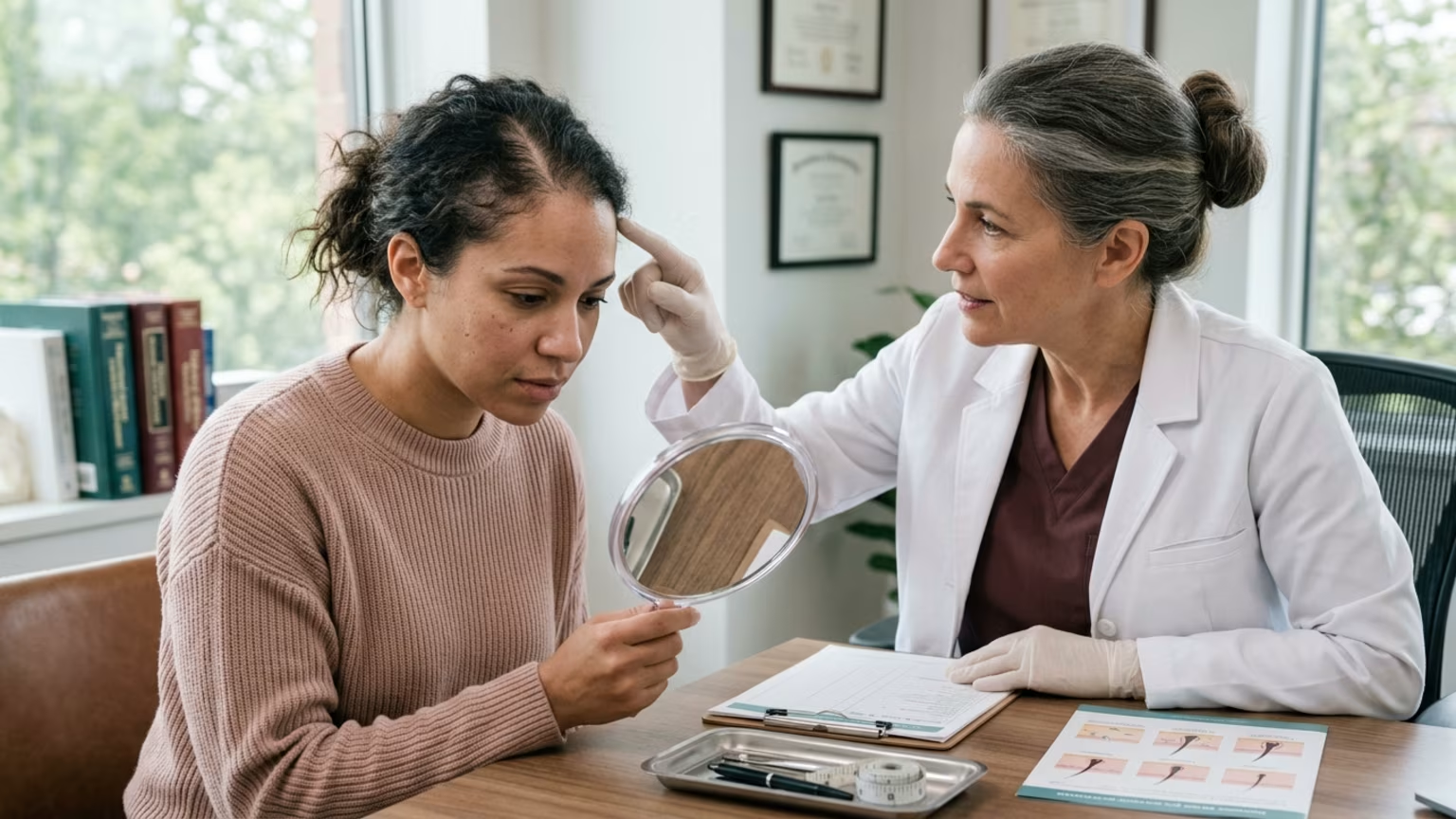

Clinical experts explain the biology behind stress-induced telogen effluvium, detail realistic regrowth timelines, and clarify when to see a dermatologist.





In September 2026, actor Sandra Bullock told Interview magazine that she had experienced two bouts of stress-induced hair loss. She noted during the conversation that she was very lucky it came back. Shortly after the interview, a beauty-health article published in ¡HOLA! identified her experience as consistent with acute telogen effluvium. This condition is a temporary disruption of the hair-growth cycle that can cause heavy and diffuse shedding across the scalp.
The timing of this celebrity disclosure offers a valuable opportunity to clarify a frequently misunderstood biological process. Many health-conscious women notice sudden shedding and instantly assume they are doing something wrong in their daily routines. I remember speaking with a dermatologist who told me her patients were coming in with severe anxiety about normal skin aging and hair changes. That conversation shaped our philosophy at Younell, confirming that we must never frame natural physical responses as personal failures.
Acute telogen effluvium occurs when a significant physiological or psychological stressor forces a large number of follicles out of their active phase. These affected follicles move prematurely into the telogen resting phase. According to dermatology and trichology specialist Cristina de Hoyos, this sudden follicular shift involves complex hormonal, immunological, and metabolic signals. The follicles generally remain alive and non-scarred, but the precise mechanism linking emotional stress to this specific condition in humans remains incompletely understood.
The most disorienting aspect of this temporary condition is its notably delayed onset. The visible shedding often appears approximately two to three months after the initial triggering event. Ana Maldonado, a medical aesthetic doctor and founder of Lessaging, warns that what people see today usually reflects a past event. Patients frequently begin noticing substantial shedding after they already feel emotionally better.
De Hoyos explains that recovery may have already begun even while we continue to see hair accumulating in the brush. This timeline makes the underlying cause incredibly difficult to recognize because the original stressor has likely passed. When the shedding does begin, it is generally diffuse rather than appearing in distinct bald patches. Women might notice a noticeably thinner ponytail, a wider part, and increased overall scalp visibility.
Understanding the strict timelines for human hair regrowth can help reduce anxiety around sudden and severe shedding. Human hair grows at a steady biological rate of approximately one centimeter per month. Because of this physiological limit, visible cosmetic recovery simply takes considerable time to become apparent. De Hoyos states that short new hairs may become noticeable along the frontal hairline and elsewhere on the scalp from approximately three to four months.
A continuing shed does not necessarily mean that the condition is worsening or that the recovery process has stalled. Older hairs may still be falling naturally while new hairs are just beginning to push through the scalp. Hair density often improves over an initial window of approximately six to nine months. However, achieving full visible cosmetic recovery typically takes between six and twelve months for most women.
Understanding proper hair regrowth expectations over these six to twelve months helps set realistic goals. Setting measurable recovery benchmarks prevents the frustration that often accompanies slow biological healing. The data clearly shows that patience is the most biologically appropriate response to a temporary shedding phase.
While Bullock’s public comments highlight a common female experience, they do not constitute a verified medical case study. She did not specify when these episodes occurred or whether a clinician formally diagnosed telogen effluvium. Attributing all sudden diffuse loss to psychological stress risks missing other serious medical or nutritional contributors. The time of year might provide some context for seasonal shedding, but seasonality alone never establishes a definitive diagnosis.
The available reporting absolutely does not prove that specific interventions cured the actor's condition. Some media coverage reported that Bullock credited inherited hair characteristics and Aniston’s LolaVie products during her interview. However, these casual comments do not establish that the topical products actually caused or treated her regrowth. Applying this narrative as a standard treatment template for all shedding events is completely unsupported by clinical evidence.
Indiscriminate use of supplements is another area where the clinical reality heavily conflicts with popular wellness advice. De Hoyos specifically advises that iron, zinc, and vitamins have not shown consistent benefit when no documented deficiency is present. She strongly cautions that more is not necessarily better when dealing with unverified nutritional needs. Topical minoxidil may be considered by a dermatologist in selected cases, but evidence specifically supporting its use for telogen effluvium remains limited.
Health-conscious women navigating midlife changes need clear parameters for evaluating their own sudden hair shedding. Your relevant medical history should account for recent emotional stress, illnesses, major weight changes, and dietary restrictions from the prior three months. Distinguishing between temporary hair shedding and underlying hair loss requires patience and careful daily observation. Counting individual hairs is generally not useful since longer hair and infrequent washing can make the fallen amount appear much larger.
Professional evaluation becomes strictly necessary when the physical signs fall outside standard temporary shedding patterns. The ¡HOLA! article recommends seeking dermatologic care if excessive shedding continues beyond two or three months. You should also consult a qualified specialist if your hair density visibly declines or if you notice patchy loss. Symptoms such as intense itching, distinct pain, severe scaling, or noticeable redness are clear prompts for an immediate clinical assessment.
A comprehensive clinical assessment offers diagnostic clarity that guesswork and celebrity anecdotes simply cannot provide. Clinicians frequently use trichoscopy to examine the scalp and hair follicles at high magnification. This specialized diagnostic tool helps them properly distinguish diffuse telogen effluvium from other progressive forms of alopecia. Before starting any new oral supplements for sudden hair shedding, patients must obtain appropriate laboratory testing to confirm actual nutrient deficiencies.
The intricate relationship between emotional strain and our physical appearance continues to generate intense clinical interest worldwide. As researchers further investigate the complex hormonal and immunological signals linking psychological stress to our hair cycles, new diagnostic tools will likely emerge. Will future clinical testing eventually allow dermatologists to predict and prevent acute shedding before the massive telogen shift fully occurs? Until then, understanding the true pace of biological recovery remains our most reliable defense against unnecessary beauty anxiety.
Stay connected for research and practical guidance on skin, hair, collagen, nutrition and beauty longevity. Clear ideas for people who want to understand how appearance changes with age and make better-informed choices over time.




Understand your skin, hair and body better without chasing every new trend, treatment or promise.
explore the Blog