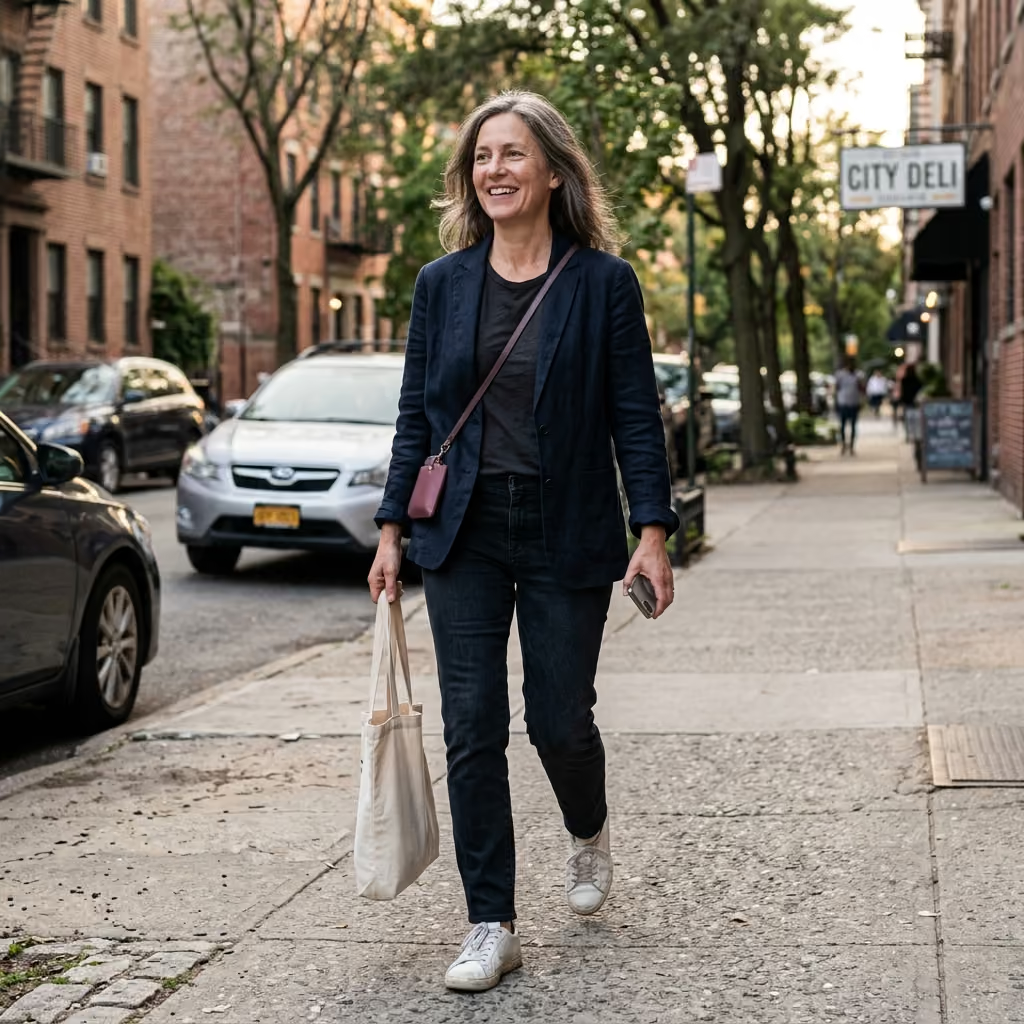
Cleveland Clinic outlines how steady weight loss, lean protein, and resistance training support skin appearance and physical function during GLP-1 treatments.





In September 2026, Cleveland Clinic published an expert commentary detailing how GLP-1 medications affect facial and body appearance during weight loss. The commentary features insights from Dr. Keren Zhou, an endocrinologist and obesity-medicine specialist. Dr. Zhou addresses appearance concerns surrounding medications like Wegovy, Zepbound, Ozempic, and Mounjaro. These treatments are utilized in obesity and diabetes care to suppress hunger and reduce food noise.
Depending on the medication, some patients may lose up to 25% of their body weight over time. This ongoing discussion reflects a wider shift in medical care. The focus is moving away from solely measuring scale weight toward a broader view of body composition and physical function. Providers are prioritizing nutrition and lifestyle choices that protect healthy aging during pharmacological treatment.
The clinical consensus indicates that the medication itself is not directly responsible for sudden facial aging. Cleveland Clinic attributes changes commonly described as "Ozempic face" or "Ozempic butt" to rapid or substantial weight loss. Losing subcutaneous fat quickly can reduce volume in the cheeks, making wrinkles, hollowness, and angularity more noticeable. Similar contour changes often appear in the breasts, hips, buttocks, and legs as fat stores decrease.
During our deep dive into environmental aging, we tested how various lifestyle factors impact skin barrier recovery. It was fascinating to see the data clearly show that simple habits like sleep and basic hydration often outperform the most expensive topical treatments. This reinforced our commitment to emphasizing foundational health over product hype. Supporting skin appearance during rapid weight loss similarly relies on internal health, steady nutrition, and preserving foundational structures.
Fat provides essential volume to the skin structure, and rapid depletion leaves the external tissue with a slightly deflated appearance. When the volume underneath the skin disappears quickly, the skin often lacks the immediate elasticity to snap back into place. Cleveland Clinic warns that excessive muscle loss alongside fat loss can further contribute to a sunken body contour.
While fat loss drives changes in skin laxity, concurrent muscle loss can create a softer or sunken body profile. A 2026 review reported that skeletal muscle represented approximately 8.5% to 24.5% of total weight loss across examined studies. Another network meta-analysis summarized in a 2026 review looked at 22 randomized trials. This research estimated that lean mass accounted for approximately 25% of the total weight lost.
Interestingly, some research suggests that GLP-1 therapy may actually improve muscle quality even when measured muscle mass declines. This improvement potentially occurs because of reduced fat deposits within the muscle itself. These figures serve as research estimates rather than specific predictions for individual patients. Because body composition measurements and study designs differ, protecting structural tissue remains a priority.
Many individuals notice that weight loss and facial aging are closely tied to how well lean mass is preserved. Patients aiming to maintain their physical vitality must look beyond the scale. Preserving strength requires a comprehensive approach to both diet and physical activity during energy restriction.
Despite these visible changes, research reviews caution against interpreting measured lean-mass loss automatically as sarcopenia. A 2026 systematic review noted that current comparative evidence remains heterogeneous and limited by low certainty. True sarcopenia requires clinically meaningful deterioration in strength or physical performance, rather than just a shift in body composition alone.
Furthermore, not everyone taking a GLP-1 medication will develop facial hollowness or visible muscle loss. The exact likelihood depends on the speed of weight loss, baseline body composition, genetics, and age. Cleveland Clinic clarifies that even thoughtful interventions cannot fully guarantee the prevention of loose skin or facial volume changes. Loose or sagging skin is usually a cosmetic concern rather than a medical emergency.
Protein and resistance exercise may help preserve lean tissue, but current evidence does not support promising that diet or exercise will completely prevent these shifts. Patients should always avoid treating online social media advice as a substitute for individualized medical care. Cleveland Clinic recommends discussing the balance between treatment benefits, weight loss speed, and appearance changes directly with a prescribing clinician.
Cleveland Clinic recommends an eating pattern centered on nutrient-dense whole foods, lean protein, vegetables, and complex carbohydrates. They advise limiting ultra-processed foods and simple carbohydrates to support sustainable changes. Rather than seeking a universal daily protein target, patients should prioritize lean protein first when their appetite is heavily suppressed. Understanding evidence-based dietary patterns for skin longevity can help women build meals that support long-term tissue repair.
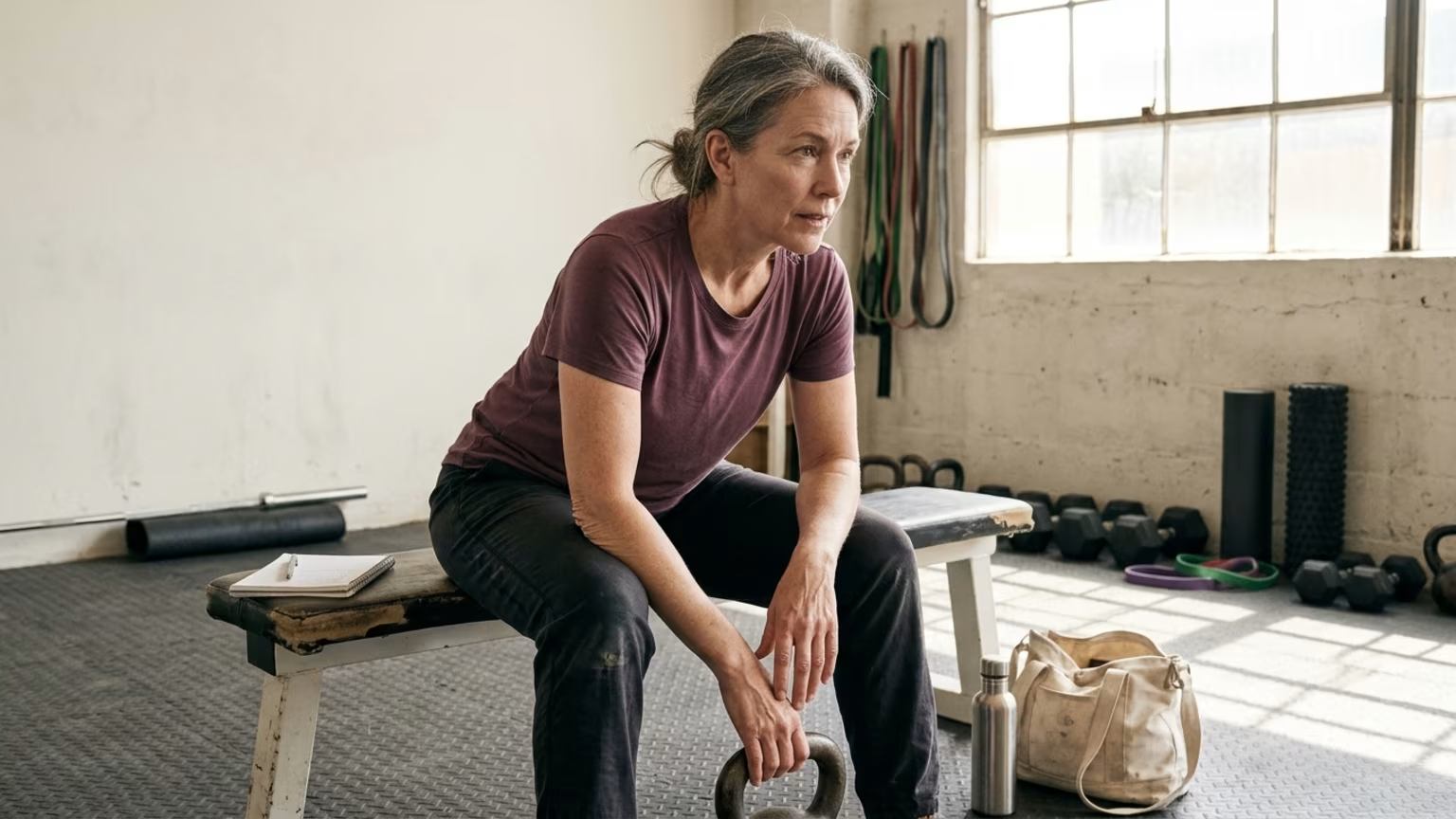
Slow and gradual dose escalation is another important strategy to mitigate unwanted appearance changes. Dr. Zhou advises against rapid drops, noting she does not want patients losing 10% of their body weight immediately in the first month. Additionally, a 2026 review identifies resistance training as the primary non-pharmacological strategy for maintaining muscle during energy restriction. Incorporating structured exercise and skin longevity habits provides a vital stimulus for preserving lean tissue and physical function.
Healthcare providers should actively monitor how quickly a patient is losing weight and whether physical function is changing. Tracking functional capabilities, like stamina or the ability to carry groceries, offers better insight than scale weight alone. If concerns arise, Cleveland Clinic says a provider may consider dosage reduction, a temporary medication break, or an exercise plan designed to build muscle.
As obesity medicine shifts its focus from scale weight toward physical function, the relationship between weight loss and skin health requires deeper investigation. Future clinical trials must evaluate muscle quality alongside functional strength to truly understand how pharmacological weight loss influences physical vitality. Recognizing how collagen aging is measured will likely play a role in developing better supportive therapies. Will emerging research establish unified nutritional thresholds that maximize fat loss while preserving skin elasticity and muscle integrity?
Stay connected for research and practical guidance on skin, hair, collagen, nutrition and beauty longevity. Clear ideas for people who want to understand how appearance changes with age and make better-informed choices over time.



Understand your skin, hair and body better without chasing every new trend, treatment or promise.
explore the Blog